
Calcium carbonate (CaCO3) is one of the most widely used inorganic fillers in global industry. Most commercial heavy calcium carbonate (GCC) comes from calcite or limestone. These minerals have isometric, rhombohedral crystal structures. However, market demand is growing for a high-value variant called aragonite. Aragonite is a polymorphic form of calcium carbonate.
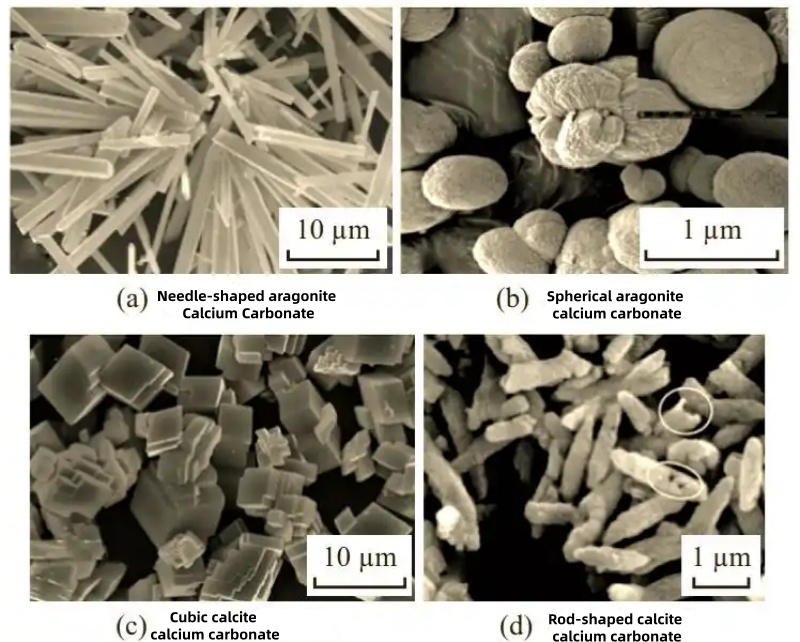
Aragonite occurs naturally in specific geological sediments and marine resources such as shells and corals. It can also be synthesized artificially through carbonization. Its most distinctive feature is its unique needle-like (columnar) morphology. In plastics, rubber, paper, and biomaterials, it serves two purposes. It acts as a standard spacer and works as a microfiber reinforcing agent. To unlock its benefits, we must keep its fragile needle-like structure intact. When preserved, aragonite significantly improves the matrix material. It enhances tensile strength, impact toughness, flexural modulus, and thermal stability.
However, processing aragonite presents a major engineering paradox. The challenge is how to grind the mineral to micron or submicron fineness. At the same time, we must avoid destroying the needle-like structure that gives it its core value.
Selecting the wrong grinding equipment will mercilessly crush these needles. They will turn into ordinary, irregular spheres or lumps. As a result, high-grade aragonite degrades into low-value, standard calcite powder. This guide comprehensively analyzes the mechanical, thermodynamic, and kinematic factors required to maintain the needle-like morphology of aragonite during machining. This provides you with precise equipment selection guidance.
The Core Challenges of Processing Aragonite Calcium Carbonate
Before evaluating equipment, we must understand the physical and thermodynamic vulnerabilities of aragonite during mechanical processing.
Challenge A: High Aspect Ratio Preservation (Morphology Protection)
The commercial value of aragonite relies heavily on its aspect ratio (length-to-diameter ratio, typically L/D ≥5:1 to 10:1). Conventional milling relies on heavy impact, high-pressure compression, or intense attrition. These forces act indiscriminately on the material. Because needle-like crystals have low bending strength across their minor axes, high-impact forces easily snap them into short fragments, reducing the aspect ratio toward 1:1. The goal of aragonite grinding is selective deagglomeration and delamination, rather than destructive crushing.
Challenge B: Thermodynamic Instability (The Calcite Phase Transition)
Aragonite is a metastable polymorph of calcium carbonate under ambient conditions. When subjected to mechanical stress, local high temperatures, or prolonged friction inside a grinding chamber, its crystal lattice can destabilize.
At temperatures exceeding 400°C (and sometimes as low as 300°C under intense mechanical shear), aragonite undergoes an irreversible phase transition into calcite. When this happens, the needle-like structure collapses entirely into a rhombohedral form, destroying its reinforcing properties. Therefore, the mill must feature exceptional temperature control.
Challenge C: Increased Hardness
On the Mohs hardness scale, calcite sits at 3.0, while aragonite ranges from 3.5 to 4.0. Though it remains a relatively soft mineral compared to quartz, aragonite’s higher hardness means it requires greater specific energy input to grind, which inherently increases the risk of heat generation and tool wear.
Key Principles for Equipment Selection of Aragonite Calcium Carbonate
Choosing the right equipment for aragonite grinding essentially involves controlling the energy input method and stress mode. The core principles include the following:
First, the grinding mechanism should primarily utilize “grading or controlled impact” rather than violent collision-based crushing. Equipment relying on high-speed hammering or random ball milling is generally detrimental to morphology preservation. This is because the resulting localized stress is excessively high, easily damaging the crystal structure.
Second, the system should have real-time grading or separation capabilities. Once particles reach the target particle size, they should be promptly removed from the grinding zone to avoid over-grinding, a major cause of morphology damage.
Third, excellent temperature control is essential. Whether through airflow cooling, shortened residence time, or external heat dissipation design, a low-temperature environment is crucial for maintaining crystal stability and structural integrity.
Finally, the equipment should have good parameter adjustability. This includes rotor speed, airflow velocity, and feed rate, as aragonite from different sources may vary in crystal strength and aspect ratio.
Evaluation of Mainstream Grinding Mill Types
In industrial production, several types of grinding equipment are commonly considered for aragonite processing, each with distinct advantages and limitations.
Jet Mill: The Preferred Option for Morphology Preservation
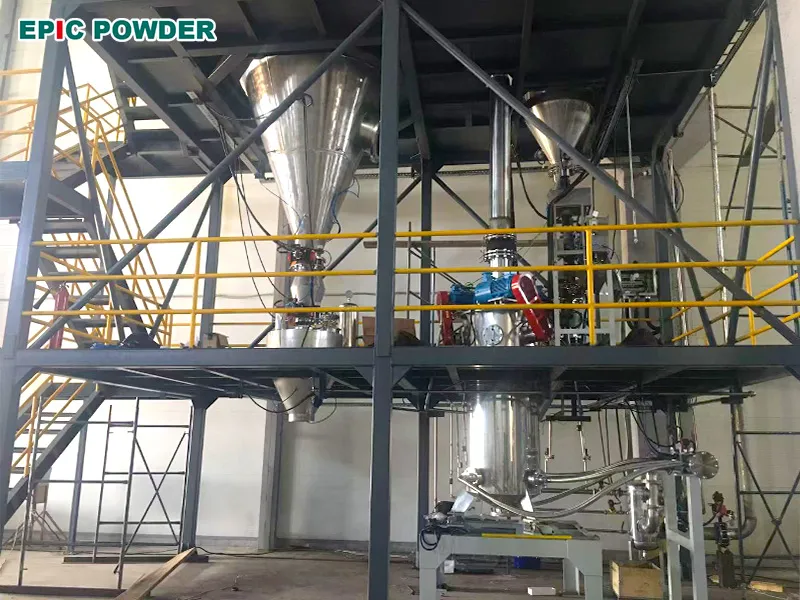
Jet mills are widely recognized as one of the most suitable choices for preserving the needle-like structure of aragonite. Their working principle relies on high-speed gas flow to accelerate particles, which then collide with each other in a fluidized state. Since there are no grinding media involved, the mechanical stress is primarily inter-particle collision rather than rigid impact.
This “soft collision” mechanism significantly reduces structural damage to elongated crystals. Moreover, the adiabatic expansion of compressed air provides a cooling effect, helping to maintain a low processing temperature. The short residence time further reduces the risk of over-grinding. However, jet mills are typically more energy-intensive and require precise control of feed particle size, making pre-crushing stages necessary.
Air Classifier Mill: Balanced Efficiency and Control
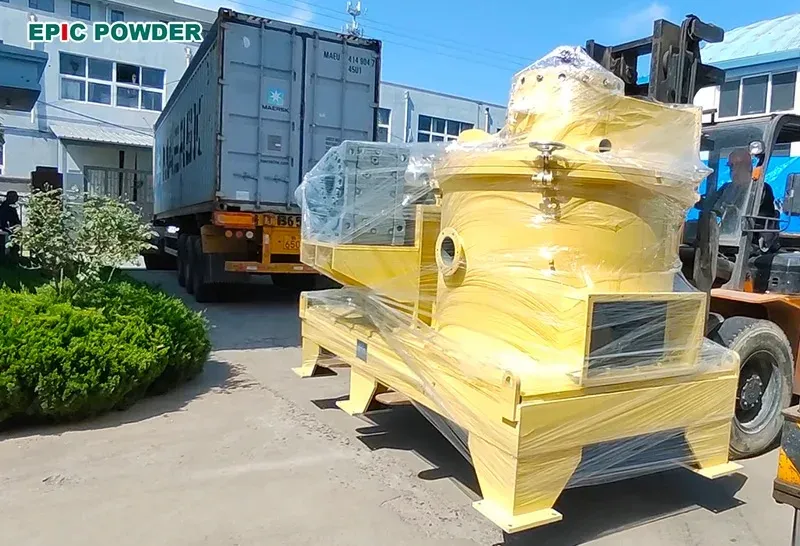
The air classifier mill integrates grinding and classification functions within a single system, making it highly efficient for continuous production. The rotor generates moderate impact forces while the internal classifier wheel ensures that only particles meeting the target size are discharged.
For aragonite, this system offers a good balance between efficiency and morphology protection, provided that operational parameters are carefully optimized. Lower rotor speeds and higher air volume are often preferred to reduce mechanical stress. However, compared to jet milling, the impact mechanism is still more aggressive, which means that some degree of aspect ratio reduction is unavoidable.
Ball Mill Systems: High Risk for Morphology Damage
Traditional ball mills are generally not recommended for maintaining needle-like aragonite morphology. The grinding mechanism relies heavily on random impact and shear generated by grinding media, which leads to severe fragmentation of elongated crystals. In addition, prolonged residence time and frictional heating further increase the risk of structural degradation and partial phase transformation.
While ball mills offer cost advantages and can achieve finer particle sizes, they are better suited for producing heavy calcium carbonate powder products where morphology requirements are not stringent. If a ball milling system must be used, it needs to be paired with efficient classifying equipment and strictly controlled process parameters. Even then, morphology preservation remains limited.
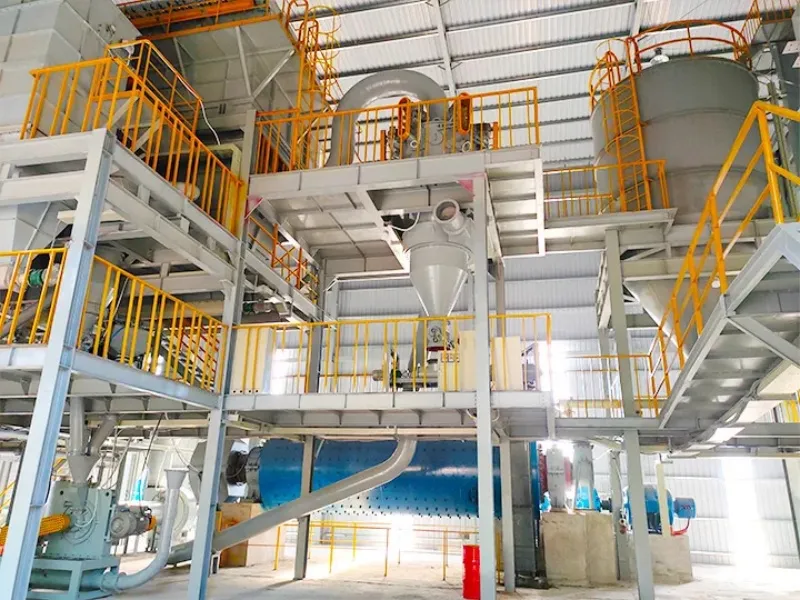
Stirred Media Mills: High Energy but Aggressive
Stirred media mills provide high energy density and are effective for ultrafine grinding. However, the intense shear forces generated by the rotating stirrer and media collisions are highly destructive to fragile crystal structures. For aragonite, this often results in rapid loss of needle morphology and transformation into equiaxed particles.
While these mills are valuable for applications requiring very fine particle sizes without strict morphology requirements, they are generally unsuitable when aspect ratio preservation is a key performance indicator.
Practical Selection Strategy
In real industrial decision-making, equipment selection should not be based on a single parameter such as fineness requirement. Instead, it requires a comprehensive evaluation of product function, morphology retention requirement, and production scale.
If the application requires high-aspect-ratio reinforcement fillers, such as in plastics, coatings, or specialty composites, jet milling combined with precise classification is generally the most reliable solution. If production efficiency and cost balance are more important, air classifier mills may be preferred, provided that parameter optimization is carefully implemented. For applications where morphology is not critical, traditional ball milling systems may still be acceptable.
A staged process design is often the most effective approach, in which pre-crushing is followed by low-stress fine grinding and final classification. This allows better control over energy distribution and minimizes irreversible damage to the crystal structure.
Conclusion
Maintaining the needle-like morphology of aragonite calcium carbonate during grinding is a complex engineering problem. It requires coordinated efforts from equipment selection, process design, and operational control. Among numerous grinding technologies, air jet mills and optimized air classifier mills offer the best balance between particle size control and structural preservation. High-impact equipment such as ball mills and stirred mills are generally unsuitable for morphology-sensitive applications.
Ultimately, the key lies not in maximizing grinding intensity, but in controlling and distributing energy in a way that respects the natural crystal architecture of aragonite. Only by doing so can the material’s unique reinforcing and functional properties be fully preserved and utilized in high-end industrial applications.

“Thanks for reading. I hope my article helps. Please leave a comment down below. You may also contact Zelda online customer representative for any further inquiries.”
— Posted by Emily Chen