
In traditional understanding, calcium carbonate (CaCO₃) is often regarded as a “low-cost inorganic filler,” mainly used to reduce production costs in plastics, rubber, and coatings. However, with the advancement of inorganic modification technologies, the strategic value of calcium carbonate in flame-retardant applications is being redefined.
Inorganic particles are non-toxic, thermally stable, resistant to high temperatures, and have large specific surface areas. As a commonly used filler and modifying material in polymer systems, calcium carbonate not only improves the rigidity, hardness, wear resistance, and heat resistance of composite materials, but also demonstrates unique advantages in certain flame-retardant applications.
So, how exactly does calcium carbonate perform in flame-retardant materials? And how is its performance transformed through industrial grinding and surface modification equipment?
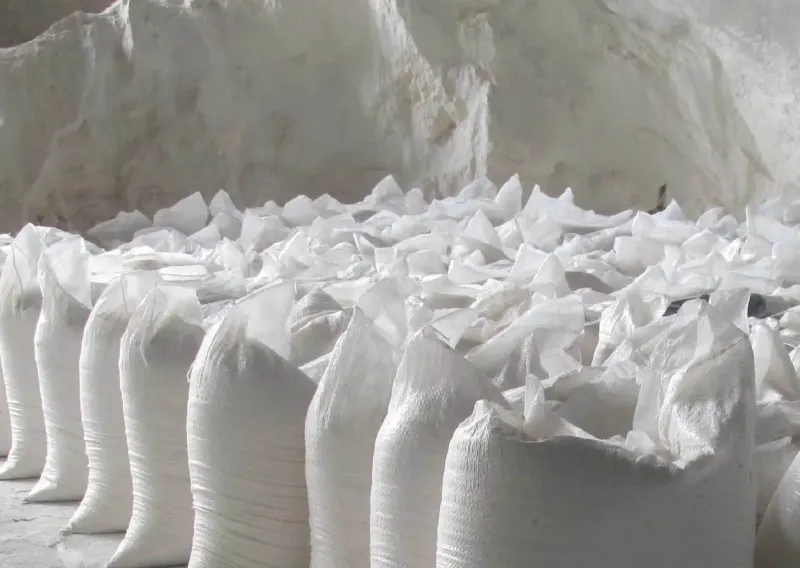
I. What Are the Flame-Retardant and Fire-Resistant Mechanisms of Calcium Carbonate? How Does It Slow Down Fire Propagation?
In flame-retardant applications, calcium carbonate is mainly used in polymer-based composites, wood/fiber modification, and coating modification.
Its flame-retardant mechanisms mainly include three aspects:
Endothermic effect:
Under high temperatures, calcium carbonate decomposes and absorbs a large amount of heat, thereby reducing the surface temperature of the material and slowing down the combustion rate. The decomposition reaction is:
CaCO₃ → CaO + CO₂↑ .
This reaction suppresses the temperature rise of the material to a certain extent, making it more difficult for the material to reach its ignition point.
Dilution effect:
Calcium carbonate is uniformly dispersed in the polymer matrix, reducing the relative concentration of combustible substances. Meanwhile, the CO₂ inert gas produced by decomposition also dilutes the surrounding oxygen concentration.
Barrier effect:
Calcium oxide produced after decomposition forms a dense protective layer on the material surface, blocking contact between oxygen and combustible substances and cutting off one of the three elements of combustion—oxygen supply—thereby preventing further combustion. In addition, the generated carbon dioxide gas further dilutes oxygen concentration and assists in flame retardancy.
Ⅱ. Application Directions of Calcium Carbonate in Flame-Retardant Materials
Composite flame retardant (synergistic magnesium hydroxide):
Magnesium hydroxide (Mg(OH)2) is environmentally friendly and has a high decomposition temperature (340°C~ 450°C). However, it suffers from poor compatibility with polymers, which limits the mechanical properties of the final material. Compounding it with calcium carbonate solves this issue. This combination leverages the matching decomposition temperatures of both the fillers and the polymer, achieving an ideal balance of reinforcement, heat resistance, flame retardancy, and fire resistance.
Flame-Retardant Silicone Rubber (Enhancing Burn-Through Resistance):
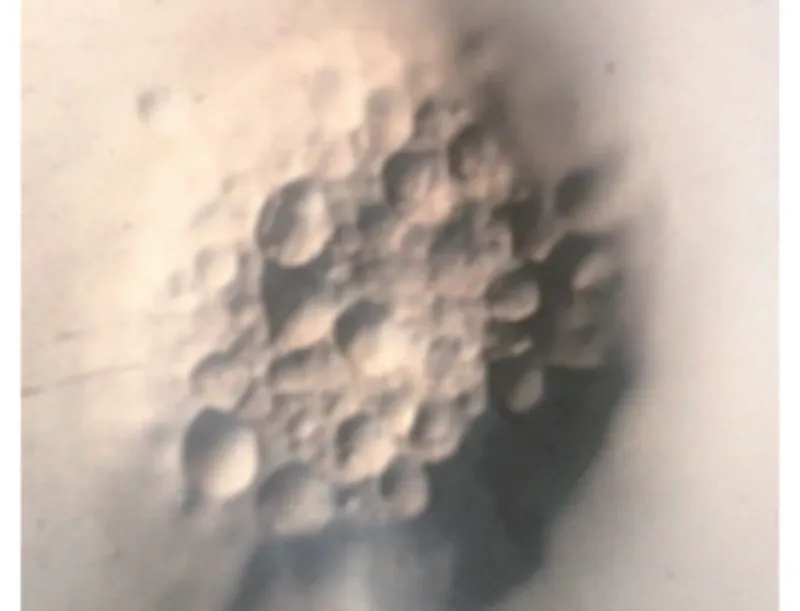
In tests of aviation fire-resistant sealing materials, silicone rubber containing 150 parts of magnesium hydroxide alone was burned through within 5 minutes. In contrast, adding just 50 parts of calcium carbonate allowed the material to withstand continuous exposure to a 1100°C flame for 15 minutes without penetration. This demonstrates that calcium carbonate imparts excellent “fire penetration resistance” and crusting properties to silicone rubber. The combination of the two yields even better results.
Flame-Retardant Sealants (Resolving the Conflict Between Mechanics and Thixotropy):
In traditional silicone sealants, the addition of large amounts of flame retardants leads to reduced elasticity, lower elongation at break, and a thicker, more runny formulation. Nano-calcium carbonate provides flame-retardant properties while also imparting excellent thixotropy and reinforcement to the compound. It is the key filler for balancing the “conflict” between mechanical properties and flame retardancy.
Flame-Retardant Fibers (Green Recycling and Utilization):
Primarily used in wet coating technologies based on waste polyamide (nylon) fibers (e.g., in the manufacture of label ribbons). This approach enables the physical recycling of polymer materials while reducing the production costs of flame-retardant fabrics.
Flame-Retardant Coatings (Intumescent Fireproof Formulation):
In fireproof powder coatings, the expansion and flame-retardant performance of the coating reach their optimal levels when the dosage of both calcium carbonate and mica powder is set to 60 parts each.
Flame-Retardant Adhesives (High-Performance MS Polymer Formulation):
In silane-modified polyether (MS) sealants for industrial and construction applications, a compound system consisting of 160 parts of ammonium polyphosphate (APP) + 80 parts of heavy calcium carbonate + 80 parts of nano-calcium carbonate is used. This yields a high-performance sealant that combines 25LM-grade high-displacement capability with a flame retardancy rating as high as V-0.
Ⅲ. Why Must Calcium Carbonate for Flame-Retardant Materials Be “Ultra-Finely Ground”? What Grinding Equipment Is Used?
The flame-retardant efficiency of calcium carbonate is closely related to its particle size (specific surface area). Coarse-particle calcium carbonate not only has low flame-retardant efficiency but also severely compromises the mechanical properties of polymer materials. By using ultra-fine grinding equipment to process calcium carbonate into micron scale (e.g., D50: 2–5 μm) or even nano scale, its specific surface area increases significantly. This allows it to absorb heat and decompose more rapidly when exposed to heat, forming a more uniform and dense residue barrier layer.
In industrial production, the following grinding equipment is primarily used for different flame-retardant applications:
Ground calcium carbonate (GCC) processing — ultra-fine ring roller mill / medium-speed micro powder mill:
Suitable for large-scale dry production of heavy calcium carbonate powder in the 400–2500 mesh range. This equipment integrates grinding and classification into a single unit. The resulting micro-powder has a narrow particle size distribution, making it ideal for use in flame-retardant coatings, flame-retardant adhesives, and polymer composites.
High-End Ultrafine Heavy Calcium Carbonate — Wet Mixing Mill/Ball Mill Production Line:
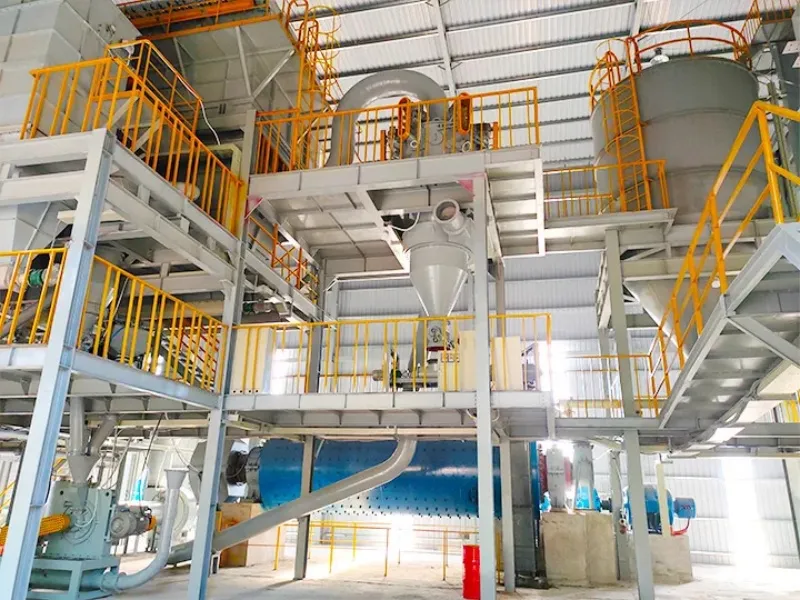
Designed for ultrafine heavy calcium carbonate (e.g., D97 ≤ 5 μm) required in flame-retardant fibers or high-end flame-retardant sealants. Typically, wet grinding followed by drying is employed to achieve extremely high fineness and excellent dispersibility.
Light/nano calcium carbonate (PCC) — multi-stage carbonation reaction and deagglomeration equipment:
Nano calcium carbonate is commonly used in flame-retardant silicone sealants, providing thixotropy and reinforcement.
Ⅳ. What Is the Effect of Surface Modification of Ultra-Fine Calcium Carbonate on Flame-Retardant Materials? What Equipment Is Used?
Ultrafine and nano-calcium carbonate have large specific surface areas and high surface energies. When added directly to polymer matrices, they are highly prone to electrostatic agglomeration, leading to a “conflict between flame retardancy and mechanical properties,” such as reduced elasticity and decreased elongation at break. Therefore, surface coating modification of calcium carbonate (e.g., using stearic acid or coupling agents) is essential.
The most essential surface modification equipment in industrial applications includes:
Continuous three-roller coating machine:
Utilizing the heat generated by high shear forces and high-speed rotation, the modifier is uniformly coated onto the surface of calcium carbonate in a molecular film. The modified calcium carbonate changes from hydrophilic to lipophilic. It blends perfectly into flame-retardant silicone sealants and silane-modified polyether adhesives. While achieving V-0 flame retardancy, it also delivers excellent thixotropy, workability, and tensile mechanical properties.

Conclusion
In summary, calcium carbonate is far from a dispensable “supporting role” in flame-retardant materials. Through high-precision grinding equipment for ultra-fine processing, calcium carbonate can be effectively refined to achieve enhanced performance. Combined with advanced surface modification technologies for hydrophobic transformation, it not only serves as a highly cost-effective synergistic flame retardant. It also plays an irreplaceable role in preventing flame penetration and improving thixotropy and mechanical strength.
In-depth research into the integrated synergy of grinding, classification, and modification will be the key to unlocking the value of calcium carbonate in high-end flame-retardant applications.

“Thanks for reading. I hope my article helps. Please leave a comment down below. You may also contact Zelda online customer representative for any further inquiries.”
— Posted by Emily Chen