
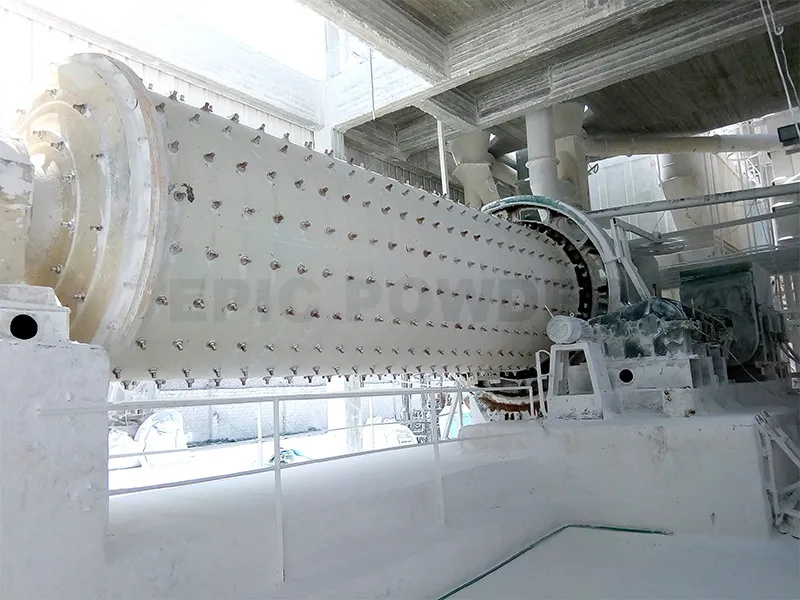
Calcium carbonate is an inorganic mineral material with both natural advantages and diverse potential. The expansion of its application boundaries and the enhancement of its added value have always been closely tied to innovations in preparation technology.
For a long time, calcium carbonate production has relied on traditional processes. These processes suffer from issues such as product homogenization, insufficient purity, high energy consumption, and limited application scenarios. These limitations have restricted the industry’s upgrade toward high-end and functional development.
In recent years, with continuous breakthroughs in scientific research, preparation technologies have evolved significantly. This progress ranges from innovative laboratory methods to large-scale industrial applications. Calcium carbonate production has transitioned from “extensive manufacturing” to “precise preparation.” At the same time, major breakthroughs have been achieved in cutting-edge fields such as 3D printing, bioremediation, and solid waste resource utilization. These advancements are driving the industry away from its traditional low-end positioning and toward a new stage characterized by high added value, green development, and multifunctionality.
I. Current Status and Pain Points of Traditional Calcium Carbonate Preparation Technologies
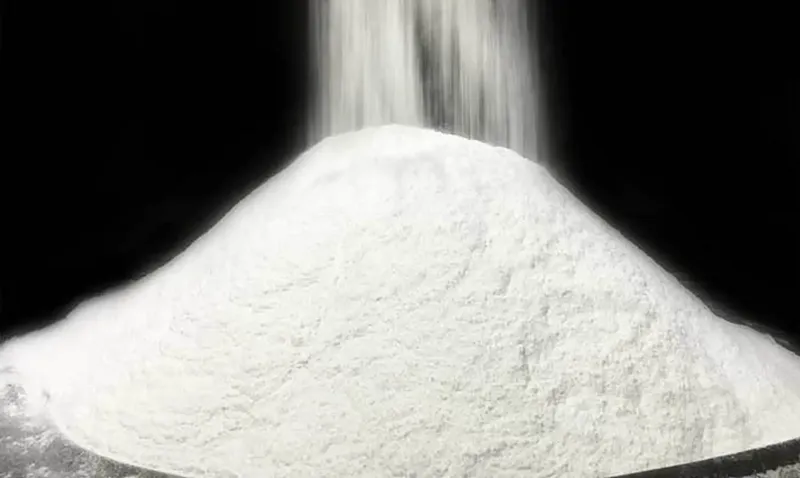
At present, mainstream industrial calcium carbonate preparation technologies are mainly divided into two categories: natural calcium carbonate (ground calcium carbonate, GCC) and synthetic calcium carbonate (precipitated calcium carbonate, PCC).
Both technological routes have achieved large-scale production. However, they still exhibit significant shortcomings in high-end applications. These limitations make it difficult to meet the advanced and refined requirements of downstream industries.
1. Mainstream Traditional Technologies and Their Limitations
(1) Ground Calcium Carbonate (GCC) Technology
This method uses natural calcite or limestone as raw materials. It involves physical processes such as crushing, grinding, and classification to produce products with different particle sizes.
Its core advantages include simple processes, low raw material costs, and relatively low energy consumption. It is widely used in construction, low-end plastics, coatings, and other mid-to-low-end fields.
However, this method has clear limitations:
- Product purity is constrained by raw material quality. It is difficult to produce high-purity products above 99.5%, and impurity content is relatively high.
- Particle size control lacks precision. It is difficult to stably produce nano-scale or ultrafine products. Particle dispersion is poor, and agglomeration occurs easily.
- Product functionality is limited. It mainly serves as a filler and cannot meet functional requirements in high-end applications.
(2) Precipitated Calcium Carbonate (PCC) Technology
This method uses limestone as raw material. It involves chemical processes such as calcination, digestion, and carbonation.
Compared with GCC, PCC offers higher purity and more uniform particle size. It can produce ultrafine and nano-scale products. It is widely used in mid-to-high-end plastics, rubber, pharmaceuticals, and other fields.
However, this method also has notable drawbacks:
- High energy consumption. The calcination stage requires large amounts of coal, leading to high carbon emissions.
- Complex production processes.
- Significant pollutant emissions. The carbonation process generates wastewater and exhaust gas, increasing environmental treatment costs.
- Severe particle agglomeration in nano-scale production. Large amounts of dispersants are required, which increases production costs.
2. Summary of Core Pain Points
Overall, the core issues of traditional calcium carbonate preparation technologies can be summarized as follows:
- Insufficient precision in purity and particle size control, making it difficult to meet high-end application requirements.
- High energy consumption and environmental pressure, which conflict with carbon neutrality goals and environmental regulations.
- Single-function products with low added value, leading to severe homogenized competition.
- Difficulty in scaling up advanced technologies (such as nano-calcium carbonate), with poor stability and challenges in industrial transformation.
II. Innovation Pathways in Calcium Carbonate Preparation Technologies
1. Upgrading Physical Preparation Technologies: Energy Saving and Performance Optimization
(1) Ultrafine Grinding and Classification Technology
Traditional GCC grinding technologies suffer from wide particle size distribution, high energy consumption, and severe agglomeration.
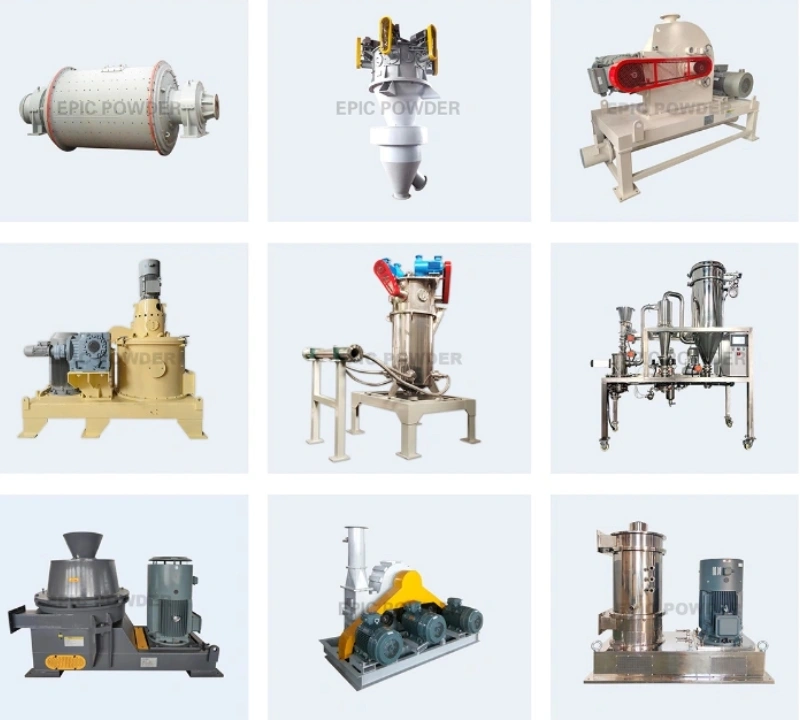
New ultrafine grinding technologies combine air classification and wet grinding processes. By optimizing grinding media and adjusting process parameters, nano-scale and ultrafine calcium carbonate can be precisely produced. Particle size distribution becomes more uniform, and dispersion is significantly improved.
At the same time, intelligent grinding equipment is being adopted. Technologies such as AI-based temperature control and online monitoring allow real-time process adjustment. These innovations can reduce energy consumption by more than 30%. They also improve production efficiency and product stability, meeting the needs of high-end coatings and electronics industries.
(2) Integrated Surface Modification Technology
This approach integrates surface modification directly into the preparation process. It avoids the issues of uneven modification and poor dispersion caused by the traditional “prepare first, modify later” method.
For example, in the carbonation process of PCC, environmentally friendly modifiers (such as bio-based agents) can be added simultaneously. This enables uniform coating on particle surfaces. It improves compatibility with organic matrices while reducing the need for dispersants and lowering production costs. It is especially suitable for high-end plastics and pharmaceutical applications.
2. Intelligent Preparation Technologies: Improving Quality and Efficiency
With the advancement of Industry 4.0, intelligent technologies are being integrated into the entire calcium carbonate production process. This enables “precise feeding, real-time control, and efficient production.”
For example:
- In the calcination stage of PCC, intelligent temperature control systems can adjust temperature and time in real time. This reduces energy consumption while improving product purity.
- In grinding and classification, online particle size detection systems provide real-time feedback. Grinding parameters are automatically adjusted to ensure consistent product quality.
- In solid waste-based calcium carbonate production, intelligent sorting technologies can precisely remove impurities. This improves product purity and promotes automation and intelligent upgrades. It also reduces labor costs and enhances industrial scalability.
III. Breakthrough Applications of Calcium Carbonate
Innovations in preparation technologies have expanded calcium carbonate applications beyond traditional filler roles. It is now entering advanced fields such as 3D printing, bioremediation, high-end optics, and environmental protection. This shift significantly increases product value and transforms its industrial positioning.
1. 3D Printing: A Breakthrough in Inorganic Material Printing
Traditional 3D printing mainly relies on organic materials. Inorganic materials have been limited due to poor plasticity and difficulty in forming.
New calcium carbonate preparation technologies provide solutions. For example, plastic calcium carbonate prepared via inorganic ion polymerization can be used as a printable material with good flowability. It enables precise printing of inorganic structures.
The printed products have dense structures and excellent mechanical properties. They can be used in construction components, industrial parts, and biological scaffolds.

2. Bioremediation: “Inorganic Repair for Inorganic Systems”
Calcium carbonate is a natural biomineral. It is a major component of animal bones and shells. It has excellent biocompatibility.
With advanced preparation technologies, it has achieved breakthroughs in bioremediation. In dental and bone repair, new calcium carbonate bulk materials can serve as repair matrices. They are highly compatible with human tissues and can promote tissue regeneration.
Compared with traditional organic repair materials, they offer better stability and safety. They are expected to gradually replace organic materials in clinical applications.
3. High-End Optical Applications: New Uses for High-Purity Products
High-quality calcium carbonate single crystals are important materials for precision optical instruments such as solar coronagraphs and micrometers.
Traditional methods cannot produce high-purity, defect-free single crystals. This has limited their application in advanced optics.
New preparation technologies, such as inorganic ion polymerization and amorphous particle fusion, can produce high-purity, defect-free crystals. These materials have excellent optical transparency. They meet the requirements of high-end optical instruments and help break foreign technological monopolies.
4. Environmental Applications: Deepening Solid Waste Utilization
With carbonation and other new technologies, calcium carbonate plays an expanded role in environmental protection. It is used not only in wastewater and exhaust gas treatment but also in efficient solid waste utilization.
For example, industrial wastes such as steel slag, salt sludge, and paper sludge can be converted into high-purity calcium carbonate products. These products can be used for wastewater neutralization and flue gas desulfurization.
This approach solves environmental issues related to waste disposal. It also reduces raw material costs. It achieves a win-win outcome for environmental protection and economic benefits, aligning with carbon neutrality goals.
IV. Challenges and Solutions in Industrialization
Although China has achieved breakthroughs in laboratory-scale technologies, industrial application still faces challenges. These include difficulties in technology transfer, high production costs, and poor stability in large-scale production.
1. Key Challenges
- Difficulty in scaling up technologies due to differences between laboratory and industrial conditions.
- High production costs due to specialized equipment and materials.
- Lack of industry awareness, leading to slow adoption of new technologies.
2. Solutions
- Strengthening collaboration between research institutions and enterprises.
- Reducing costs through scale production, equipment localization, and diversified raw materials.
- Promoting technology adoption and establishing industry standards.
V. Future Trends in Technology and Industry Development
With the maturation of new preparation technologies, the calcium carbonate industry will move toward:
- Precision, low-carbon, and intelligent production, with new technologies gradually replacing traditional methods.
- High-value and multifunctional applications, expanding into advanced fields like 3D printing and biomedicine.
- Circular and collaborative development, with solid waste utilization becoming mainstream and stronger cooperation between academia and industry.

“Thanks for reading. I hope my article helps. Please leave a comment down below. You may also contact Zelda online customer representative for any further inquiries.”
— Posted by Jason Wang