
Calcium carbonate (CaCO₃), as one of the most abundant minerals in the Earth’s crust, has long been known as the “industrial staple.” In recent years, with global attention on environmental protection and green, low-carbon development, calcium carbonate has demonstrated significant value in environmental governance due to its natural non-toxicity, wide availability, low cost, and unique physicochemical properties. However, the environmental performance of calcium carbonate is not fixed. Its effectiveness largely depends on particle size, specific surface area, and surface activity. It is precisely the development of calcium carbonate ultrafine grinding technology and high-end ultrafine grinding equipment that has fully activated calcium carbonate’s “superpower” in the environmental field, transforming it from a traditional low-end filler into a highly efficient environmental functional material.
The following explains in detail its deep applications and synergistic effects in various environmental fields through calcium carbonate ultrafine grinding technology:
Calcium Carbonate Grinding Technology: The “Catalyst” for Environmental Applications
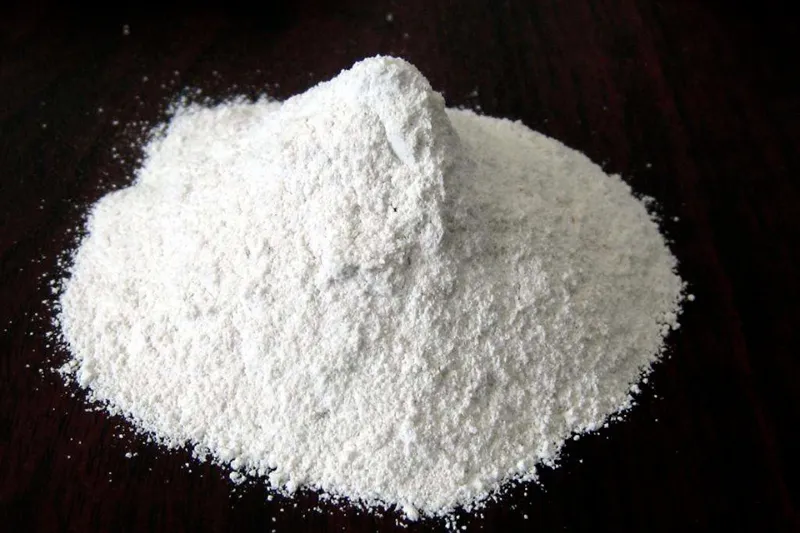
Ordinary coarse calcium carbonate has low reactivity due to its large particle size and small surface area. Its reaction rate is slow, and adsorption capacity is weak in environmental applications. However, ultrafine calcium carbonate (micron-sized) and nano-calcium carbonate produced by modern ultrafine grinding technology undergo a qualitative leap in physical properties:
- Ultra-high specific surface area: The smaller the particle size, the greater the exposure of active groups and surface area, which geometrically increases. This greatly enhances the contact area for adsorption of harmful substances and chemical neutralization reactions.
- High surface energy and activity: Ultrafine powders have stronger chemical reactivity. When treating acidic waste gases and wastewater, neutralization reactions are faster and more thorough.
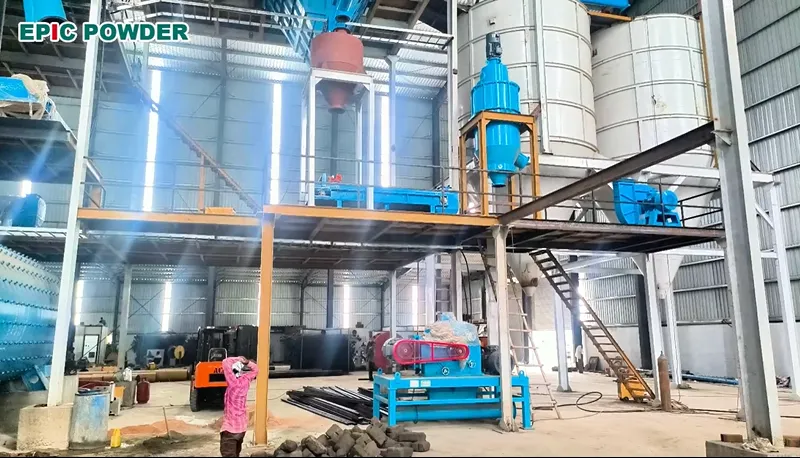
To achieve such precise particle size control, the industry typically employs the following ultrafine grinding equipment:
Wet Stirred Mills / Sand Mills:
Mainly used for producing ultrafine and nano-scale heavy calcium carbonate (D97 ≤ 2 μm). Grinding media provide shear and impact in water, reducing calcium carbonate to submicron or even nano size. Ideal for water treatment and polymer-based environmental materials.
Jet Mills:
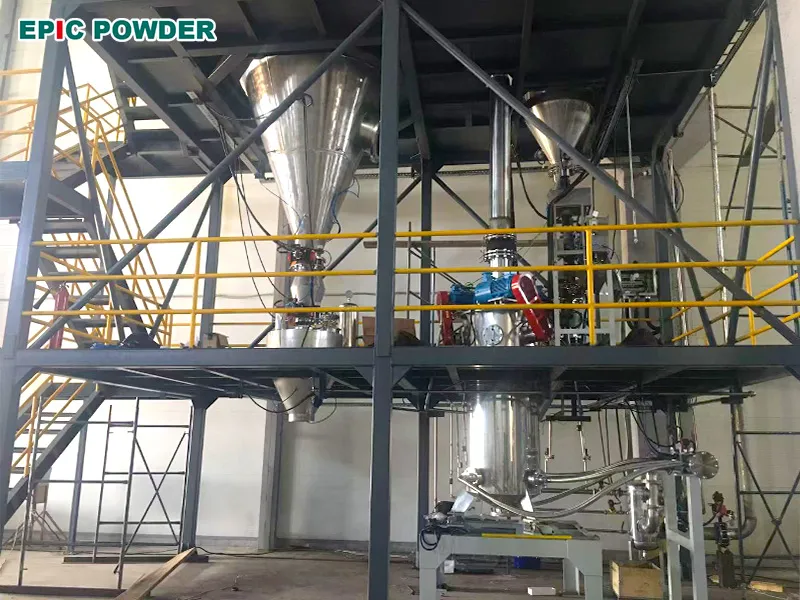
Utilize high-speed elastic fluids (e.g., compressed air) to cause strong collisions, friction, and shear between particles. Jet milling achieves extremely fine particle size with high purity and narrow size distribution. Commonly used in high-demand flue gas desulfurization and denitrification agents.
Mechanical Impact Ultrafine Mills:
Paired with high-precision turbine classifiers, they can stably produce micron-level powders at high throughput, primarily used in soil remediation and solid waste treatment.
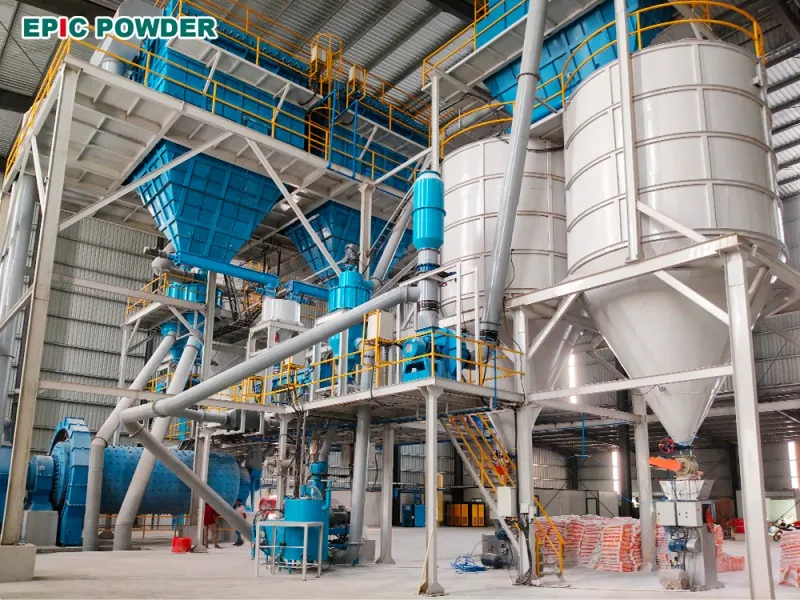
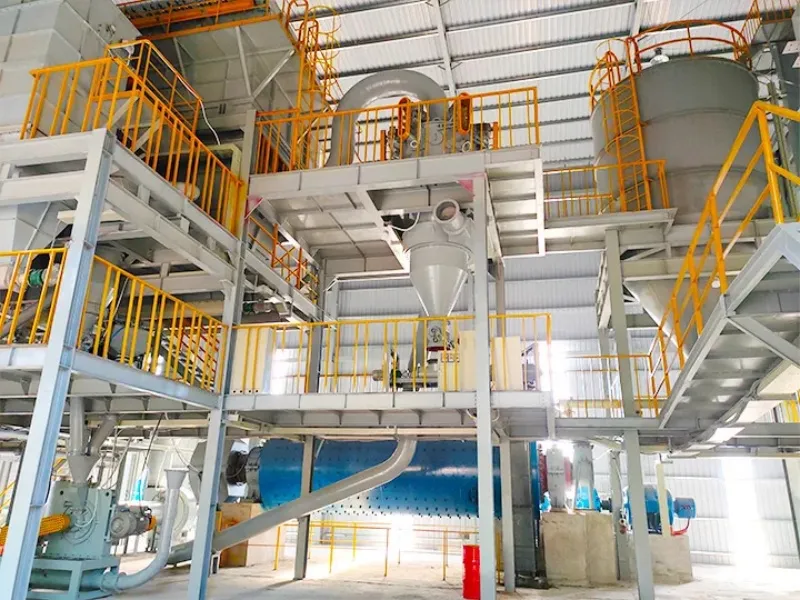
Ball Mill Classification Production Line:
The ball mill classification line grinds calcium carbonate to micron or submicron scale, coupled with high-precision classifiers to strictly control particle size. Features include:
High throughput: More efficient than wet stirred mills or jet mills for large-scale production, suitable for extensive environmental applications.
Controllable particle size: Classifiers continuously screen particles to maintain desired size, ensuring specific surface area and activity of ultrafine calcium carbonate.
Wide applications: Particularly suited for flue gas desulfurization, soil remediation, and solid waste treatment.
Operational stability: Consistent powder properties during continuous mechanical operation prevent efficiency loss caused by uneven particles.
Through this combination of advanced equipment, calcium carbonate ultrafine grinding allows the production of powders with optimized particle size, surface area, and reactivity for precise environmental applications.
Water Treatment: From Coarse to Fine
In water pollution control, ultrafine calcium carbonate acts as a water “purifier” and “buffer.”
- Regulating water hardness and preventing scaling
Micronized calcium carbonate, being slightly soluble in water, acts as a crystal nucleus, allowing calcium and magnesium ions to precipitate in controlled clusters. This reduces hard water effects and prevents calcite scaling in industrial circulating water and pipelines. - Precise pH adjustment
Acidic industrial wastewater (e.g., electroplating, pickling) is highly corrosive.
- Ordinary calcium carbonate: Settles quickly; reaction is incomplete, and surface passivation may occur.
- Ultrafine calcium carbonate: Due to tiny particle size, it remains highly suspended in water, offering massive contact area with acids. Reaction:
CaCO₃ + 2H⁺ → Ca²⁺ + H₂O + CO₂↑
It stabilizes wastewater pH without the overshoot risk of strong bases like NaOH.
- Removal of heavy metals, fluoride, and phosphate
Ultrafine calcium carbonate has strong surface adsorption and ion exchange capability:
- Heavy metals removal: Reacts with Pb²⁺, Cd²⁺, Cu²⁺, forming insoluble carbonates like PbCO₃.
- Fluoride and phosphate removal: Reacts efficiently to form CaF₂ and Ca₃(PO₄)₂ precipitates. Nano-scale activity enhances aggregation and sedimentation; some phosphate precipitates can be directly recycled as ecological fertilizer.
Flue Gas Treatment: Achieving >95% Desulfurization Efficiency
In power generation, steel sintering, and other industrial flue gas treatment, calcium carbonate particle fineness determines desulfurization success.
- Wet/Dry Flue Gas Desulfurization (FGD)
Calcium carbonate reacts with SO₂ to produce gypsum (CaSO₄·2H₂O).
- Fineness is decisive: Using coarse 250-mesh powder leads to rapid surface passivation by CaSO₄ shells, causing material waste and low efficiency.
- Ultrafine grinding contribution: Mechanical impact or ball mill classification reduces particle size to 325 mesh or even 1250 mesh (~10 μm), exponentially increasing surface area. Ultrafine powder reacts instantly in the desulfurization tower, achieving >95% efficiency.
By-product valorization: High-purity gypsum can be used for construction boards or cement retarders, achieving “waste-to-resource” recycling.
- Assisting Efficient Denitrification
In SCR or SNCR systems, ultrafine calcium carbonate adsorbs acidic gases (SO₃, glycolic acid, etc.), protecting costly catalysts from acid corrosion and maintaining system efficiency.
Soil Remediation: Nano-active Powders Immobilize Heavy Metals
Calcium carbonate serves as an economical soil amendment for polluted farmland and industrial sites.
- Neutralizing acidic soil
Excess fertilizer use and acid rain cause soil acidification, inhibiting crop growth. Ultrafine calcium carbonate dissolves rapidly, neutralizing acids and providing bioavailable calcium. - Heavy metal immobilization
For heavy metal-contaminated soil (e.g., cadmium-affected rice fields), soil replacement is costly. Ultrafine or nano calcium carbonate slurry rapidly reacts with free heavy metals in soil pore water, forming insoluble precipitates like CdCO₃ and PbCO₃, reducing mobility and bioavailability, preventing uptake by crops and entry into the food chain.
Solid Waste Treatment and Resource Utilization
Calcium carbonate acts as both a barrier and a resourceful “binder” in solid waste management.
- Landfill lining and cover
Ultrafine calcium carbonate mixed with bentonite forms a dense, adsorptive composite cover. It physically blocks water infiltration and chemically adsorbs acidic leachate, reducing groundwater pollution risk. - Industrial waste co-cementing
In utilizing fly ash, coal gangue, or metallurgical slag, ultrafine calcium carbonate serves as an activator and microfiller. It enables the production of green cement, eco-concrete, and roadbed materials, partially replacing costly clinker and reducing carbon emissions.
Degradable Plast
ics and Green Materials: Foundation of Eco-Packaging
Under plastic bans and carbon neutrality policies, degradable plastics (PLA, PBAT) and eco-composites are booming, with ultrafine calcium carbonate as an essential “golden partner.”
- Promoting complete plastic degradation
Surface-modified ultrafine or nano calcium carbonate evenly disperses in PLA, disrupting polymer crystallinity and increasing micro-fragility. Upon disposal, moisture penetrates easily; acidic conditions dissolve CaCO₃, creating micro-pores that accelerate microbial degradation and shorten the degradation cycle. - Cost reduction and resource efficiency
Pure bio-based degradable plastics are expensive. Ultrafine, surface-modified CaCO₃ is highly compatible with polymer matrices. Filling levels of 30–50% reduce resin consumption, cut costs, and improve rigidity and matte texture while decreasing petroleum or food-based raw material dependency.
Conclusion
In summary, calcium carbonate’s role in environmental protection has shifted from “coarse filler” to “finely functionalized material” driven by grinding technology. From nano-scale adsorption to multi-ton flue gas desulfurization, ultrafine grinding equipment directly determines its efficiency and potential ceiling.
In the future, as environmental standards and carbon reduction requirements tighten, ultrafine calcium carbonate combined with surface organic/inorganic modification will play an increasingly irreplaceable role in complex pollution control and fully degradable green materials.

“Thanks for reading. I hope my article helps. Please leave a comment down below. You may also contact Zelda online customer representative for any further inquiries.”
— Posted by Emily Chen