
In modern industry, calcium carbonate (CaCO3) has evolved beyond being a mere “extender” used to reduce costs. With the rapid advancement of the polymer materials industry, transforming inexpensive mineral resources into high-value active reinforcing fillers has become a focal point of research in material science. Ultra-fine grinding technology has fundamentally altered the destiny of calcium carbonate. By controlling particle size at the micro or even nano-scale, the physical and chemical surface properties of CaCO3 undergo a qualitative leap. This article explores how to comprehensively enhance the reinforcing performance of calcium carbonate in composite materials—such as rubber and plastics—through grinding process optimization, synergistic surface modification, and structural control.
I. Mechanism of Ultra-fine Grinding on Reinforcement Performance
The core of reinforcing performance lies in the interface bonding strength between the filler and the polymer matrix. Ultra-fine grinding affects reinforcement by altering the physical dimensions of the powder.
1. Size Effect and Surge in Specific Surface Area
As ultra-fine grinding progresses, the particle size decreases from the common 10-20μm to below 1μm or even to the nanometer level.
- Geometric Effect: The smaller the particle size, the higher the number of particles per unit volume. This means that at the same filling ratio, the contact area between the filler and the matrix increases exponentially.
- Specific Surface Area: Ultra-fine particles possess a significantly larger Specific Surface Area (SSA), providing more active sites for physical adsorption and chemical bonding.
2. Surface Energy and Active Sites
The grinding process is not just about size reduction; it is an injection of energy.
- Lattice Distortion: Intense mechanochemical action causes defects and distortions in the crystal lattice on the surface of calcium carbonate, exposing more unsaturated bonds.
- Increased Surface Energy: Ultra-fine powders have extremely high surface energy, making them highly reactive macroscopically, which facilitates reactions with coupling agents.
II. Key Process Paths for Enhancing Reinforcement
Achieving high-quality reinforcement is not as simple as “the finer, the better.” It requires a systematic optimization of the grinding process.
1. Selection and Control of Grinding Technology
Mainstream industrial ultra-fine grinding equipment includes stirred mills, jet mills, and ring roller mills.
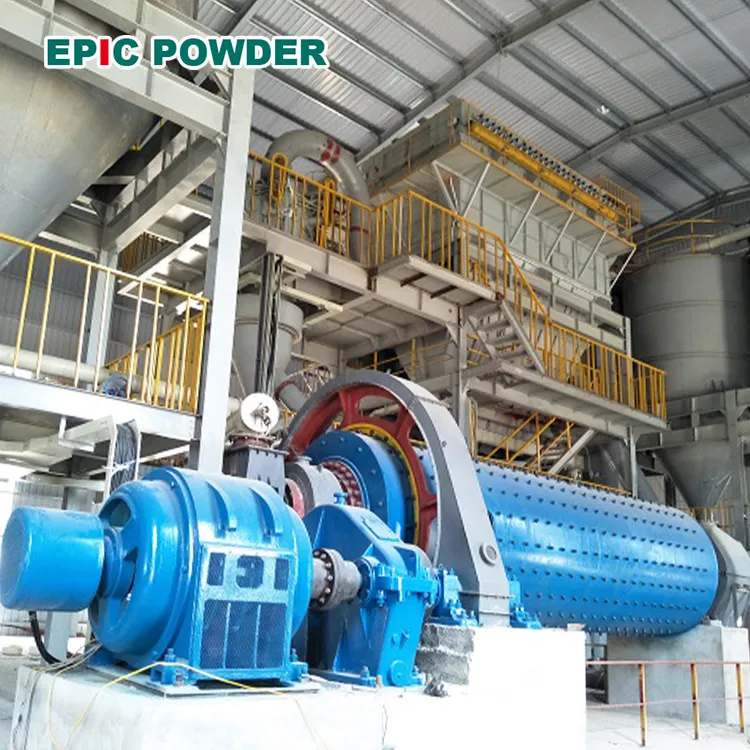
Ball milling is one of the most classic and widely utilized physical grinding processes for achieving the ultra-fine transition of calcium carbonate. It leverages the impact, compression, and frictional forces generated by grinding media (such as alumina or zirconia balls) as the mill cylinder rotates to pulverize the material.
- Mechanochemical Activation: Compared to other equipment, ball mills offer a longer residence time, which generates intense mechanochemical effects. This not only reduces the particle size of CaCO3 but also creates localized high-energy sites on the particle surfaces through high-energy collisions at the moment of fracture. This significantly enhances the reactivity between the powder and surface modifiers.
- Optimization of Media Gradation: To achieve an ultra-fine effect, multi-stage micro-bead grinding is typically employed. By decreasing the diameter of the grinding media, the collision frequency between the particles and the media per unit of time is significantly increased, effectively improving the precision of d50 and d97 indicators.
- Flexibility of Dry and Wet Ball Milling:
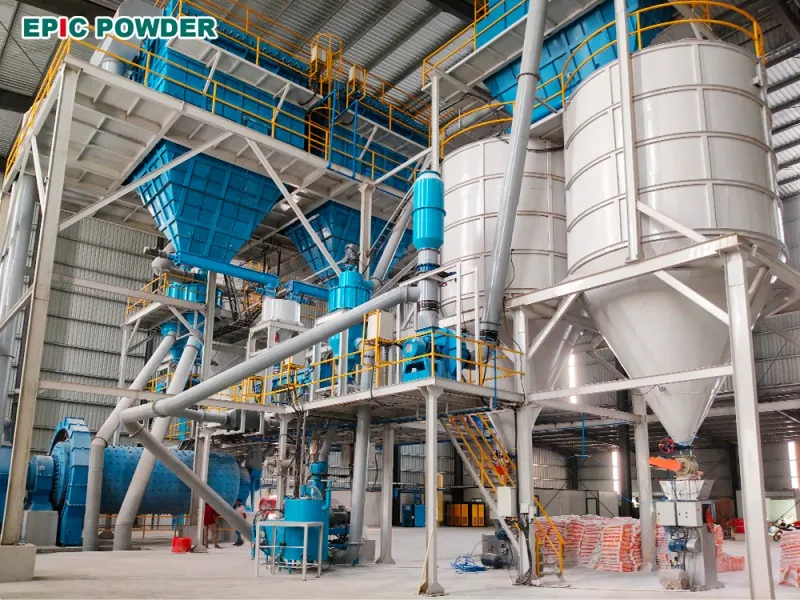
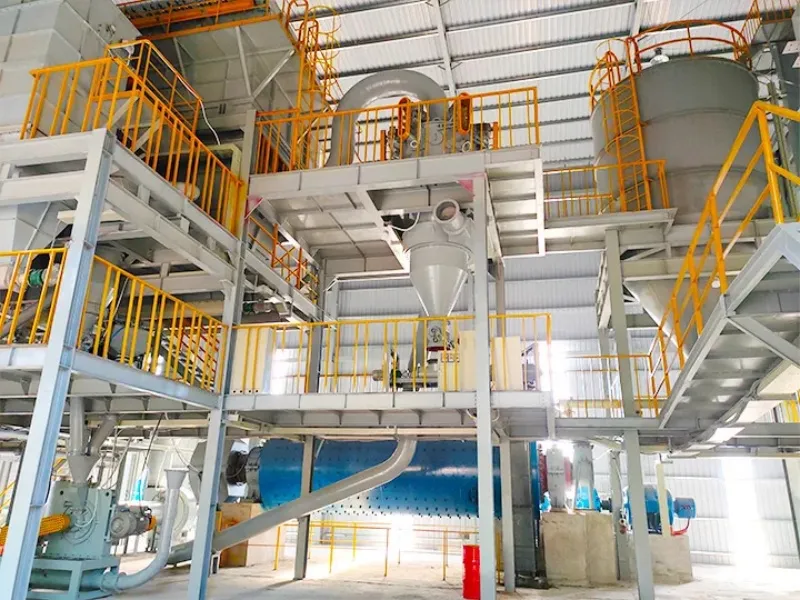
- Dry Ball Milling: Usually equipped with a classification system, it is suitable for large-scale industrial production.
- Wet Ball Milling: When used with dispersants, it effectively overcomes the electrostatic attraction of ultra-fine powders to prevent re-agglomeration. It is the preferred pathway for preparing high-performance, nano-scale reinforcing fillers.
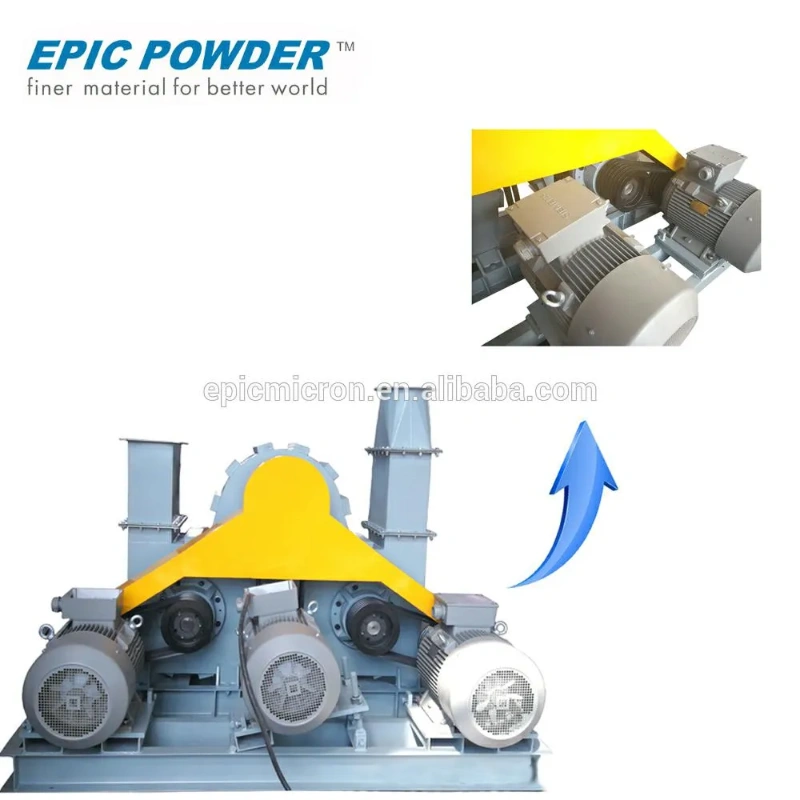
Jet Milling: Utilizes high-speed airflow to achieve collision-based grinding. It produces high-purity products with narrow distribution, ideal for heat-sensitive materials.
2. Narrowing Particle Size Distribution (PSD)
“Uniformity” is more critical than “fineness.” If the PSD is too wide, oversized particles become stress concentration points when the material is under load, leading to a decrease in tensile strength. Precise control through classification systems ensures the d97 index remains within the target range.
3. Micro-morphology Control
By adjusting the grinding environment, different crystalline forms of CaCO3 (such as calcite or aragonite) can be induced.
- Acicular or Flaky Morphology: Compared to spherical particles, morphologies with higher aspect ratios act as a “skeleton” support within the matrix, significantly improving the modulus.
III. Deep Integration of Grinding and Surface Modification
Due to high surface energy, ultra-fine CaCO3 is prone to secondary agglomeration. If this is not resolved, “ultra-fine” particles will behave as “large aggregates” in the matrix, ruining the reinforcement effect. Therefore, “in-situ modification during grinding” is the core technology.
1. In-situ Surface Modification
Modifiers (such as stearic acid, titanate, or aluminate coupling agents) are added directly during the ultra-fine grinding process.
- Mechanochemical Activation: The fresh surfaces created by grinding are highly active, allowing modifier molecules to anchor chemically and instantaneously.
- Monomolecular Layer Coating: Ideally, a dense organic coating forms on the CaCO3 surface, transforming the hydrophilic surface into a lipophilic one.
2. Selection of Modifiers and Their Mechanisms
| Modifier Type | Mechanism | Reinforcement Performance |
| Fatty Acids | Physical/Chemical adsorption | Improves flowability; moderate reinforcement |
| Coupling Agents | Forms a “bridge” between inorganic/organic | Significantly boosts tensile and tear strength |
| Polymer Coating | Forms a flexible buffer layer | Increases impact toughness |
IV. Reinforcement Strategies for Different Matrices
1. Applications in the Rubber Industry
Ultra-fine CaCO3 can partially replace carbon black or silica.
- Semi-reinforcing Effect: By controlling the particle size between 100-400nm, the hardness and wear resistance of the rubber compound are significantly improved.
- Reduced Heat Build-up: Compared to carbon black, ultra-fine CaCo3 filled rubber generates less heat, making it suitable for dynamic components.
2. Applications in the Plastics Industry (PP, PE)
- Toughening Effect: While traditional coarse powder reduces toughness, modified ultra-fine CaCO3 induces crazing and shear banding in the matrix, absorbing energy and achieving “simultaneous stiffening and toughening.”
- Thermal Stability: Uniformly distributed micro-particles restrict the movement of polymer chains, increasing the Heat Deflection Temperature (HDT).
V. Challenges and Solutions in Ultra-fine Grinding
1. Overcoming Agglomeration
Agglomeration is the “natural enemy” of ultra-fine powders.
- Dry-process Prevention: Add grinding aids to reduce Van der Waals forces and electrostatic attraction between particles.
- Equipment Optimization: Use high-shear mixers during compounding to ensure particles stay monodispersed before entering the matrix.
2. Energy Consumption and Cost Control
Ultra-fine grinding is energy-intensive.
- Efficiency Optimization: Implement multi-stage grinding (coarse then ultra-fine) to avoid energy waste.
- Intelligent Control: Use sensors to monitor concentration and temperature in the grinding chamber for optimal efficiency.
VI. Conclusion and Outlook
Enhancing the reinforcement performance of calcium carbonate through ultra-fine grinding is a systemic endeavor involving mechanical engineering, surface chemistry, and polymer science. The core logic can be summarized as: Fineness as the foundation, distribution as the key, and modification as the soul.
In the future, as nanotechnology matures, ultra-fine CaCO3 will trend toward:
- Functionalization: Moving beyond reinforcement to provide flame retardancy, antibacterial properties, and UV resistance.
- Customization: Tailoring specific morphologies and surface properties for downstream products like lightweight EVs or medical consumables.
- Green Manufacturing: Developing low-energy physical-chemical integrated equipment to reduce the carbon footprint.
In summary, ultra-fine grinding technology is transforming calcium carbonate from a “cheap filler” into an indispensable “reinforcing core,” creating high added value and opening broad prospects for the high-value utilization of non-metallic mineral resources.

“Thanks for reading. I hope my article helps. Please leave a comment down below. You may also contact Zelda online customer representative for any further inquiries.”
— Posted by Emily Chen