
Ground Calcium Carbonate, or GCC is one of the most important inorganic fillers in industries such as plastics, rubber, coatings, papermaking, building materials, and new energy materials. Currently, the raw materials for industrial production of heavy calcium carbonate powder primarily come from calcite and limestone.
When setting up a heavy calcium carbonate production line, many customers often ask:
Both calcite and limestone can be used to produce GCC. What exactly is the difference between them? Is the equipment configuration the same?
In fact, although both raw materials consist primarily of CaCO₃, there are significant differences between them in terms of mineral structure, grinding performance, equipment wear, product quality, and end-use applications. These differences not only determine the market positioning of Ground calcium carbonate powder but also directly impact the return on investment for the entire grinding production line.
Differences in Raw Materials: The Foundation of Ground Calcium Carbonate Powder Quality
Calcite—The Premium Raw Material for High-End Ground Calcium Carbonate
Calcite is a naturally occurring crystalline carbonate mineral characterized by a well-developed crystal structure and high purity.
Typical specifications:
- CaCO₃ content: 98%–99% or higher
- Whiteness: 90–96
- Low iron content
- Few impurities
- Pure, uniform white color
Due to its well-developed crystals, calcite exhibits excellent cleavage properties, making it easier to fracture along crystal planes during the grinding process. This results in heavy calcium carbonate products with finer particle sizes and more uniform particle shapes.
Limestone—An Abundant, Fundamental Raw Material
Limestone is a sedimentary rock composed of calcite, dolomite, quartz, clay minerals, and other components.
Typical specifications:
- CaCO₃ content: 90%–96%
- Whiteness: 80–90
- High impurity content
- Elevated iron and silicon content
- Inhomogeneous structure
Due to the presence of hard impurities such as quartz in the ore, the grinding of limestone is prone to wear, which also affects the whiteness and purity of the final product.
Therefore, in terms of raw material quality:
Calcite is more suitable for producing high-end, ultra-fine heavy calcium carbonate powder. Limestone is more suitable for producing standard industrial-grade heavy calcium carbonate powder.
Differences in Grinding Performance: A Direct Factor in Equipment Selection
For ground calcium carbonate producers, the ease of grinding the ore is often more important than its price.
Calcite Offers Clear Advantages in Grinding
Calcite has a Mohs hardness of approximately 3.
Characteristics: Easy to crush, easy to grind, low energy consumption, easy to control particle size, and minimal equipment wear.
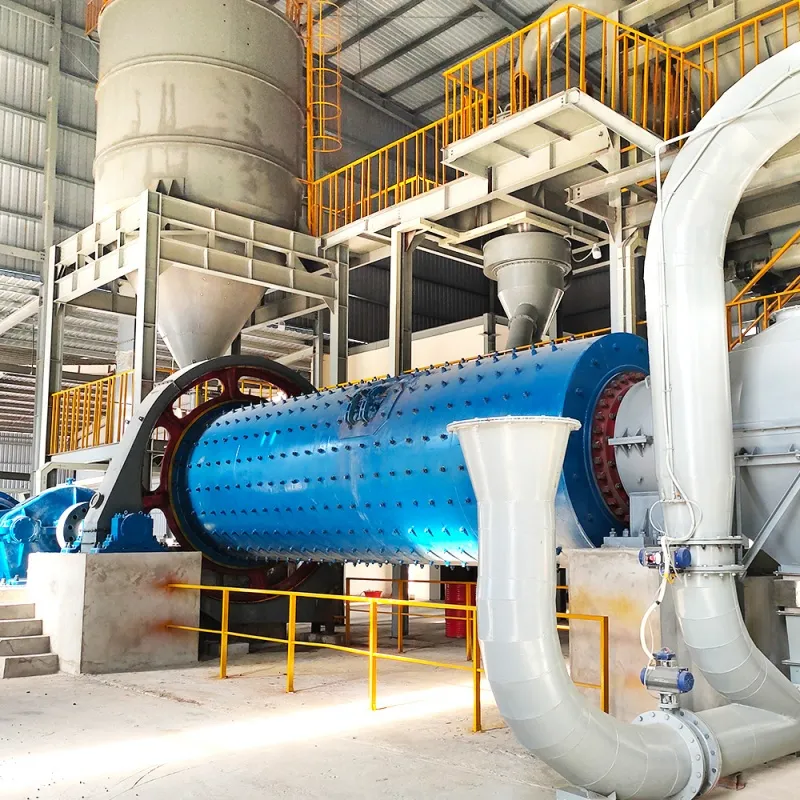
Recommended Equipment: Raymond mills, ring roller mills, ball mill and classifier production lines, and vertical mill systems.
All of these can achieve high output and low energy consumption per unit.
Calcite demonstrates a distinct advantage, particularly in the production of ultra-fine heavy calcium carbonate with mesh sizes of 800, 1250, 1500, and 2500.
Limestone Is More Difficult to Grind
The distribution of impurities within limestone is complex.
- Common issues include: Quartz particles causing equipment wear, uneven hardness distribution, significant fluctuations in product particle size, and reduced classification efficiency.
- Consequently, when producing products of the same fineness: Power consumption is higher, steel ball consumption is greater, and wear on grinding rollers and rings is accelerated, leading to increased maintenance costs.
- For large-scale limestone heavy calcium carbonate projects, it is typically necessary to incorporate: Iron removal systems, pre-screening systems, and multi-stage classification systems to ensure final product quality.
Differences in Equipment Configuration: Different Solutions for Different Raw Materials
Calcite Heavy Calcium Carbonate Production Line
For high-whiteness calcite ore, a common configuration is:
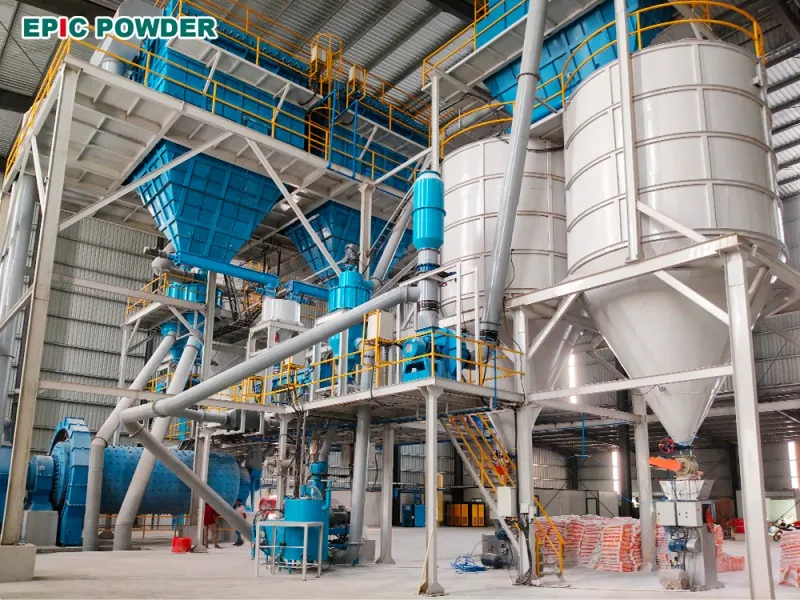
Primary crusher → Elevator → Storage silo → Ring roller mill/ball mill → Air classifier → Collection system.
- Production fineness range: D97 10 μm–45 μm.
- Widely applicable for: plastic masterbatches, PVC pipes, cable compounds, coatings, and papermaking.
- When product requirements reach: 1500 mesh, 2000 mesh, or 2500 mesh, the following configuration is typically used: Ball mill + air classifier production line.
This system offers advantages such as a narrow particle size distribution, minimal loss of whiteness, and high product value-added.
Limestone Heavy Calcium Carbonate Production Line
Due to the high impurity content in the raw material, the production line typically includes a pre-treatment stage:
Crusher → Vibrating Screen → Magnetic Separator → Raymond Mill/Vertical Mill → Classification System → Dust Collection System
- Mainly produces: 200 mesh, 325 mesh, 400 mesh, 600 mesh, and other standard heavy calcium carbonate products.
- Applications: Dry-mix mortar, concrete, putty powder, cement products, and general plastic fillers.
For limestone, an excessive pursuit of ultra-fine grinding often leads to a sharp increase in energy consumption; therefore, economic benefits must be comprehensively considered.
Product Quality Differences: Determining Final Market Positioning
Calcite Heavy Calcium Carbonate Powder
- Features: High whiteness, high purity, uniform particle size, good dispersibility, low oil absorption, and good chemical stability.
- Main Applications: High-end coatings, automotive plastics, PVC profiles, engineered stone, cable compounds, biodegradable materials, halogen-free flame-retardant materials, and food and pharmaceutical-grade products.
In recent years, with the development of new energy and eco-friendly materials, demand for high-purity, ultra-fine calcite calcium carbonate has continued to grow.
Limestone Calcium Carbonate Powder
- Characteristics: Low cost, abundant resources, and large-scale production.
- Main Applications: Building materials, general-purpose plastics, rubber fillers, feed additives, low-end papermaking, and the cement industry.
Its core competitiveness lies in cost-effectiveness rather than high performance.
How to Select the Right Grinding Equipment?
If the target products are:
- Ultra-fine heavy calcium carbonate (800 mesh or finer)
- High-filler PVC materials
- High-end coatings
- New energy materials
Recommended options:
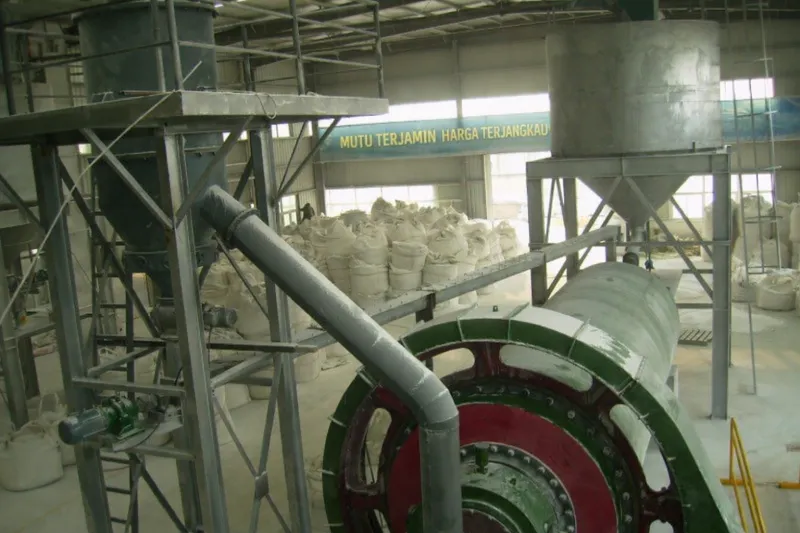
High-purity calcite + ball mill and classification production line or ultra-fine ring roller mill system
If the target products are:
- Construction-grade heavy calcium carbonate
- Putty powder
- Dry-mix mortar
- General-purpose plastic fillers
Recommended options:
Limestone + Raymond mill or vertical mill system.
This approach not only meets product requirements but also helps control investment costs and operating expenses.
Conclusion
Although both calcite and limestone can be used to produce heavy calcium carbonate, the differences between them extend far beyond the ores themselves. These differences are more evident in the entire grinding and processing system. Calcite offers advantages such as high purity, high whiteness, and ease of grinding. It is the raw material of choice for producing high-end, ultra-fine heavy calcium carbonate powder. Limestone, on the other hand, is abundant and low-cost, making it more suitable for large-scale applications in the building materials and basic industries sectors.
For manufacturers of heavy calcium carbonate, selecting raw materials must be accompanied by the selection of appropriate grinding equipment and classification processes. Only by achieving a precise alignment of “ore characteristics, equipment configuration, and market positioning” can companies achieve optimal product quality and the highest return on investment. This ensures long-term, stable profitability for heavy calcium carbonate projects.

“Thanks for reading. I hope my article helps. Please leave a comment down below. You may also contact Zelda online customer representative for any further inquiries.”
— Posted by Emily Chen