
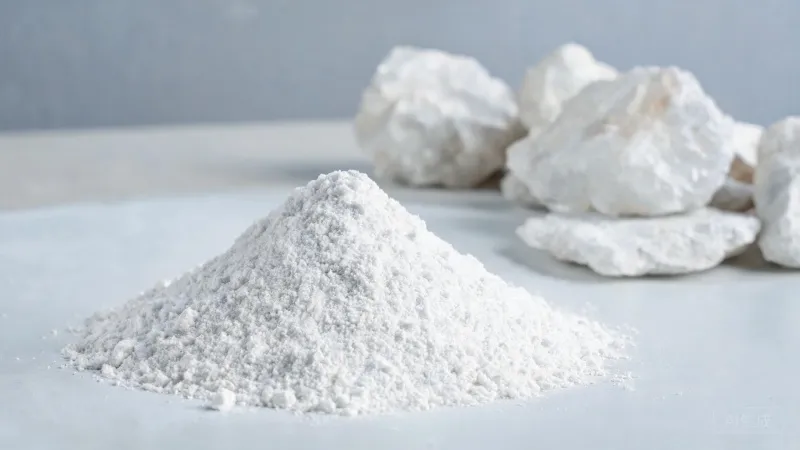
In every corner of industrial production and daily life, heavy calcium carbonate powder plays an indispensable role. From plastic pipes and architectural coatings to toothpaste and food additives, this white powder derived from natural calcite is everywhere. It has become a must have material across papermaking, construction, and daily chemical industries. Yet between raw ore and usable powder lies a critical bridge: grinding equipment. This machinery directly determines the quality, fineness, and adaptability of the final product. Without complex chemical synthesis, the powder achieves precise adaptation to diverse industrial needs through physical grinding and classification alone. With its high cost-effectiveness and versatility, it serves as an invisible cornerstone supporting efficient operations across industries.
1. Dual Empowerment: Natural Advantages and Grinding Technology
Heavy calcium carbonate powder has become an industry essential for two key reasons: its natural, eco-friendly properties and its outstanding cost-effectiveness. Grinding equipment is the critical link that transforms this potential from raw ore into usable powder.
Made from natural calcite and limestone, heavy calcium carbonate powder undergoes purely physical processes—including crushing, grinding, and classification—with no chemical additives used at any stage. This preserves the mineral’s non-toxic, odorless, and chemically stable properties, perfectly aligning with today’s green and low-carbon trends.
Within this workflow, the choice of grinding equipment directly determines the product’s particle size distribution, whiteness, and quality stability. Every step shapes the final performance—from jaw crushers for coarse crushing and impact crushers for fine crushing, to precision grinding mills and dynamic classifiers for screening.
Core Grinding Equipment System
The heart of heavy calcium carbonate production is the “grinding + classification” closed-circuit system. Based on target fineness, the industry has developed a mature equipment hierarchy: 80–400 mesh coarse powder uses Raymond mills. 400–1500 mesh fine powder suits ring roller mills. 800–2500 mesh ultra-fine powder relies on ultra-fine vertical mills or ball mill + classifier systems. After grinding, the powder enters a dynamic classifier, where a variable frequency impeller speed filters out qualified products. Coarse particles are returned to the mill for regrinding—forming a closed-loop production process. This ensures that each particle precisely meets specifications.
Compared to other filler materials, heavy calcium carbonate benefits from widely distributed raw materials and low mining/processing costs. The continuous iteration of grinding equipment — from traditional Raymond mills to ultra-fine vertical mills that integrate grinding, classification, and conveying. It has significantly boosted production capacity and reduced unit energy consumption. This allows downstream products to drastically cut production costs by incorporating heavy calcium carbonate without compromising core performance. This “low cost, high adaptability” characteristic makes it the preferred choice for cost control and efficiency improvement across industries.
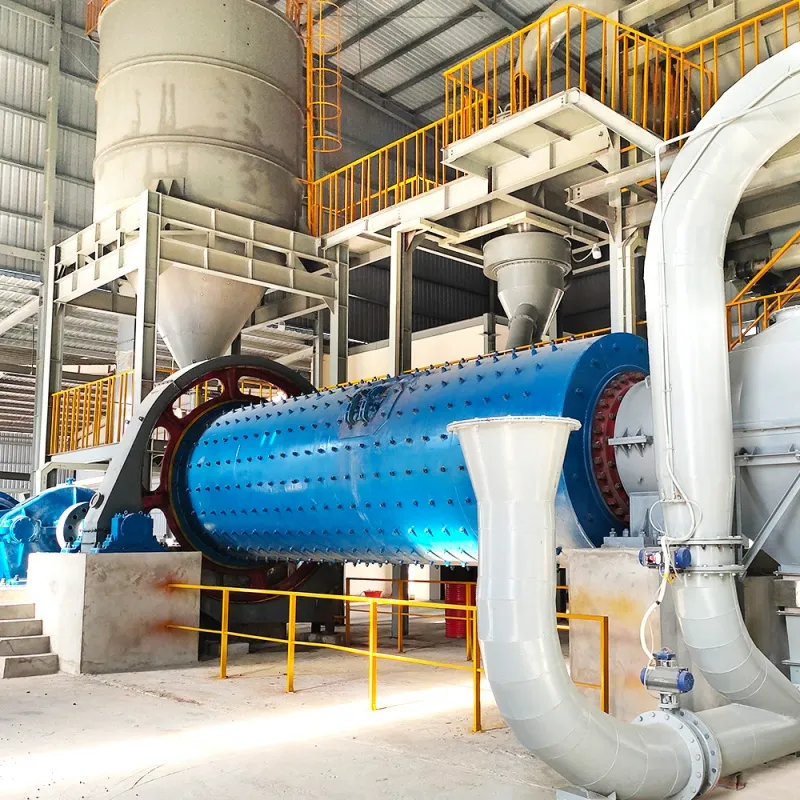
Industrial grinding equipment — the vertical roller mill is central to producing ultra-fine heavy calcium carbonate powder
2. Grinding Equipment Precisely Matches Industry-Specific Needs
The industrial demand for heavy calcium carbonate stems from its ability to precisely address core pain points across industries. And the prerequisite for this is that grinding equipment can output powders of varying fineness and specifications on demand. It provides the foundation for product quality enhancement, efficiency improvement, and cost reduction. It making it an irreplaceable raw material in industrial production.
2.1 Plastics Industry: Dual Drive of Cost and Performance
The plastics industry is the largest consumer of heavy calcium carbonate powder. This is primarily driven by the dual demands for cost control and performance improvement. In plastics production, resin raw materials are expensive; adding an appropriate amount of heavy calcium carbonate can effectively reduce resin usage and lower production costs. Simultaneously, it can improve the toughness, hardness, and dimensional stability of plastic products. It makes plastic pipes, appliance housings, and packaging films more durable and aesthetically pleasing.
Equipment Matching: Raymond Mill & Ring Roller Mill
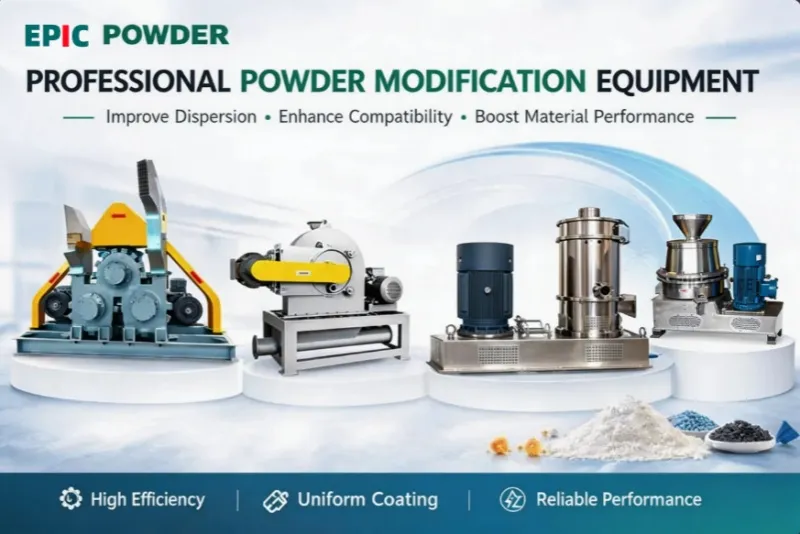
Plastic products typically require heavy calcium carbonate fineness between 400–1250 mesh, with some high-end engineering plastics demanding ultra-fine powder above 1500 mesh. Products around 400 mesh can be produced using Raymond mills with classification systems — low investment and proven technology. For fine powders of 800-1250 mesh, ring roller mills or ultrafine vertical mills are typically used to obtain powders with more uniform particle size. This is beneficial for their dispersion and compatibility in resins. Furthermore, to address compatibility issues caused by the polarity difference between heavy calcium carbonate and resins, a dry surface modification process can be employed. This involves coatings to powder particles post-grinding using modification equipment — can significantly increase addition ratios and improve product quality.
2.2 Paper Industry: Quality Enhancement and Energy Conservation
The paper industry’s demand focuses on quality improvement and energy saving. In paper production, heavy calcium carbonate serves as a core filler that increases paper whiteness, opacity, and smoothness while improving printability. It also reduces pulp consumption, conserving forest resources and lowering papermaking costs. Whether office paper, packaging paper, or specialty paper, all rely on heavy calcium carbonate — with its dosage directly linked to paper quality.
Equipment Matching: Ultra-Fine Vertical Mill & Wet Grinding
The paper industry has extremely high requirements for the whiteness and fineness of heavy calcium carbonate, typically requiring ultrafine powder of 800-2500 mesh. Some high-grade coated papers even require over 90% of the particles to be smaller than 2μm. Dry production mainly uses ultrafine vertical mills. A single machine can produce tens of tons per hour, integrating grinding and grading functions. It can produce products with high whiteness and narrow particle size distribution. For higher quality coated-grade heavy calcium carbonate, a wet grinding process is used. The ore is mixed with water to form a slurry, which is then ground using a stirred mill. This produces powder with higher sphericity and more uniform particle size to meet the coating requirements of high-speed paper machines.
2.3 Construction Industry: Performance and Cost Optimization
The construction industry’s demand arises from the dual optimization of building material performance and cost. In concrete, dry-mix mortar, tiles, and putty powder, adding heavy calcium carbonate improves material fluidity and workability while enhancing strength, durability, and texture. It also significantly reduces raw material costs. From building construction to road paving, heavy calcium carbonate is ubiquitous.
Equipment Matching: Raymond Mill for Economic Efficiency
The construction industry has relatively broad requirements for material fineness, typically ranging from 200 to 400 mesh. It is a typical field of “large-scale, wide-application.” Raymond mills, with their simple structure, low investment, and comprehensive functions, are the preferred equipment for the production of construction-grade heavy calcium carbonate. Their vertical structure integrates crushing, conveying, grinding, and collection functions, requiring little floor space and offering simple operation and maintenance. They are an ideal choice for large-scale, low-cost production.
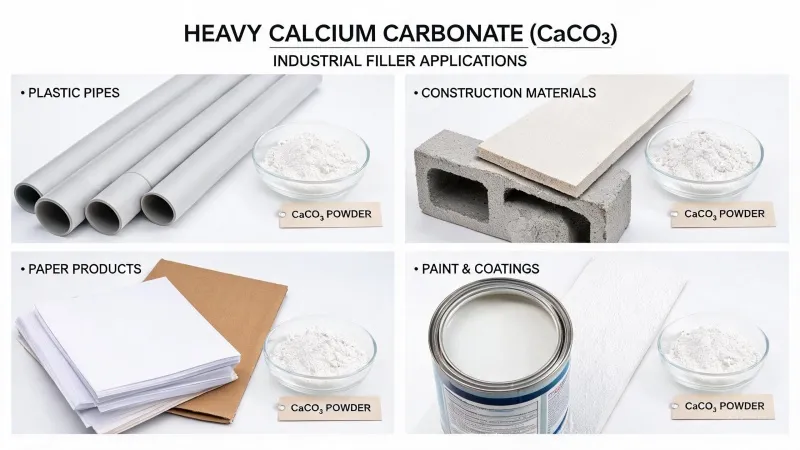
Versatile applications of heavy calcium carbonate powder across plastics, construction, paper, and coatings industries
2.4 Rubber & Coatings Industry: Functionality and Economy
The rubber and coatings industries also rely on heavy calcium carbonate for functional support. In rubber products, it enhances the wear resistance and toughness of tires, sealing rings, and other items, delaying aging and extending service life. In coatings, it strengthens the hiding power, washability, and leveling of wall paint and anti-corrosion paint, creating more uniform and durable coatings.
Equipment Matching: Ball Mill + Classifier System & Surface Modification
The rubber and coatings industries require a wide range of fineness from heavy calcium carbonate, from 400 to 2500 mesh. A ball mill combined with a classification system can produce products of 600-6500 mesh, with adjustable particle size. Multiple classifiers can be connected in parallel to a single ball mill to simultaneously produce products of various particle size grades, flexibly meeting different formulation requirements. High-end coating-grade heavy calcium carbonate powder also requires surface modification treatment. Dry modification is suitable for ordinary coatings, while wet modification, due to its more uniform coating effect, is suitable for high-grade anti-corrosion coatings and functional coatings.
3. Daily Life and Niche Application Demand
Beyond the industrial sector, the demands of daily life and other niche markets have further solidified the “essential” status of heavy calcium carbonate. These applications place higher demands on the purity, fineness, and safety of the powder. Technological advancements in grinding equipment are a powerful guarantee for meeting these stringent standards.
In daily life, food-grade heavy calcium carbonate powder can serve as a calcium supplement and anti-caking agent in flour and calcium tablets — safe, non-toxic, and highly adaptable. In toothpaste, it is a gentle abrasive cleaning ingredient that cleans teeth without damaging tooth enamel. In cosmetics, it optimizes product texture, making skincare and makeup products more refined and smooth. These applications often require ultra-fine powder above 1250 mesh or even nano-scale particles. Ultra-fine vertical mills and wet stirred mills are the core equipment for producing such high-end powder, their precision grinding and classification capabilities ensuring particles are sufficiently fine and uniformly distributed to meet the strict safety and refinement requirements of the food and daily chemical industries.
Additionally, environmental desulfurization, feed calcium supplementation, and ink filling applications also have rigid demand for heavy calcium carbonate. In environmental protection, heavy calcium carbonate is used for flue gas desulfurization in coal-fired power plants, absorbing sulfur dioxide from industrial exhaust to support energy conservation and emission reduction — this application requires moderate fineness (200–325 mesh) that Raymond mills can easily provide. In the feed industry, it serves as a natural calcium source additive for livestock growth. In the ink industry, it functions as a filler improving ink leveling and hiding power, typically requiring 800+ mesh ultra-fine powder with surface modification to ensure good dispersion in ink bases.
4. The “High Adaptability” Advantage Empowered by Grinding Equipment
The essential nature of heavy calcium carbonate also stems from its strong adaptability and flexible application. Behind this adaptability lies the “customization” capability provided by the grinding equipment system.
| Target Fineness | Core Equipment | Typical Applications | Process Features |
|---|---|---|---|
| 80–400 mesh | Raymond Mill | Construction materials, putty powder, desulfurization agents | Low investment, simple process, high capacity |
| 400–1500 mesh | Ring Roller Mill | Plastic fillers, general coatings, rubber | Multi-stage grinding, lower energy consumption |
| 800–2500 mesh | Ultra-Fine Vertical Mill | Paper fillers, high-end coatings, cosmetics | Integrated, high capacity, narrow particle distribution |
| 600–6500 mesh | Ball Mill + Classifier | Multi-grade parallel production, specialty coated paper | Flexible adjustment, simultaneous multi-product output |
| 1250+ mesh (wet) | Stirred Mill (Wet) | Food grade, high-end coated paper, nano materials | Extremely fine particles, high sphericity, narrow distribution |
From tens of mesh to thousands of mesh, from standard heavy calcium carbonate to surface-modified products, from dry grinding to wet ultrafine grinding—this complete grinding system can precisely match the personalized needs of various industries. It can be put into use immediately without complex modifications. The dry process has a shorter flow rate and lower cost, accounting for approximately 70% of total capacity. It is suitable for the production of plastic masterbatches and general coatings. Wet processes, with narrower particle size distributions and higher sphericity, achieve quality breakthroughs in high-end coated paper and functional films. This equipment flexibility — “dry and wet parallel, coarse and fine available, modification optional” — is the deeper reason why heavy calcium carbonate cannot be easily replaced.
5. Conclusion: The “Essential Loop” of Grinding Equipment and Heavy Calcium Carbonate
Throughout the industry’s development, the essence of heavy calcium carbonate lies in the perfect match between its natural advantages, functional value, and industry needs. Grinding equipment is the key link connecting ore and downstream applications, transforming “resource endowment” into “essential products.” It solves the core pain points of cost reduction and efficiency improvement in various industries. Simultaneously, equipment upgrades align with environmental trends (for example, pulse-jet dust collectors can achieve dust removal rates exceeding 99.9%). From Raymond mills to ultrafine vertical mills, from dry to wet processes, a complete equipment system offers an extremely wide range of applications. It is difficult to replace with other materials.
The characteristics of “low cost, multifunctionality, high adaptability, and high environmental friendliness” have made heavy calcium carbonate a key material in many industries. Supporting all of this is the grinding equipment system. From coarse crushing to ultrafine grinding, from dry to wet methods, from basic pulverization to surface modification, it transforms natural minerals into fine powders. Silently supporting the efficient operation of industrial production and daily life, it has become an indispensable “practical champion.”

“Thanks for reading. I hope my article helps. Please leave a comment down below. You may also contact Zelda online customer representative for any further inquiries.”
— Posted by Emily Chen