
Due to their unique morphology, high specific surface area, and large porosity, porous spherical calcium carbonate particles show distinct advantages in fields such as adsorption materials, and biocomposites. They have become one of the hot topics in current CaCO3 research.
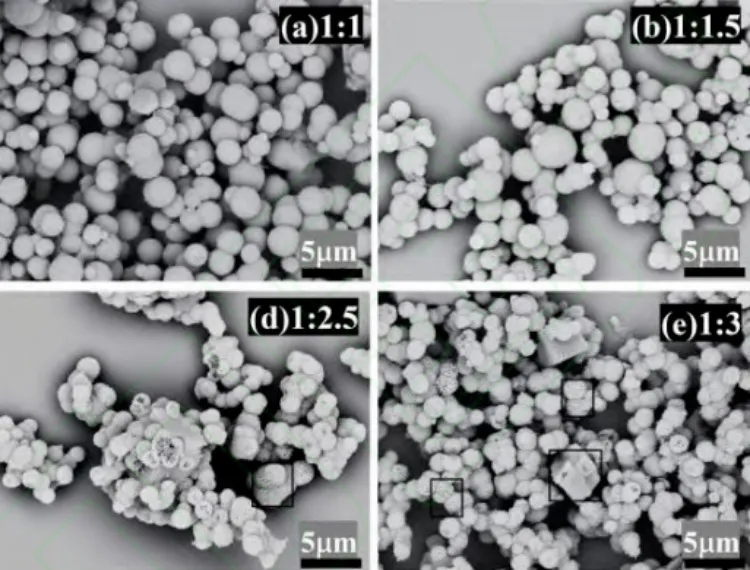
Food-grade Micro-nano Porous Spherical Vaterite Calcium Carbonate
Using waste mussel shells as the calcium source, micro-nano porous spherical vaterite calcium carbonate (CaCO3) was prepared by a metathesis method. The resulting product is mainly vaterite in crystal form, accounting for 92.35%. The morphology is predominantly porous and spherical. The spherical particles have an average particle size of 1.917 μm, a median particle size (D50) of 3.503 μm, and an agglomeration index of 1.83. The product reaches a CaCO3 purity of 98.53%, with Mg2+ content below 1%. It meets the national standard requirements for food-grade calcium carbonate additives.
Porous Calcium-based Aerogel Sphere Slow-release Fertilizer
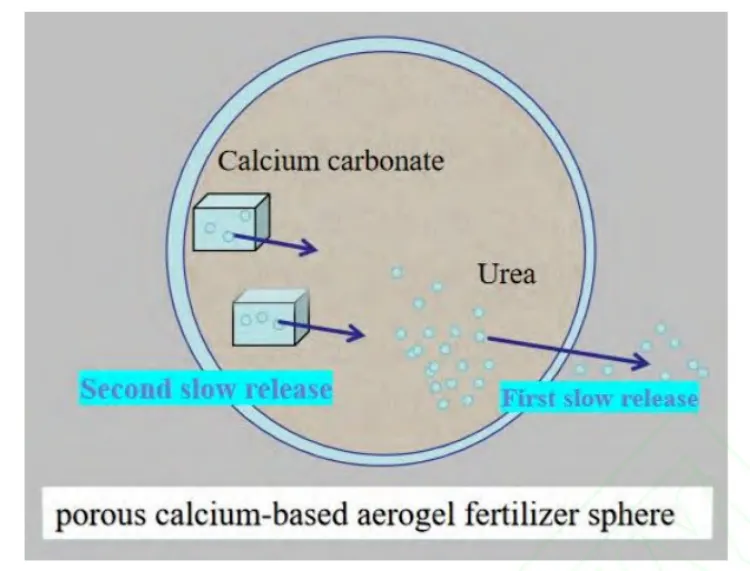
Traditional fertilizers suffer from low utilization rates, while existing slow-release options remain costly. To address these limitations, Shou Anfa et al. synthesized a porous calcium-based aerogel sphere slow-release fertilizer using a sol-gel method. This approach successfully combines the mesoporous structure of porous calcium carbonate (CaCO3) with the three-dimensional network of aerogels. The nutrient slow-release performance was systematically evaluated by a soil column leaching method.
The experiments show that the prepared porous calcium carbonate has an average pore size of 16.835 nm. It exhibits a mesoporous structure with a calcite crystal form. Soil column leaching tests showed that the nutrient release within 24 hours was 17.8%–20.5%, significantly lower than the 22.5%–29.5% of the hydrogel sphere control group. At 28 days, the cumulative release reached 62.2%–73%, outperforming hydrogel spheres (49.5%–66.5%) in long-term effectiveness. It also effectively suppressed the initial nutrient burst. Compared with the cumulative leaching rate (about 8.8%) of urea loaded on blank porous calcium carbonate, the material was confirmed to have a secondary slow-release function.
Composite Molecular Sieve
Using nano-CaCO3 as a macropore template, a macropore/micropore composite titanium silicalite molecular sieve TS-1, with a macropore size of about 60 nm, was prepared by dry gel conversion and hydrothermal synthesis. The effects of CaCO3 dosage, template agent amount, and water content on the pore size, titanium species state, and catalytic phenol hydroxylation performance were systematically studied.
The study found that CaCO3 not only constructs macropores but also changes the coordination form of titanium species. Thanks to reduced diffusion resistance and the inhibition of anatase TiO2 formation, the macropore/micropore composite TS-1 exhibited excellent catalytic activity in phenol hydroxylation.
Porous Calcium Carbonate Biocomposite Material
Based on porous calcium carbonate microspheres (CaCO3) prepared by co-precipitation, an azoxystrobin controlled-release system with dual pH responsiveness (Az/CaCO3@TA-Cu) was constructed, with a drug loading of 16.42%. Simulated release studies showed that Az/CaCO3@TA-Cu has good pH-controlled release performance. The cumulative release rate in phosphate buffer at pH 7 for 96 hours was 36.99%. At pH 5 and pH 9, the cumulative release rates were 74.32% and 58.79%, respectively.
Mycelial growth rate experiments showed that Az/CaCO3@TA-Cu has a strong inhibitory effect on Fusarium graminearum. Its median inhibitory concentration was 6.58 and 3.28 times that of pure Az and Az/CaCO3, respectively. In addition, statistics on wheat germination and zebrafish survival showed that Az/CaCO3@TA-Cu offers better biosafety than both Az/CaCO3 and pure Az.
Porous Calcium Carbonate Lead Wastewater Adsorption Material
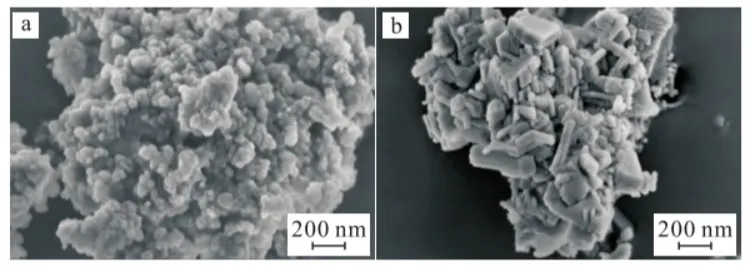
Using limestone as raw material, limestone-based porous calcium carbonate (CaCO3) was prepared by a carbonization + template method. It was used for treating simulated lead-containing (Pb2+) wastewater. The results showed that the optimal conditions were as follows: a porous CaCO3 dosage of 0.18 g, a Pb2+ initial concentration of 1500 mg·L-1, an adsorption temperature of 40 °C, and an adsorption time of 120 min. Under these conditions, the Pb2+ adsorption rate in 100 mL of lead nitrate solution reached 99.71%. The adsorption capacity was 815.56 mg·g-1. After ultrasonic regeneration, the adsorption rate and capacity were 77.75% and 636.42 mg·g-1, respectively.
Porous Calcium Calcium-based Carbon Dioxide Adsorption Material
Using KCl, NaCl, and LiCl as salt templates, CaCO3 materials were prepared, and their CO2 adsorption performance was systematically evaluated. The CO2 adsorption capacities of CaCO3-KCl, CaCO3-NaCl, and CaCO3-LiCl were 0.39, 0.32, and 0.31 mmol/g, respectively. After 10 breakthrough cycle tests, the CO2 adsorption capacity of CaCO3-KCl decreased by only 7%. It also showed good separation performance for CO2/N2.
Superhydrophobic Surface Material
Superhydrophobic materials are often referred to as biomimetic lotus leaf surface materials. They are defined by a stable surface contact angle greater than 150° and a rolling contact angle less than 10°.
To fabricate such a surface, researchers utilized a custom porous calcium carbonate (CaCO3) microsphere layer as a template. A polyethylene superhydrophobic surface was then successfully produced through hot pressing followed by acid etching. Compared with traditional templates, porous calcium carbonate offers clear advantages in template durability, repeatability, ease of preparation, and template area. The wettability of the surface was evaluated by measuring the static water contact angle (WCA). The results were significantly better than those of ordinary smooth surfaces. When in contact with rainwater, it showed strong resistance to water impact.
From Food to Functional Surfaces — The Role of Epic Powder Crushing Equipment
Across all these applications, the value of porous calcium carbonate depends on one thing: precise control of particle size, morphology, and crystal form. This is exactly where Epic Powder’s crushing and grinding equipment plays a decisive role. Epic Powder offers a complete processing chain for calcium carbonate (CaCO3) production, converting raw shell and limestone into high-value functional powders. Its equipment lineup includes ball mills, jet mills, air classifier mills, and standalone air classifiers.
These advanced grinding and classification systems enable the production of micro- and nano-grade CaCO3. The resulting particles feature narrow size distributions and uniform morphology. This provides the reliable feedstock necessary for vaterite phase control, mesopore formation, and composite material loading. For manufacturers transforming ordinary calcium carbonate into high-performance porous materials, Epic Powder delivers the critical equipment to turn technical possibility into full-scale production.

“Thanks for reading. I hope my article helps. Please leave a comment down below. You may also contact Zelda online customer representative for any further inquiries.”
— Posted by Emily Chen