
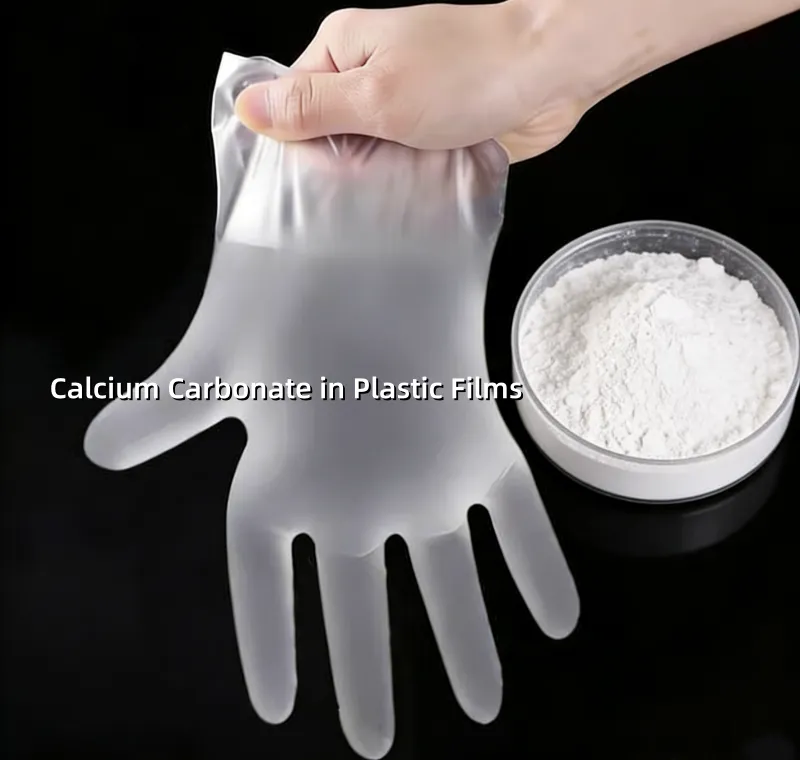
Calcium carbonate (CaCO3) is a widely used inorganic filler in plastic films due to its low cost, bright white color, and excellent overall performance. Compounding Caco3 into filler masterbatches simplifies processing, improves mixing efficiency, boosts production speed, and minimizes airborne dust emissions.
1. Application Characteristics and Processing Requirements
Using calcium carbonate as a polymer filler enhances dimensional stability, stiffness, and heat resistance while reducing production costs. However, improper use or unrefined particle size can increase overall material density and degrade mechanical properties (such as tensile strength, impact resistance, and toughness) as well as optical clarity.
- Surface Hydrophilicity: Calcium carbonate particles naturally contain surface hydroxyl groups (OH), giving them a hydrophilic, oleophobic character and slight alkalinity. This results in poor affinity with organic polymers, leading to particle agglomeration and interface defects within the matrix.
- Ultrafine Processing & Modification: To mitigate these defects and allow higher loading levels, raw calcium carbonate must undergo ultrafine pulverization (down to micro- or nano-scale) and surface modification to make the particles hydrophobic and easily dispersible.
2. Core Pulverization & Modification Equipment for Calcium Carbonate
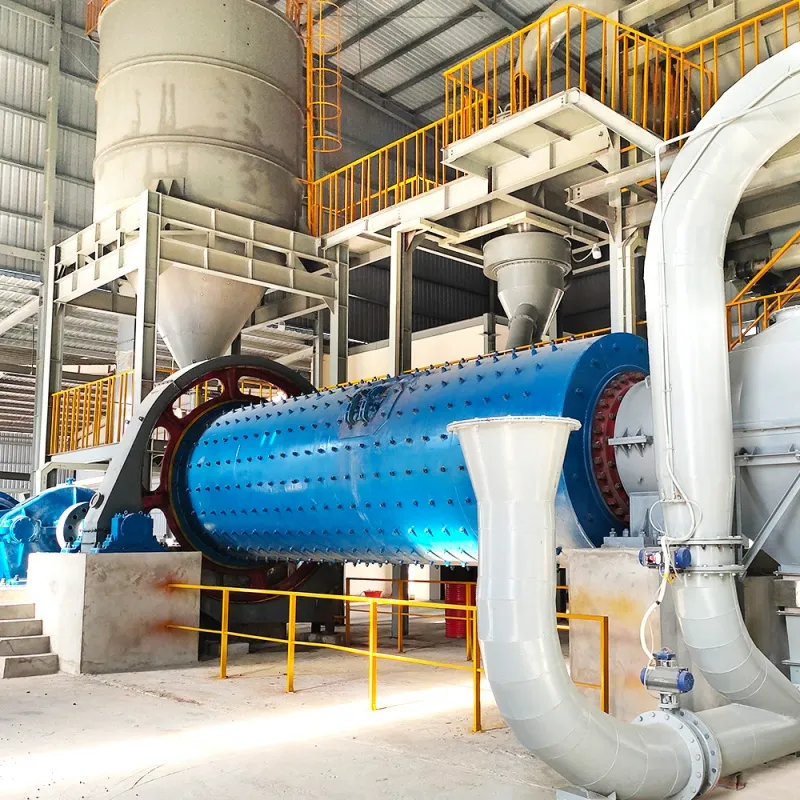
The processing pipeline for calcium carbonate typically follows a sequence of coarse crushing, fine grinding, ultrafine grinding, and surface coating. Different milling systems directly affect the final performance of the plastic film:
| Pulverization / Modification Equipment | Operating Mechanism & Features | Impact on Film Performance |
| Vertical Roller Mill / Ring-Roller Mill/Ball Mill | Suited for coarse and fine dry grinding (200–1250 mesh) with high capacity and low energy consumption. | Provides consistent base filler material, effectively reducing raw material costs and increasing film stiffness and thermal stability. |
| Wet Grinding Mill / Bead Mill | Used for ultrafine wet grinding (above 2000 mesh / sub-micron levels), producing narrow particle size distributions. | Minimizes stress concentration points inside the film; adding 5% can increase dart drop impact strength by 13.2% and elongation at break by ~5%. |
| Jet Mill | Uses high-velocity airflow for particle-on-particle collisions, preventing metal contamination. | Ensures high dispersion, making it ideal for high-clarity packaging and ultra-thin films without compromising gloss. |
| Continuous Three-Roller /Pin Mill Modification Mill | Combines pulverization and surface coating simultaneously, utilizing grinding heat to activate modifiers. | Eliminates agglomeration, ensures uniform resin dispersion, and significantly improves breathability, moisture permeability, and degradability. |
3. Application of Modified Calcium Carbonate in Film Resins
Combining ultrafine milling with surface modification yields functionalized calcium carbonate powders optimized for various resins:
- Polyethylene (PE) Films: PE packaging accounts for over 40% of plastic film consumption. Ultrafine modified Caco3 improves mechanical strength, thermal stability, anti-fog properties, IR/UV shielding, and controlled environmental degradation.
- Polypropylene (PP) Films:
- Biaxially Oriented PP (BOPP): Requires particle sizes free of coarse grit. Ultrafine jet-milled calcium carbonate prevents film breakage during biaxial stretching while maintaining mechanical strength.
- Thermally Induced Phase Separation (TIPS) Micro-porous Films: Uniform calcium carbonate acts as a pore-forming agent, creating micro-porous PP membranes with high separation efficiency and robust mechanical properties.
- Polyvinyl Chloride (PVC) and Fluoropolymer Films:
- PVC / PVDC Films: Added within appropriate limits, modified calcium carbonate improves tensile strength, elongation at break, and processing stability.
- PVDF Porous Films: Controlling the particle size and loading of calcium carbonate during TIPS processing enables precise tuning of PVDF membrane porosity, water flux, and rejection rate.
4. Process & Equipment Synergies
Successfully integrating calcium carbonate into plastic films relies on the synergy of pulverization, surface modification, and extrusion processing. Using high-precision grinding machinery to control particle distribution, alongside dry or wet surface modification, transforms Caco3 into a high-value additive that balances low cost with high performance.

“Thanks for reading. I hope my article helps. Please leave a comment down below. You may also contact Zelda online customer representative for any further inquiries.”
— Posted by Emily Chen