
1. Introduction: Why Equipment Selection Is the First Critical Step in Calcium Carbonate Processing
Calcium carbonate (CaCO₃) is one of the most widely used inorganic mineral fillers, serving plastics, rubber, paper, coatings, sealants, and construction materials. Natural calcite, marble, and limestone are crushed, ground, classified, and (when required) surface-modified to produce ground calcium carbonate (GCC) powder. The added value of the final product depends heavily on fineness, whiteness, and particle size distribution—and whether these targets can be met starts with selecting the right grinding equipment.
Common calcium carbonate grinding mills include Raymond mills (pendulum roller mills), ball mills, vertical roller mills, ultrafine grinding mills, jet mills, and wet stirred mills. Their fineness ranges, energy consumption, capacity, and investment levels differ dramatically. A mismatched choice leads directly to problems such as insufficient fineness, high electricity costs, and degraded whiteness. This article maps each equipment type by fineness level and provides a practical selection framework.
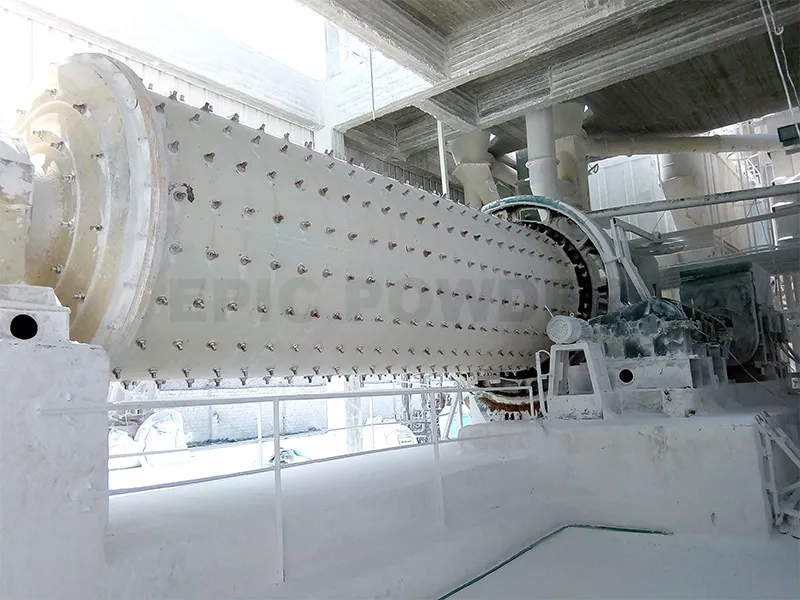
2. Main Types of Calcium Carbonate Grinding Equipment and Their Fineness Ranges
| Equipment | Grinding Principle | Typical Fineness | Capacity Profile | Typical Applications |
| Jaw / Hammer Crusher (front end) | Compression and impact crushing | Particles ≤ 30 mm | High-capacity coarse crushing | Ore pre-crushing to feed the grinding stage |
| Raymond Mill (Pendulum Mill) | Centrifugal roller crushing + air classification | 80–600 mesh | Medium-to-large continuous production | Standard filler-grade GCC below 325 mesh; best cost-performance |
| Ball Mill | Impact, friction, and shear between grinding media | 200–2500 mesh (with classifier) | Large capacity; dry or wet operation | Large-scale production of filler and ultrafine GCC |
| Vertical Roller Mill | Roller-on-table crushing + built-in classifier | 200–1250 mesh | Very large capacity; low specific power consumption | Large 400–800 mesh GCC production lines |
| Ultrafine Grinding Mill (ring roller / ultrafine vertical) | Multi-stage ring-roller crushing + turbo fine classification | 325–2500 mesh | Medium-to-large continuous production | Mainstream equipment for 800–2500 mesh ultrafine GCC |
| Jet Mill | Particle-on-particle impact in high-speed air streams | 325–6000 mesh (d97 ≤ 2–10 μm) | Small-to-medium capacity; high energy use | Premium ultrafine products requiring high cleanliness |
| Wet Stirred Mill / Bead Mill | Agitator-driven media shear and friction | d50 ≤ 1–2 μm | Continuous slurry production | Paper-coating grades and ultrafine GCC slurry |
Quick positioning: Below 600 mesh, choose Raymond or vertical roller mills (lowest power per ton). For 800–2500 mesh, choose ultrafine mills or ball mill + classifier systems. For nano-scale, high-cleanliness products, choose jet mills. For paper-coating slurry, choose wet stirred mills.
3. Dry vs Wet Process Routes
Calcium carbonate grinding is divided into dry and wet routes depending on whether a liquid medium is introduced:
- Dry process: Crushing → dry grinding (Raymond / vertical / ultrafine mill) → classification → dust collection and packing. Short flowsheet, no dewatering or drying needed, lower investment—mainstream for filler-grade GCC. Economic fineness typically up to about 1250 mesh; beyond that, energy consumption rises sharply and agglomeration increases.
- Wet process: Slurry preparation → wet stirred milling (often with sodium polyacrylate dispersant) → filtration and drying (or sold directly as slurry). Products show narrow size distribution and little agglomeration, reaching d50 ≤ 1–2 μm. It is the mainstream route for ultrafine GCC above 800 mesh and paper-coating slurry grades, but requires a dewatering/drying system.
Selection advice: For dry powder fillers up to 1250 mesh, choose dry grinding. For 2500 mesh and above, or for direct supply of paper-coating slurry, choose wet grinding.
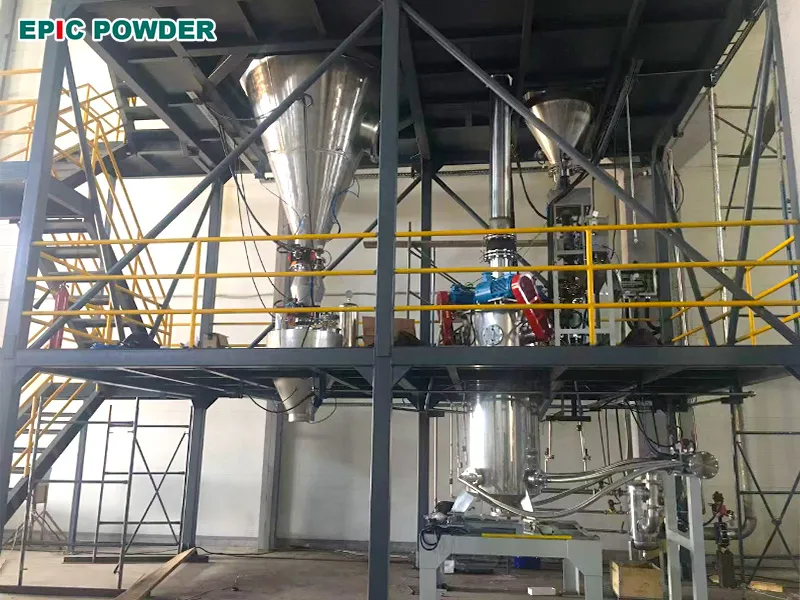
4. Five Key Factors in Equipment Selection
- Target fineness and size distribution: Fineness determines the equipment type; distribution targets (e.g., d97) determine classifier configuration. Define fineness first, then select equipment.
- Production scale: For plants above tens of thousands of tons per year, prefer large continuous systems such as vertical mills or ball mill + classifier lines. For small batches and multiple grades, Raymond or ultrafine mills offer more flexibility.
- Raw material characteristics: Calcite, marble, and limestone differ in hardness, whiteness, and silica content. High silica accelerates roller, ring, and liner wear, hurting both product whiteness and equipment life.
- Energy consumption and operating cost: Raymond and vertical mills win clearly in the coarse-powder range; in the ultrafine range, energy use climbs steeply with fineness—compare “power consumption per ton of product,” not just equipment price.
- Product positioning: Standard filler grade, activated (surface-modified) grade, or paper-coating grade? Modification steps (e.g., stearic acid coating) should be designed together with the grinding circuit.
5. Selection Workflow and Conclusion
A typical selection logic for a calcium carbonate grinding line is: define target fineness and capacity → lock in the dry or wet route → compare candidate mills by fineness range and specific power consumption → verify wear risks based on raw ore whiteness and silica content → confirm process parameters through lab or pilot trials.
As grinding equipment continues to advance toward large-scale and intelligent operation (variable-frequency control, online particle size monitoring, automated packing), the boundaries of what one machine can achieve keep expanding. There is no single “best mill”—only the combination that best matches your fineness targets, capacity, and cost structure.
FAQ: Frequently Asked Questions About Calcium Carbonate Grinding Equipment
Q1: Which equipment is most cost-effective for 325 mesh ground calcium carbonate?
A: For fineness up to 325 mesh, a Raymond mill or vertical roller mill is the best choice. Raymond mills offer lower investment for small-to-medium plants, while vertical mills deliver lower power consumption per ton for large-scale continuous production.
Q2: Which mill should I choose for 1250–2500 mesh ultrafine GCC?
A: Ring-roller ultrafine mills or a ball mill with fine classifier are recommended. Ultrafine mills offer continuous, stable production; ball mill systems provide large capacity with controllable media wear. For premium, high-purity products, jet mills are an option.
Q3: Is a jet mill necessary for calcium carbonate?
A: Only when submicron fineness (d97 ≤ 2–10 μm) and extremely low iron contamination are required. Jet mills are media-free and clean but consume several times more energy than mechanical mills—unnecessary for standard filler grades.
Q4: What is the difference between wet-ground and dry-ground calcium carbonate?
A: Wet (stirred) milling yields a narrow size distribution with less agglomeration, reaching d50 ≤ 1–2 μm—ideal for paper-coating slurries. Dry milling is simpler and delivers dry powder directly, but is economical only up to about 1250 mesh.
Q5: How does high silica content in raw ore affect grinding equipment?
A: Hard impurities like quartz accelerate wear on rollers, rings, liners, and grinding media, shortening equipment life and lowering product whiteness. Add silica/iron removal before grinding and choose highly wear-resistant wear parts.
Contact us for a free grinding solution proposal and equipment quotation !