
In industries such as plastics, coatings, rubber, papermaking, and artificial marble, calcium carbonate is one of the most widely used and cost-effective functional fillers. In recent years, however, a more advanced and high-performance material—porcelain-white composite calcium carbonate—has been rapidly gaining popularity among customers.
So what makes it stand out among so many filler materials? This article analyzes its advantages from the perspectives of material properties, application value, and its synergy with advanced grinding equipment.
What Is Porcelain-White Composite Calcium Carbonate?
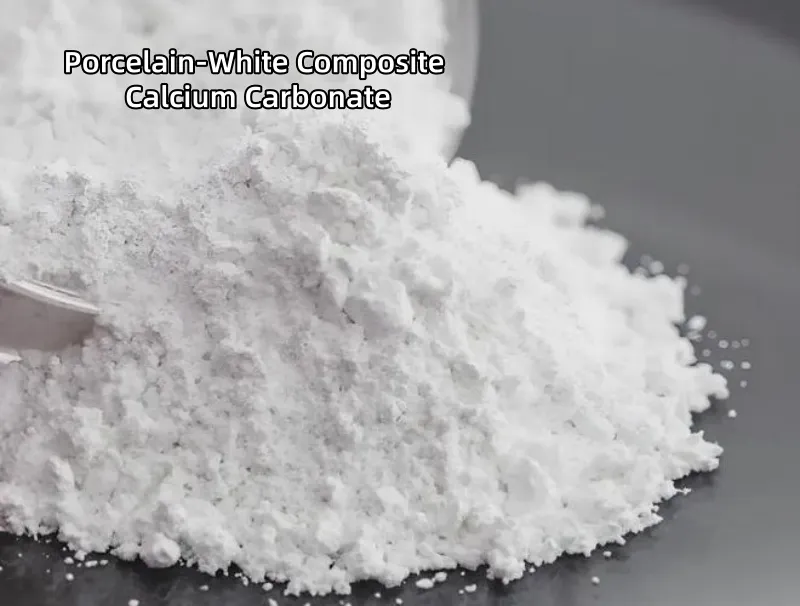
Porcelain-white composite calcium carbonate is produced by using high-whiteness ground calcium carbonate as the base material and then applying surface coating, modification, or inorganic mineral compounding. Its key characteristics include:
- High whiteness and strong covering power
- Fine particle size (typically D97: 5–15 μm) with a narrow distribution
- High surface activation and excellent compatibility with resin systems
- Significant cost advantage, enabling partial substitution of TiO₂ or light calcium
With the combination of whiteness, strength, dispersion, and cost efficiency, it has become extremely popular among plastic and coating manufacturers.
Why Do Customers Prefer Porcelain-White Composite Calcium Carbonate?
1. Higher Whiteness for Better Product Appearance
Its whiteness usually reaches 94–98, significantly higher and more stable than ordinary GCC. In PVC pipes, films, and masterbatches, it delivers a brighter and cleaner visual effect.
2. Fine Particle Size & Narrow Distribution for Superior Performance
After processing with advanced grinding and classification systems, the particles become more uniform, which helps:
- Improve product strength
- Reduce system viscosity
- Enhance gloss and tactile feel
It is especially suitable for PVC, PP, PE, artificial stone, and rubber-plastic products.
3. High Surface Activation for Better Resin Compatibility
Through advanced modification or compounding, the material disperses more effectively inside polymer systems, significantly improving:
- Impact strength
- Tensile strength
- Thermal stability
It also reduces energy consumption during processing and increases extrusion or injection efficiency.
4. Cost Advantage—Partially Replaces Titanium Dioxide
In some formulations, porcelain-white composite CaCO₃ can replace 10–30% of TiO₂, providing both performance and cost benefits.
Why Does Advanced Grinding Equipment Determine the Material’s Quality?
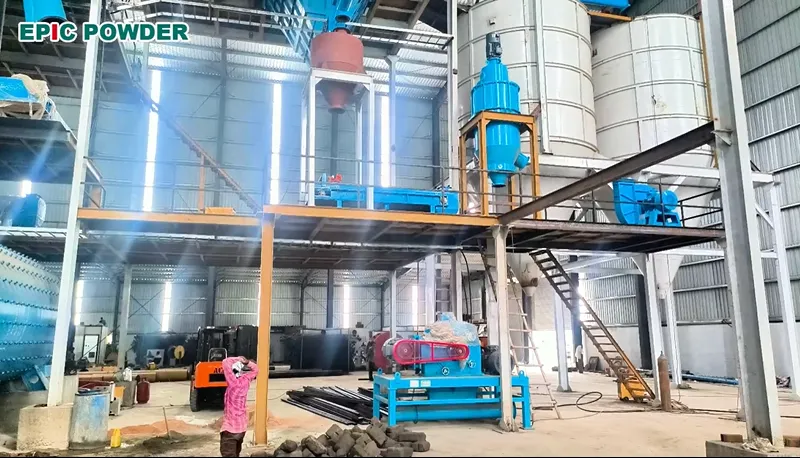
High-quality porcelain-white composite calcium carbonate depends heavily on equipment.
Epic Powder’s advanced grinding and classification solutions ensure that the final powder has:
- Preserved high whiteness
- Narrow particle size distribution (D97 controlled at 5–15 μm)
- Stable crystal morphology
- Uniform particle shape
- Extremely low metal contamination
Key equipment used for producing high-grade composite calcium carbonate includes:
1. Ceramic-Lined Ball Mill
- Ideal for customers needing high whiteness and zero metal contamination
- Produces fine powders (down to D97: 5 μm)
- Ceramic media avoids Fe contamination that would reduce whiteness
2. Air Classifier with Ceramic Rotor
- Achieves precise and narrow particle size distribution
- Controls D50/D97 with high accuracy
- Forms closed-circuit systems with ball mills or vertical mills
3. Vertical Roller Mill
- High capacity, low energy consumption
- Suitable for medium- and high-grade composite CaCO₃ requiring flexible fine/coarse control
4. Powder Coating / Modification Machine
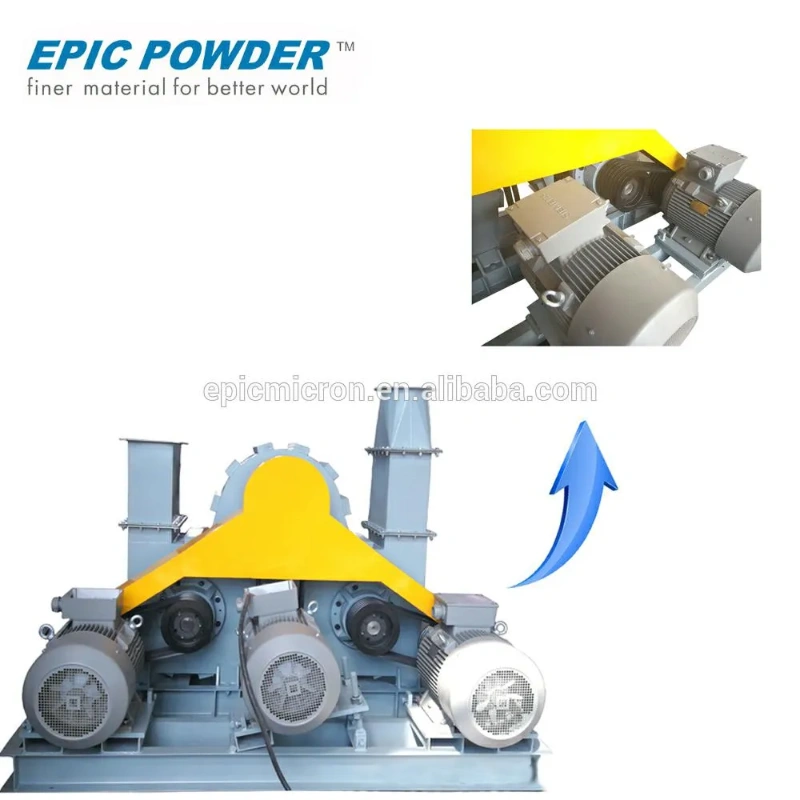
- Ensures uniform coating
- Enhances polymer compatibility and reduces oil absorption
- A key step for boosting performance in composite CaCO₃
Through these equipment combinations, Epic Powder provides a complete production chain—grinding, classification, and surface modification—to consistently deliver high-whiteness, high-activity, and high-dispersion porcelain-white composite calcium carbonate.
Major Application Industries
- PVC pipes, conduits, profiles
- PE/PP whitening masterbatch
- Transparent or semi-transparent filler masterbatch
- Architectural and artistic coatings
- Artificial marble and engineered stone
- Rubber products
In these sectors, porcelain-white composite CaCO₃ provides manufacturers with better appearance, enhanced performance, and lower production cost.
Conclusion
Porcelain-white composite calcium carbonate is favored not only because it produces brighter and cleaner products, but also because it delivers excellent performance while lowering overall cost. High-end grinding, classification, and modification equipment—especially ceramic-lined ball mills, air classifiers, and coating machines—are the keys to ensuring its stable, high-quality production.
If you are looking to build a high-quality porcelain-white composite calcium carbonate production line, Epic Powder can provide complete solutions, from engineering design and equipment selection to turnkey project delivery.

“Thanks for reading. I hope my article helps. Please leave a comment down below. You may also contact Zelda online customer representative for any further inquiries.”
— Posted by Emily Chen