
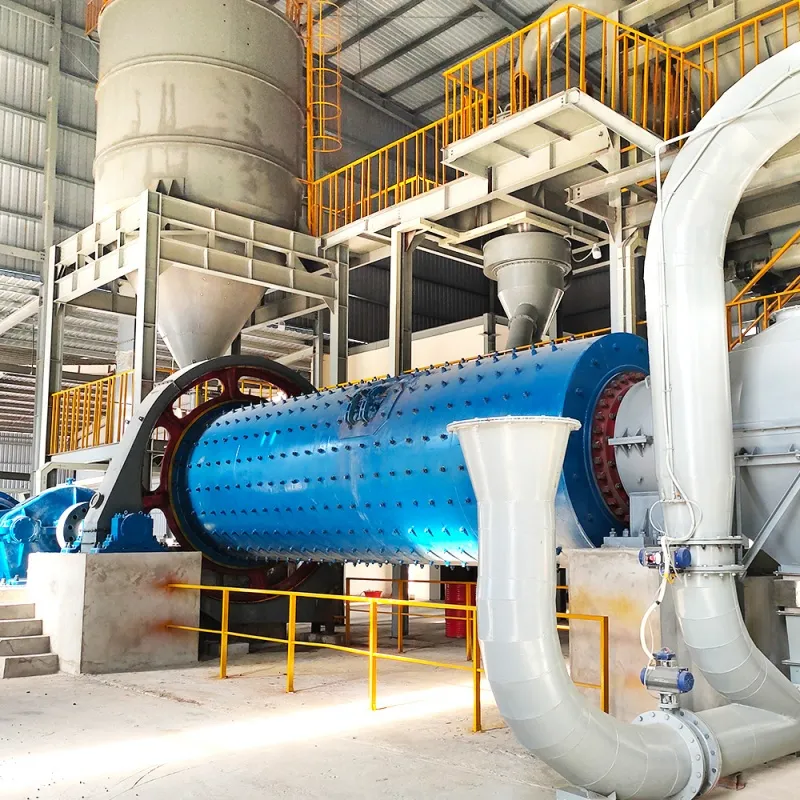
The industrial value of calcium carbonate stems not only from natural resource endowments, but also from manufacturing technology. From natural ores to industrial powders, and from coarse fillers to high-end functional materials, every jump in product grade relies on iterative processing methods and equipment breakthroughs. Calcium carbonate processing is far more than simply “grinding rocks.” It is a systematic engineering process that integrates crushing, grinding, classification, modification, and chemical synthesis. The choice of process directly determines a product’s particle size, purity, morphology, and functional properties. Ultimately, it dictates the product’s added value and scope of application. Examining the evolution of these processing technologies and analyzing the pros and cons of main tech routes is essential to understanding the industry’s upgrade logic and future direction.
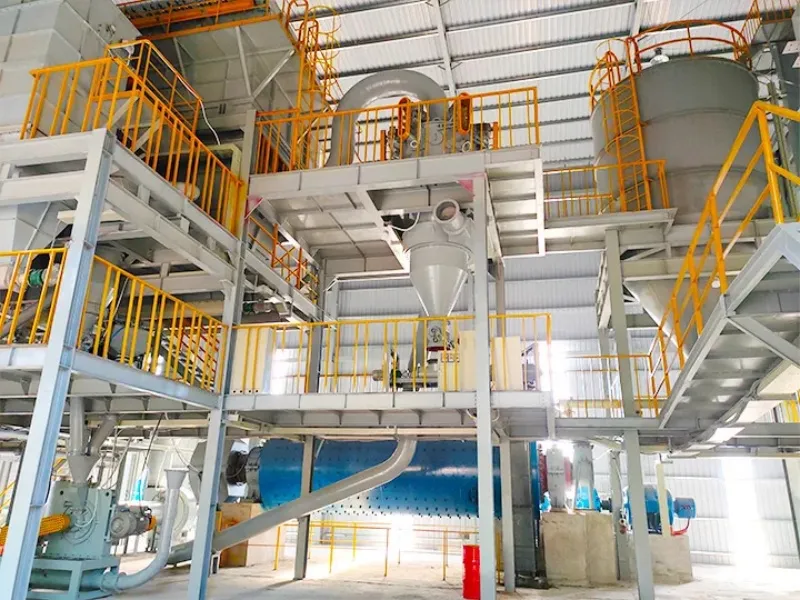
1. Crushing Pretreatment: The Fundamental Step from Raw Ore to Coarse Powder
Crushing is the first step in calcium carbonate processing. It is responsible for breaking large raw ore down into a size suitable for grinding. Its efficiency and energy consumption directly affect the operating costs of the entire production line.
Traditional crushing often adopts a two-stage or three-stage closed-circuit process:
- Primary Crushing: Large raw ore is first coarsely crushed by a jaw crusher down to a particle size of several tens of centimeters.
- Secondary & Fine Crushing: It then goes through a cone crusher or impact crusher to produce gravel particles of around ten millimeters.
- Screening: Finally, a vibrating screen separates the material. Qualified particles move on to the next process, while oversized particles return to the crusher for re-crushing, forming a closed loop.
Early crushing processes used simple equipment with low automation. They generated heavy dust pollution and had limited crushing ratios. The resulting feed size for grinding was too large, which increased the load on subsequent grinding stages.
With advances in mining equipment, single-cylinder and multi-cylinder hydraulic cone crushers have gradually become popular. These efficient crushers have greatly improved crushing efficiency, produced more regular particle shapes, and stably kept the feed size under 10 millimeters. Meanwhile, supporting environmental protection facilities—such as enclosed workshops, baghouse dust collectors, and spray dust suppression systems—have eliminated dust in traditional workshops and achieved clean production.
For high-grade calcite ore, manual sorting or photoelectric sorting is integrated into the crushing stage. This removes gangue and impurities in advance, boosting raw material purity and whiteness to guarantee final product quality from the source. Some high-end production lines have introduced color sorters and X-ray sorting equipment to automate precise impurity removal, significantly improving material utilization and product consistency.
2. Dry Grinding & Classification: Mainstream Technology for Mass Production
Dry grinding is the most classic and widely used process for Heavy Calcium Carbonate (GCC). Thanks to its short workflow, low cost, and large capacity, it supports more than half of the industry’s total output. The typical dry process operates in a closed-loop system: crushed gravel enters grinding equipment, and the ground material is screened by an air classifier. Qualified fine powder is collected as finished product, while coarse particles return to the mill for re-grinding.
[ Crushed Gravel ] ──> [ Grinding Mill ] ──> [ Air Classifier ]
                              ▲                      │
                              │ (Coarse Particles)   ▼ (Qualified Fine Powder)
                              └──────────────── [ Finished Product ]
Early dry grinding relied on Raymond mills, which could only produce coarse powders of a few hundred mesh. These products had coarse particle sizes and broad distributions, limiting them to low-end building material fillers.
Since the late 20th century, the domestic manufacturing of ring-roller mills, vertical roller mills, and ultrafine ball mills has pushed dry grinding into the ultrafine era:
Vertical Roller Mills:
These integrate crushing, grinding, drying, and classification. They offer high single-machine capacity, low energy consumption, and high automation, making them the top choice for large-scale production lines. They can stably produce fine powder of 600–1250 mesh, which fits mid-range applications like general plastics and coatings.
Ball Mills with Multi-Stage Classifiers:
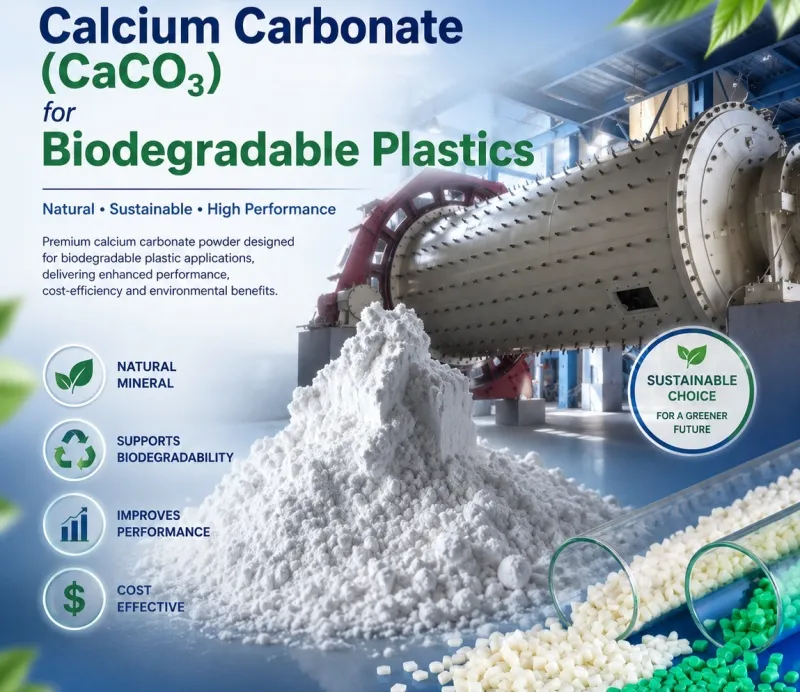
Used for even finer dry processing. By connecting multiple high-precision turbine classifiers in series, particle sizes can be cut with high precision to produce ultrafine heavy calcium carbonate of 1500–3000 mesh. The D97 can be controlled within 10 microns, covering most demands for mid-to-high-end industrial fillers.
The advantage of the dry ultrafine process is that it requires no dewatering or drying. It features a short workflow, lower investment, and low unit production cost, making it ideal for large-scale continuous production. Its drawbacks are a wider particle size distribution compared to wet processes and difficulty in breaking through the sub-micron size limit.
In recent years, dry processing has continuously upgraded toward energy efficiency, larger scale, and smart automation. Single-machine output has grown from a few tons per hour to tens of tons, while unit power consumption keeps dropping. Technologies like online particle size testing, automatic classification speed adjustments, and intelligent load control have greatly improved fineness stability and production efficiency while reducing the need for manual intervention.
3. Wet Ultrafine Grinding: Core Technology for High-End Powders
When products require higher fineness and a narrower particle size distribution, wet grinding offers irreplaceable advantages. It is the mainstream technology for producing high-end papermaking coating grade and ink grade ultrafine heavy calcium carbonate.
The core principle of wet processing is straightforward: calcium carbonate powder is mixed with water to form a slurry of a specific concentration. A dispersant is added, and the slurry is fed into a sand mill or stirred mill. Ultrafine grinding is achieved through the impact, compression, and shearing forces of the grinding media. After wet classification, the ground slurry can be directly supplied to downstream clients or spray-dried into dry powder products.
Wet grinding delivers three major advantages:
- High Fineness Limit: It can easily produce sub-micron ultrafine powders with a D97 of less than 2 microns, with some processes approaching the nanometer scale.
- Narrow Size Distribution & Spherical Shape: The particles feature a narrow size distribution and rounded morphology with good product consistency, which is vital for the stability of downstream product performance.
- Superior Dispersion: Good powder dispersion during grinding prevents agglomeration, leading to superior application performance.
High-end coated paper, premium water-based coatings, and high-end inks demand extreme fineness and uniform distribution, relying almost entirely on wet-ground products.
However, wet processing also has clear limitations. The workflow is long, requiring multiple steps including slurrying, grinding, classification, and drying. Equipment investment is heavy, and production costs are higher than dry methods. In addition, the drying process consumes significant energy, placing higher demands on a company’s technical and financial strength. Currently, domestic wet ultrafine capacity is concentrated among industry leaders targeting mid-to-high-end markets as a core area for competitive differentiation.
Iterative technology continuously improves wet grinding efficiency:
- The adoption of high-flow horizontal sand mills has greatly boosted single-machine capacity and grinding efficiency.
- The use of nano-scale grinding media has further pushed through fineness bottlenecks.
- Advances in composite dispersant technology have effectively reduced slurry viscosity, raising grinding efficiency under high solid content.
- Integrated setups combining “wet grinding + wet modification + spray drying” complete surface modification directly in the liquid phase. This produces a more uniform coating and superior product performance.
4. Surface Modification: The Key Jump from Fillers to Functional Materials
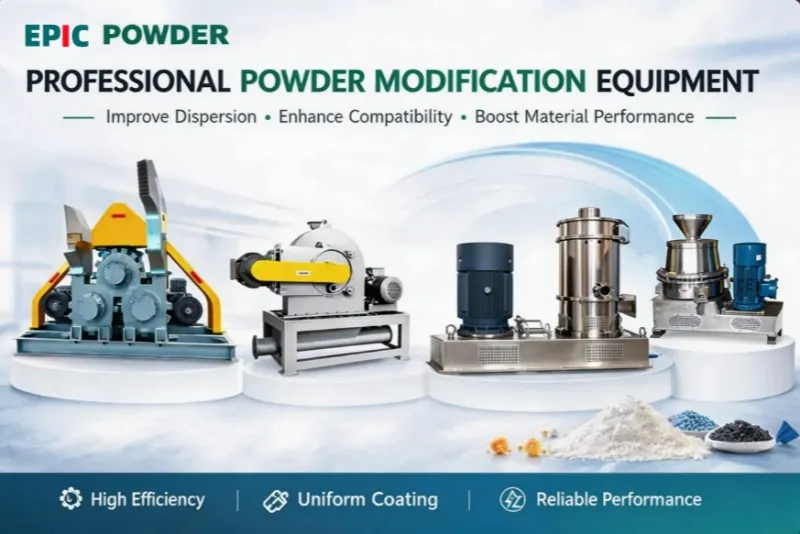
If grinding and classification determine the physical form of calcium carbonate, surface modification determines its application performance. It is the core process for increasing added value and making the jump from a “common filler” to a “functional material.” Driven by downstream high-end demand, surface modification has developed into two mainstream technical routes: dry modification and wet modification.
                         ┌──> Dry Modification: Powder + Modifier + High-Speed Heat/Shear
                         │    (Simple, high efficiency, cost-effective for mass production)
Surface Modification ────┤
                         │    ┌──> Liquid-Phase Coating: Slurry + Modifier
                         └──> ┴──> Direct Supply as Slurry OR Spray Drying
                                  (Complete coverage, higher activation rate for high-end uses)
Dry Modification
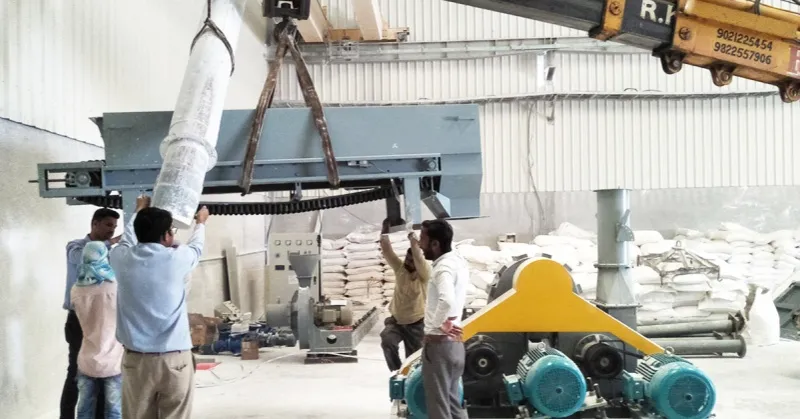
Dry modification is the most widely applied method and is usually paired with dry grinding lines. Dried calcium carbonate powder is fed into a high-speed modifier. Under rapid stirring and set temperatures, modifiers like stearic acid or coupling agents are atomized and added. Mechanical force and thermal energy help coat the modifier evenly onto particle surfaces before the material is cooled and discharged as active calcium carbonate.
Dry modification is simple, efficient, and continuous, making it well-suited for large-scale processing of standard active heavy calcium carbonate. Early dry modification relied on simple high-speed mixers for batch production, which yielded limited coating uniformity. Today, dedicated continuous powder modifiers are widely used. They feature better modifier atomization and precise temperature control, significantly boosting product activation rates.
Wet Modification
Wet modification is paired with wet grinding. Modifiers are added directly into the ground slurry to complete surface coating in a liquid phase environment. In a liquid system, modifiers disperse more thoroughly, allowing every particle to make uniform contact with the agent. This results in a more complete coating, a higher activation rate, and better product stability, making it the preferred process for high-end ultrafine active calcium carbonate.
After wet modification, the slurry can be dried immediately or supplied directly as modified slurry to paper and coating manufacturers. This avoids secondary agglomeration issues and delivers better performance in application.
Evolution of Modification Technology
Surface modification is evolving from single-agent treatments to composite and customized solutions:
- Composite Modifiers: Mixing multiple modifiers allows products to achieve hydrophobic properties, dispersion, and reinforcement simultaneously to fit complex downstream formulas.
- Customized Formulas: Developing tailored formulas for different downstream sectors enables a “one-product, one-solution” approach, aligning calcium carbonate performance closely with downstream matrix systems.
- Eco-Friendly Agents: Modifiers themselves are turning greener and more functional. Water-based, bio-based, and functional modifiers are gradually gaining traction, further expanding the applications of modified calcium carbonate.
5. Chemical Synthesis: Preparation Systems for Light and Nano Calcium Carbonate
Unlike the physical processing used for Ground Calcium Carbonate(GCC), Light Calcium Carbonate (PCC) and Nano Calcium Carbonate rely on chemical synthesis. The core mechanism involves controlling crystal growth through a carbonation reaction, where technical barriers focus on crystal morphology control and particle size management.
Traditional light calcium carbonate uses a batch carbonation process. Slaked lime slurry (calcium hydroxide) is fed into a carbonation tower, while carbon dioxide gas is introduced from the bottom. The gas-liquid contact triggers a carbonation reaction to produce calcium carbonate. Batch processing uses simple equipment with lower investment, but parameter fluctuations during carbonation lead to poor consistency in crystal form and particle size. Thus, it is mostly used for standard light calcium carbonate.
To improve stability, continuous carbonation processes are being adopted. By using multi-stage carbonation towers in series, material flow remains continuous and parameters stay stable, dramatically improving product quality consistency.
The synthesis of nano calcium carbonate places extreme demands on process control. Temperature, concentration, gas-liquid ratio, and stirring speed must be precisely managed during carbonation. Crystal control agents are added to induce directional crystal growth. By tweaking process parameters, manufacturers can synthesize various morphologies—such as spindle, cubic, acicular (needle-like), or spherical—tailored to rubber, plastics, sealants, and pharmaceuticals.
New carbonation technologies like high-gravity carbonation and microchannel carbonation further enhance mass transfer efficiency. They enable tighter control over crystal form and particle size, yielding superior product performance.
Another key advancement in synthesis is in-situ modification. Adding modifiers at the end of the carbonation reaction completes surface coating directly on the growing crystals. This prevents nano-particles from agglomerating during drying while improving coating uniformity, making it the mainstream preparation technique for high-end nano calcium carbonate.
6. Future Trends in Processing: Smart, Green, and Customized
Looking at the evolution of calcium carbonate processing, technology has consistently advanced toward four goals: finer particle size, higher uniformity, lower energy consumption, and specialized functionality. Moving forward, process upgrades will deepen along three core directions:
| Trend | Key Technologies & Directions |
| Smart & Digital | • Real-time monitoring with online testing equipment (particle size, whiteness, composition). • Implementation of digital twins, smart scheduling, and predictive equipment maintenance. • Reduced human error, boosted operating efficiency, and improved product stability. |
| Green & Low-Carbon | • Widespread use of energy-saving equipment to continuously lower unit energy consumption. • Closed-loop recycling for wastewater, waste gas, and solid waste targeting near-zero emissions. • Waste heat recovery and clean energy adoption to curb carbon emissions. • Maturing processes using calcium-rich industrial waste and tailings to build a circular economy. |
| Customized & Integrated | • Shift away from generic products toward tailored processing for specific downstream needs. • Custom-designed grinding, classification, and modification integrated workflows. • Shift in business models from selling raw powder to delivering complete “Material + Process + Application” solutions. |
Every breakthrough in calcium carbonate processing expands the value boundaries of this natural mineral. This progress spans from simple crushing to ultrafine grinding, from physical milling to chemical synthesis, and from general powder to customized functional materials. Processing technology represents the core competitiveness of the calcium carbonate industry. It is also a key pillar for transforming resource-rich countries into industrial powerhouses. As equipment technology and materials science continue to advance, processing will evolve toward higher precision, lower energy consumption, and greater functionality. Ultimately, this will drive the sustainable development of the industry.

“Thanks for reading. I hope my article helps. Please leave a comment down below. You may also contact Zelda online customer representative for any further inquiries.”
— Posted by Emily Chen