
Against the backdrop of global energy transition and the explosive growth of the new energy industry, sectors such as lithium-ion batteries, photovoltaics, and new energy vehicles have become core engines driving demand for advanced materials. Calcium Carbonate in the New Energy sector plays an increasingly vital role. Thanks to its high purity, exceptional stability, controllable morphology, and superior cost-effectiveness, calcium carbonate is upgrading from a traditional cost-reducing filler into an indispensable functional base material across the new energy supply chain.
However, the new energy industry imposes extremely strict requirements on particle size distribution, morphology control, and impurity content. The performance of high-end Calcium Carbonate in the New Energy sector relies heavily on the processing technology of upstream ultra-fine grinding and precision classification equipment.
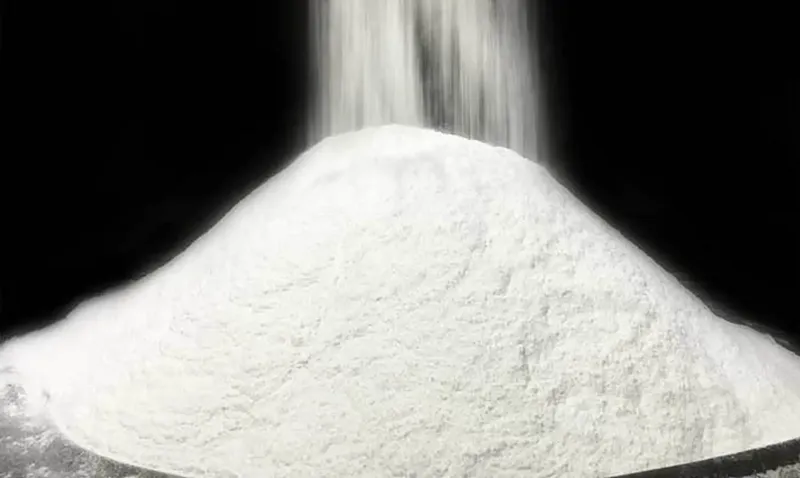
Lithium Battery Sector: Core Applications of Ultra-Fine Grinding and Morphology Control
1. Ultra-Fine High-Purity Calcium Carbonate for Battery Separators (Sub-micron/Nanometer Grinding)
- Application Value: Coating an electronic-grade calcium carbonate ceramic layer onto polyolefin separators significantly improves thermal dimensional stability and puncture resistance. This reduces the risk of battery thermal runaway. Additionally, its weak alkalinity neutralizes acidic substances in the electrolyte, extending battery lifespan.
- Equipment & Process Requirements: Separator coatings require extremely fine particle sizes (typically 0.5-1.5µm) and an ultra-narrow size distribution. Oversized particles that could scratch the separator are strictly forbidden. This process requires wet ultra-fine grinding mills (bead mills) or jet mills, paired with high-precision, metal-free air classifiers to achieve sub-micron or nanometer powder without coarse particle carryover.
2. Auxiliary Functional Materials for Electrodes and Electrolyte Systems
- Application Value: Trace amounts of high-purity calcium carbonate act as crystal regulators during the synthesis of cathode materials like LFP (lithium iron phosphate). In anode materials, it serves as a pore-adjusting agent to enhance rate performance. Furthermore, porous calcium carbonate microspheres act as a structural framework for solid-state electrolytes.
- Equipment & Process Requirements: This application requires mechanical ultra-fine pulverizers (such as ring-roller mills or vertical mills) equipped with high-frequency classification systems. These systems precisely control particle morphology (such as spindle or spherical shapes) to optimize tap density and interfacial activity.
3. Battery PACK and Thermal Management Materials
- Application Value: In flame-retardant foams, thermal conductive silicones, and structural modified plastics, ultra-fine calcium carbonate works synergistically with flame retardants to improve char formation and stiffness.
- Equipment & Process Requirements: Ultra-fine vertical roller mills (VRM) or continuous surface modification machines are typically used. They perform dry or wet surface coating with silanes or coupling agents during the grinding process, improving dispersion in polymer matrices.
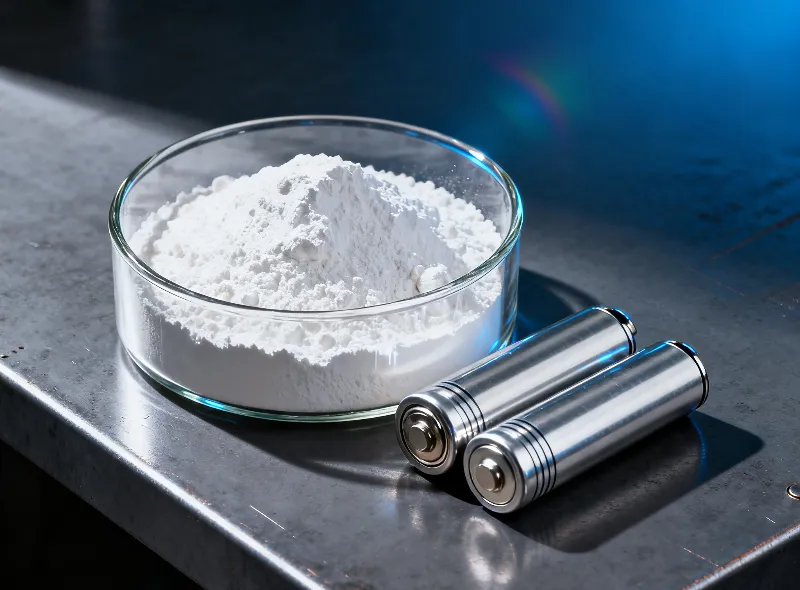
Photovoltaic and Energy Storage Sectors: Dry Grinding Routes for High Whiteness and Large Capacity
1. PV Encapsulation Materials and Backsheet Fillers
- Application Value: High-whiteness, low-iron/manganese calcium carbonate reflects ultraviolet and visible light. This enhances the heat resistance, weatherability, UV resistance, and dimensional stability of backsheet films and encapsulant EVA/POE films. Utilizing Calcium Carbonate in the New Energy photovoltaic segment effectively extends module service life.
- Equipment & Process Requirements: PV-grade calcium carbonate requires high whiteness, minimal impurities, and stable micron-level output (1250-3000 mesh). Ultra-fine vertical grinding mill systems or ball mill + air classification lines are preferred. Multi-stage high-efficiency air classifiers isolate narrow particle distributions, supported by full-system iron isolation (such as alumina ceramic linings and magnetic separators).
2. Energy Storage Media and Supporting Construction Materials
- Application Value: Calcium-looping thermochemical energy storage technology utilizes the reversible decomposition-carbonation reaction of calcium carbonate for long-duration energy storage. In addition, calcium-based building materials are widely used in PV mounting brackets and calcium-plastic panels.
- Equipment & Process Requirements: Because these applications involve high volume and demand low cost, upgraded Raymond mills or large vertical roller mills are sufficient to meet large-scale powder supply needs.
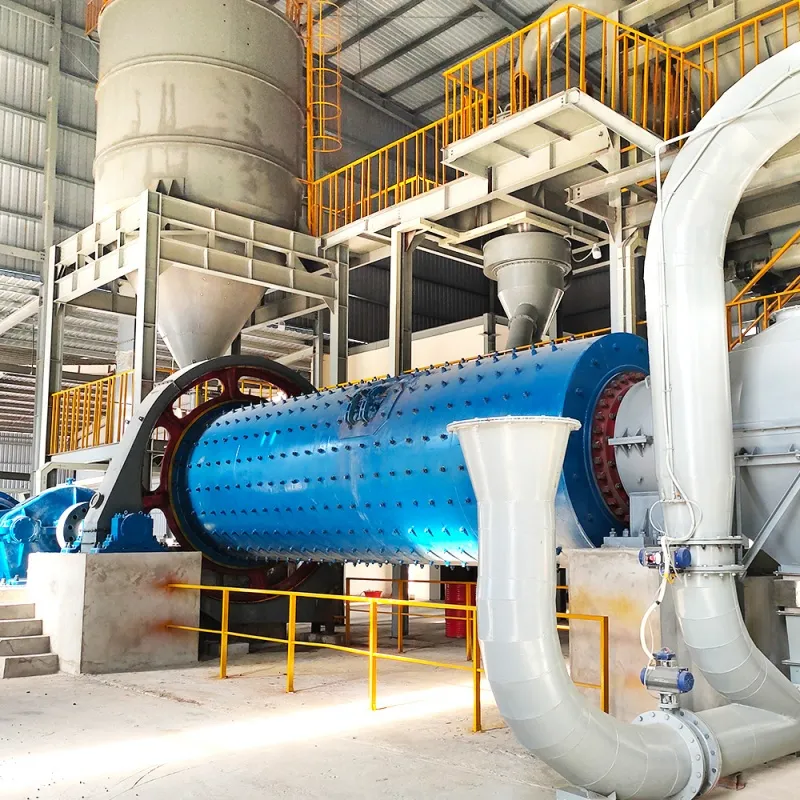
New Energy Vehicles: Modified Plastics and Lightweight Components
1. Interior and Exterior Modified Plastic Components (PP + Calcium Carbonate Composites)
- Application Value: Interior door panels, dashboards, and bumpers widely use PP modified with calcium carbonate. This increases stiffness, heat deflection temperature, and dimensional stability, achieving lightweighting and cost reduction.
- Equipment & Process Requirements: This requires calcium carbonate with specific aspect ratios and crystal structures. Ultra-fine ball mill classification lines produce powders above 2000 mesh, while inline continuous surface modification machines improve compatibility between the powder and resin matrix.
2. Cables and Sealing Strip Materials
- Application Value: High-voltage cables, charging guns, and sealing strips demand strict insulation, weatherability, and elasticity. Ultra-fine calcium carbonate regulates insulation, elasticity, and compression set.
- Equipment & Process Requirements: High-shear wet grinding equipment or nano-calcium carbonate carbonation systems ensure the powder remains free of secondary agglomeration.
Technical Barriers for Processing Equipment of Calcium Carbonate in the New Energy Sector
The high-performance demands on Calcium Carbonate in the New Energy market pose four major technical challenges for grinding equipment manufacturers:
- Strict Iron Contamination Control: Battery and PV-grade powders are extremely sensitive to transition metals (Fe, Cu, Ni). Internal equipment surfaces contacting raw materials must be lined with alumina ceramics, polyurethane, or special alloys. High-gradient magnetic separators must also be installed at the discharge outlet.
- Precision Classification: Systems must feature micro/sub-micron turbine air classifiers. Variable frequency controls precisely manage top-cut sizes (D97 or D100) to completely eliminate oversized grains.
- Integrated Grinding and Modification: Modern setups adopt combined grinding and coating systems (such as in-mill modifier injection or post-ball-mill coating machines). These process steps de-agglomerate and modify surfaces simultaneously, significantly reducing energy consumption.
- Continuous and Stable Production: Downstream customers require strict batch consistency. Processing lines must integrate PLC/DCS intelligent control systems to achieve closed-loop control over feeding rate, airflow, classification speed, and mill load.
Conclusion
The expanding application of Calcium Carbonate in the New Energy industry represents a joint evolution between fine material science and powder processing equipment. Without high-quality ultra-fine grinding, precision classification, and surface modification machinery, natural mineral ores cannot be converted into high-value functional materials suitable for batteries and solar modules. As the demand for cost efficiency and high performance increases, specialized powder grinding production lines capable of high purity, ultra-fine processing, surface coating, and low energy consumption will serve as the core driver for industry advancement.

“Thanks for reading. I hope my article helps. Please leave a comment down below. You may also contact Zelda online customer representative for any further inquiries.”
— Posted by Emily Chen