
Calcium powder (commonly known as limestone powder or stone powder) is mainly composed of calcium carbonate (CaCO3). It is weakly alkaline, poorly soluble in water, and soluble in acid. It is an extremely common mineral resource on Earth, widely found in rocks such as aragonite, calcite, chalk, limestone, marble, and travertine. It is also a primary component of animal skeletons and shells.
Depending on production processes and application requirements, calcium powder can be mainly classified into ground calcium carbonate (GCC), precipitated calcium carbonate (PCC), activated calcium powder, flue gas desulfurization (FGD) calcium powder, and ultra-fine calcium carbonate.
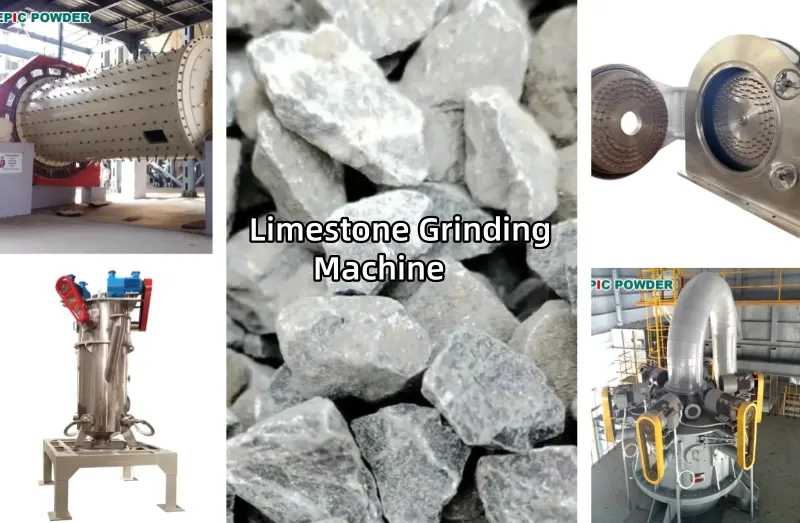
Core Application Fields and Quality Standards of Calcium Powder
1. Rubber Industry
- Specification Requirements: 400 mesh, whiteness ≥ 93%, calcium content ≥96%.
- Application Value: As one of the main fillers used in the rubber industry, adding it in large amounts can increase product volume and save expensive natural rubber. This significantly reduces production costs while endowing vulcanized rubber with higher tensile strength, tear strength, and wear resistance.
2. Plastics Industry
- Specification Requirements: 400 mesh. The whiteness must remain unchanged after high-temperature heating. The ore structure should be large-crystal calcite, with a calcium content ≥ 99% and whiteness ≥ 95%.
- Application Value: It acts as a framework in plastic products, which is crucial for the dimensional stability of products. It can significantly enhance hardness, surface gloss, and smoothness. High-whiteness (whiteness ≥ 90) calcium carbonate can also replace expensive white pigments.
3. Paint Industry
- Specification Requirements: 800 mesh or 1000 mesh, whiteness ≥ 95%, calcium carbonate content ≥ 96%.
- Application Value: It is used in large quantities in thick paints and other paint products (typically accounting for over 30%), serving to adjust body and rheological properties.
4. Water-Based Coatings Industry
- Specification Requirements: 800 mesh or 1000 mesh, whiteness ≥ 95%, purity ≥ 96%.
- Application Value: It accounts for 20% to 60% of usage, enabling coatings to possess excellent characteristics such as non-settling, easy dispersion, and good gloss.
5. Paper-Making Industry
- Specification Requirements: 325-mesh ground calcium powder, whiteness ≥ 95%, calcium content ≥98%.
- Application Value: It ensures the strength and whiteness of paper while significantly reducing the cost of raw materials for paper-making.
6. Construction Industry
- Specification Requirements: Dedicated 325-mesh dry-mixed mortar grade, whiteness ≥ 95%, calcium content ≥ 98%.
- Application Value: It is used in concrete and dry-mixed mortar to lower production costs and enhance product toughness and strength.
7. Fireproof Ceiling Industry
- Specification Requirements: 600 mesh, whiteness ≥ 95%, calcium content ≥ 98.5%.
- Application Value: It enhances the whiteness, brightness, and overall fire-retardant performance of the products.
8. Artificial Marble Industry
- Specification Requirements: 325 mesh, whiteness ≥ 95%, calcium content ≥ 98.5%, pure and impurity-free.
- Application Value: It is widely used as a primary aggregate in the manufacturing of high-end artificial marble slabs.
9. Floor Tile Industry
- Specification Requirements: 400 mesh, whiteness ≥95%, calcium content ≥ 98.5%, pure and impurity-free.
- Application Value: It increases the whiteness and tensile strength of products, improves toughness, and cuts production expenses.
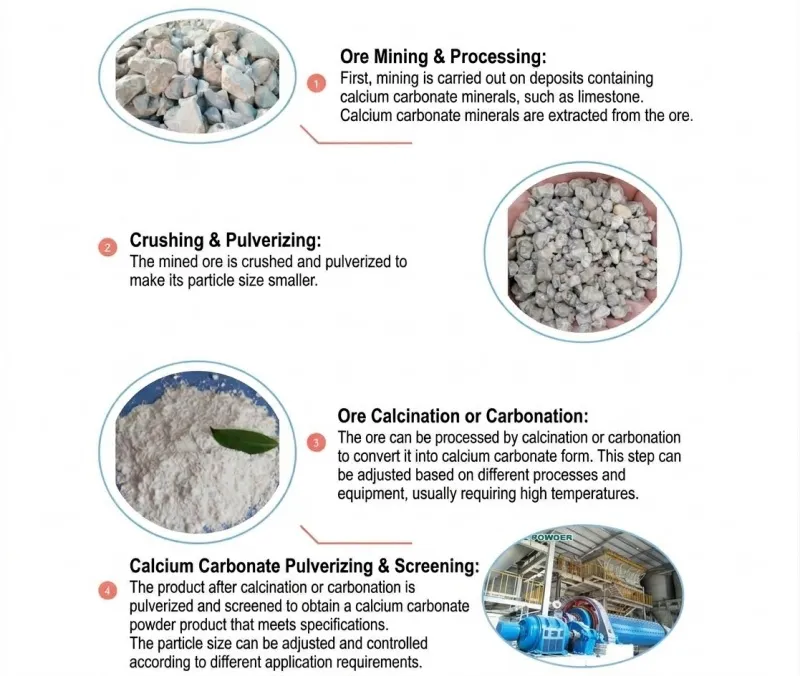
Production and Processing Workflow of Calcium Powder Combined with Advanced Powder Equipment
The production of high-quality calcium powder relies on the coordinated operation of a series of precision machinery and equipment, such as crushing, grinding, classification, and screening:
1. Coarse Crushing and Raw Material Processing
- Equipment Application: Jaw Crusher / Impact Crusher
- Process Flow: Mined calcium ores (such as limestone and calcite) are fed into crushing equipment. The large raw ores are initially crushed into small particles suitable for entering the grinding mill.
2. Fine Grinding and Pulverization
According to different fineness requirements, advanced powder grinding equipment is adopted:
- Ball Mill System: Suitable for large-scale, continuous medium-to-fine powder production (such as 325 mesh to 600 mesh). It achieves efficient and uniform pulverization of ores through the impact and extrusion of internal grinding media (steel balls).
- Jet Mill System: Utilizes high-speed airflow to cause violent collisions and friction among material particles. It is particularly suitable for producing ultra-fine, high-purity functional calcium powder.
3. High-Precision Air Classification (Particle Size Control)
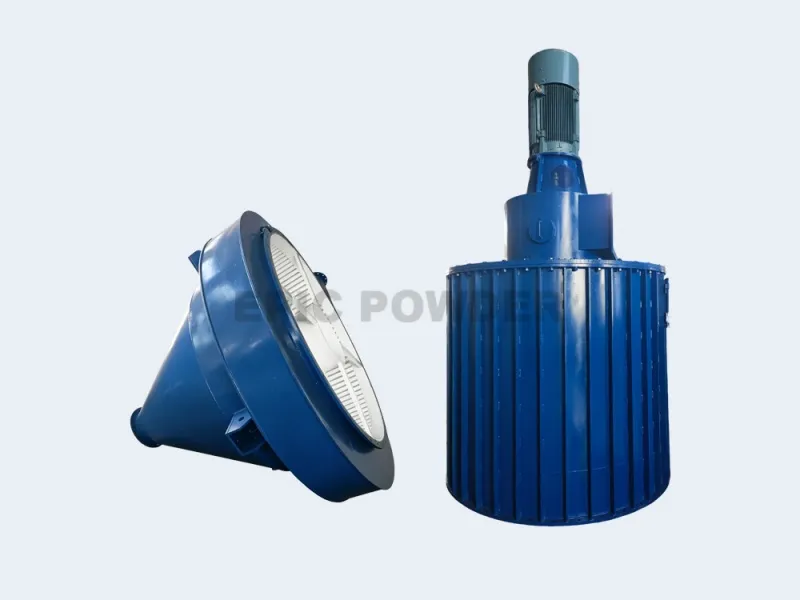
- Equipment Application: Air Classifier
- Process Flow: The ground mixed powder enters the high-efficiency air classifier. With the centrifugal force and airflow buoyancy generated by the internally rotating classification wheel, precise particle size separation is performed on the powder. Unqualified coarse particles are retained and returned to the grinding mill for re-pulverization, ensuring that the final product has an extremely narrow particle size distribution (such as strict control over D97).
4. Calcination or Carbonation Treatment (Chemical Grade Products)
- Process Flow: Certain specialized calcium carbonates need to be converted into specific forms of calcium carbonate through high-temperature calcination (typically at 900°C to 1000°C) or carbonation reactions, before entering the micron powder processing system.
Conclusion
In summary, transforming natural ores into high-quality calcium powder that meets the demands of various industrial sectors is a systematic project that highly relies on advanced powder engineering technology. By scientifically configuring and cooperatively operating core equipment such as ball mills, jet mills, and high-efficiency air classifiers, enterprises can not only precisely control the particle size distribution and purity of products, but also effectively reduce comprehensive energy consumption and production costs while ensuring excellent application performance.
With the continuous surge in demand for ultra-fine and functional powder materials from downstream high-tech industries, continuously optimizing grinding and classification processes will become the core key for mineral processing enterprises to win advantages in fierce market competition.

“Thanks for reading. I hope my article helps. Please leave a comment down below. You may also contact Zelda online customer representative for any further inquiries.”
— Posted by Emily Chen