
As one of the most widely used inorganic powder materials, calcium carbonate has penetrated multiple sectors of the national economy. Its core advantages include readily available raw materials, low cost, adjustable performance, non-toxicity, and environmental friendliness. With downstream industries shifting towards precision and high-end applications, single-grade calcium carbonate products can no longer meet the diverse requirements of different scenarios. This has led to the emergence of GCC, PCC, and modified calcium carbonate. Different categories and grades of calcium carbonate vary significantly in terms of performance, cost, and application scenarios. Accurately matching the specific needs of downstream markets is essential.
1. Core Differences Among Mainstream Calcium Carbonate Products
Currently, the core calcium carbonate market products can be divided into three main categories: heavy calcium carbonate (HCC), light calcium carbonate (LCC), and modified calcium carbonate (including active calcium carbonate and nano calcium carbonate). These three product types have distinct features in production processes, physicochemical properties, and cost control. They form a clear product differentiation structure, catering to different levels and scenarios of market demand.
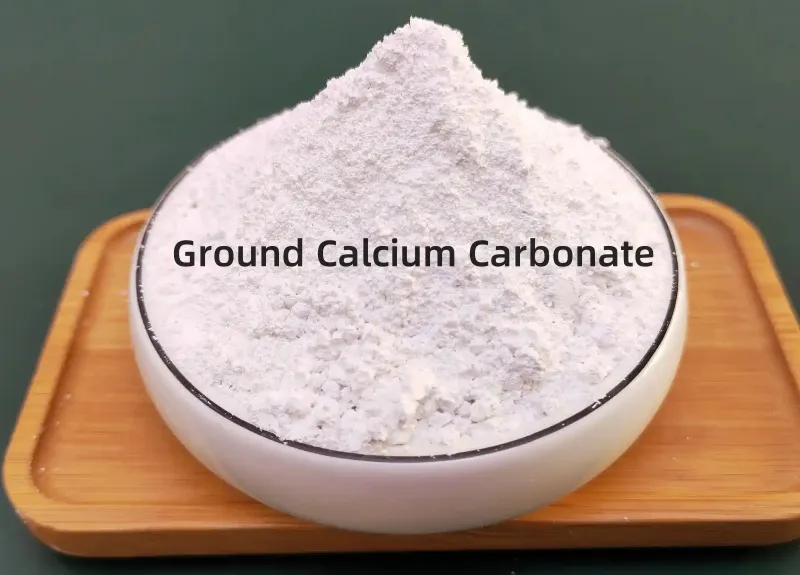
Ground Calcium Carbonate (GCC)
Heavy calcium carbonate is the most widely used and highest-volume product in the calcium carbonate market. Its core positioning is “low cost, high filler, basic functionality.” Its differentiation advantages focus on cost and filling performance.
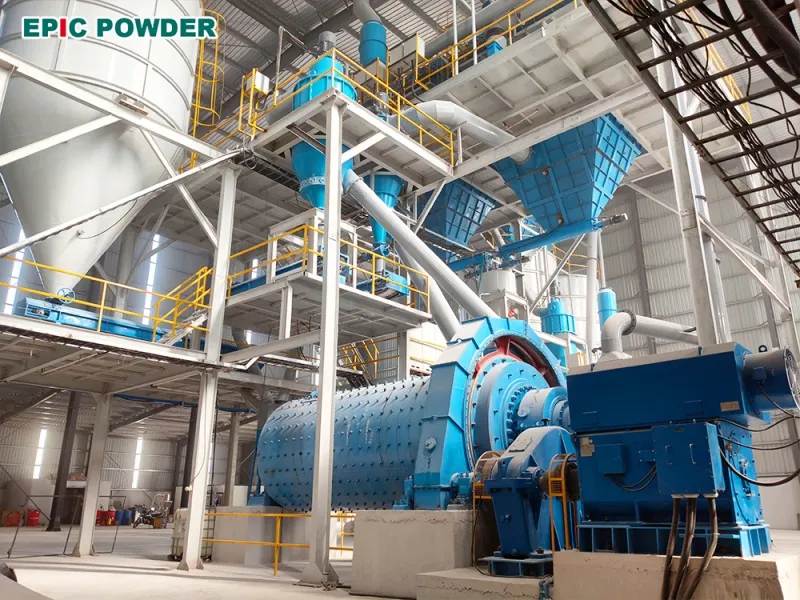
- Production Process: HCC is made from natural calcium carbonate minerals, mainly limestone and calcite. It is processed through crushing, grinding, and classification. The entire process involves no chemical reactions. The production process is simple, energy consumption is relatively low, and environmental impact is minimal. Complex chemical synthesis equipment is not required, and the production cost is much lower than that of light or modified calcium carbonate.
- Core Properties: The particles are irregular in shape, with a wide particle size range, from tens to thousands of mesh. Whiteness is moderate, usually 80%-90%. The chemical properties are stable, and filling performance is excellent. HCC can achieve high filling ratios in various substrates. It also has good flowability and is easy to disperse, effectively reducing production costs for downstream products. However, its reinforcement performance and compatibility are relatively weak, making it unsuitable for scenarios requiring high mechanical properties.
- Cost Positioning: The market price is relatively low, about 60%-70% of LCC and 30%-50% of modified calcium carbonate. It is the most cost-effective basic filler, suitable for mid-to-low-end applications that are cost-sensitive and have low performance requirements.
Precipitated Calcium Carbonate (PCC)
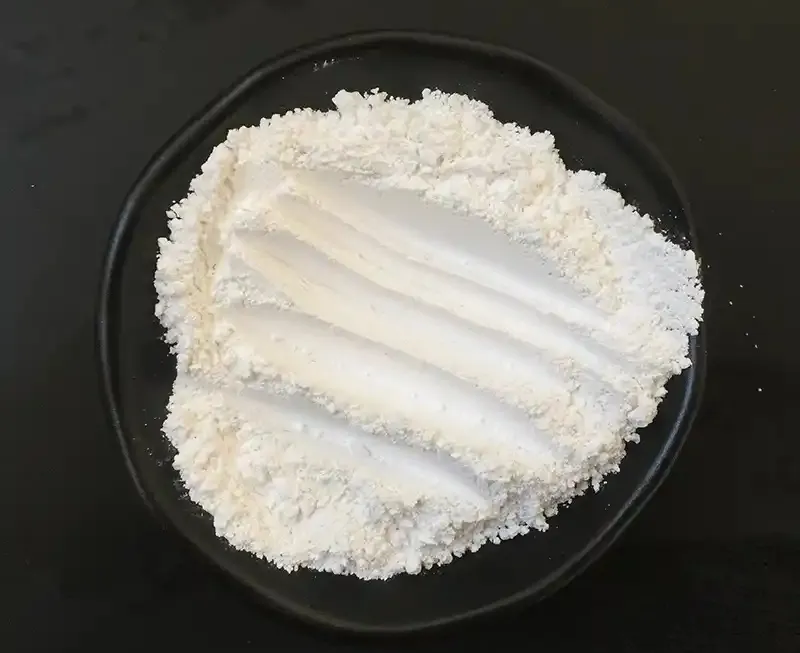
Light calcium carbonate is a mid-to-high-end basic calcium carbonate product. Its core positioning is “moderate cost, excellent performance, broad adaptability.” Its differentiation advantages focus on balanced performance, combining filling and basic reinforcement, suitable for mid-to-high-end applications.
- Production Process: PCC is made from limestone through chemical synthesis processes, including calcination, digestion, carbonation, precipitation, drying, and grinding. The production process is complex and energy-intensive. Critical parameters, such as calcination temperature and carbonation time, must be controlled to ensure uniform particle size and regular crystal shape.
- Core Properties: The particles have regular crystal shapes, such as spindle or cubic forms. Particle size is finer, usually 1-10 μm. Whiteness is higher, often exceeding 90%. Specific surface area is larger than HCC, and reinforcement performance and dispersibility are superior. PCC can improve the mechanical properties and appearance of downstream products. However, the maximum filling amount is lower than that of GCC, and production costs are higher.
- Cost Positioning: Market prices are moderate, approximately 1.5-2 times higher than GCC. PCC is suitable for mid-to-high-end applications that require certain performance standards but are moderately cost-sensitive. It serves as a key transitional product between GCC and modified calcium carbonate.
Modified Calcium Carbonate
Modified calcium carbonate is the high-end product in the market. Its core positioning is “high cost, high functionality, high added value.” Its differentiation advantages focus on functionality and compatibility. Through surface modification or nano-processing, it overcomes the performance limitations of ordinary calcium carbonate, catering to high-end niche markets.
- Production Process: Modified calcium carbonate is based on GCC or PCC and processed through surface coating, coupling agent modification, nano-processing, or composite modification. The key is to alter surface properties via modification technology, enhancing compatibility and dispersibility with organic polymers. Additional functions such as reinforcement, toughness enhancement, water resistance, and weather resistance are also achieved. Main modification equipment includes honeycomb mills, high-speed mixers, and jet mills. Honeycomb mills allow uniform application of coating agents, improving modification effectiveness.
- Core Properties: Properties vary according to modification methods. Active calcium carbonate (surface-coated) significantly improves compatibility and dispersibility, allowing close integration with plastics, rubber, and other polymers. Nano calcium carbonate (nano-processed) has particle sizes controlled at 1-100 nm, with high specific surface area and reactivity. It provides multiple functions, including filling, reinforcement, and toughness enhancement, improving wear resistance and tear strength. Composite modified calcium carbonate (combined with carbon black, graphene, etc.) achieves synergistic performance enhancement, suitable for more complex high-end applications.
- Cost Positioning: Prices are the highest, approximately 3-5 times that of GCC and 1.5-2.5 times that of PCC. The products have high added value, suitable for high-end niche markets where performance requirements are strict and cost sensitivity is low. It is the core direction for upgrading the calcium carbonate industry.
2. Calcium Carbonate Market Segmentation and Selection Guide
Different calcium carbonate categories form a clear market segmentation pattern due to variations in performance and cost. Downstream industries select suitable products based on product performance requirements and cost budgets. The following summarizes mainstream market applications, adaptation standards, and selection tips.
Building Materials
The building materials sector is the largest calcium carbonate market, accounting for over 50% of total usage. Core requirements are “low cost, high filling, and adequate basic performance,” mainly in cement, concrete, wall materials, and decorative products. Selection varies across sub-segments.
- Cement and Concrete: Core requirements include cost reduction, improved flowability, and strength. GCC (80-200 mesh) is preferred, with filling ratios of 20%-50%. It reduces cement usage and production costs, while enhancing concrete flowability and durability. High-end concrete may add small amounts of PCC (200-400 mesh) to improve strength and appearance.
- Wall Materials (AAC blocks, gypsum boards): Core requirements include increased filling, hardness, and thermal insulation. GCC (100-300 mesh) is preferred, with filling ratios of 30%-60%. It is low-cost and meets basic performance standards. Mid-to-high-end gypsum boards may use PCC (300-500 mesh) to enhance whiteness and surface flatness.
- Decorative Materials (marble slabs, tiles): Natural marble (natural calcium carbonate) is directly used for decoration, offering both utility and aesthetics. In tile production, PCC (400-800 mesh) or fine GCC is used to improve whiteness, flatness, and wear resistance, suitable for mid-to-high-end tiles.
Plastics
Plastics are a core calcium carbonate market, accounting for 15%-20% of total consumption. Core requirements are “cost reduction + mechanical property enhancement.” Different grades of plastic products show significant selection differentiation.
- Low-end Plastics (bags, basins, ordinary injection parts): Core requirement is cost reduction. GCC (100-300 mesh) is preferred, with filling ratios of 20%-40%. Reinforcement performance is not critical; basic molding and usage needs are sufficient.
- Mid-range Plastics (pipes, boards, profiles): Core requirements balance cost and mechanical properties. PCC (300-600 mesh) or ordinary active calcium carbonate is preferred, with filling ratios of 15%-30%. These improve rigidity, dimensional stability, and reduce shrinkage and deformation.
- High-end Plastics (engineering plastics, automotive lightweight plastics, high-end packaging): Core requirements include mechanical performance and compatibility. Nano calcium carbonate or composite modified calcium carbonate is preferred, with filling ratios of 10%-20%. These improve impact strength, tensile strength, wear resistance, and enable lightweight design, suitable for high-end applications.
Rubber
The rubber sector is another important calcium carbonate market, accounting for 10%-15% of total usage. Core requirements are “reinforcement + filling + processing optimization.” Different rubber products require different calcium carbonate properties.
- Low-end Rubber (ordinary mats, hoses, shoes): Core requirement is cost reduction and improved processability. GCC (200-400 mesh) is preferred, with filling ratios of 30%-60%, meeting basic usage requirements.
- Mid-range Rubber (ordinary tires, seals, tapes): Core requirement balances reinforcement and cost. PCC (400-800 mesh) or active calcium carbonate is preferred, with filling ratios of 20%-40%. This improves wear resistance, tear strength, and mixing performance.
- High-end Rubber (new energy vehicle tires, precision seals, aerospace components): Core requirements are high reinforcement and compatibility. Nano or composite modified calcium carbonate is preferred, with filling ratios of 15%-30%. It significantly improves wear resistance, aging resistance, and anti-slip properties, suitable for harsh operating conditions.
Food, Pharmaceutical, and Personal Care
These sectors are high-end niche markets, accounting for 5%-10% of total consumption. Core requirements are “safety, high purity, and performance suitability.” Food-grade or pharmaceutical-grade PCC or modified calcium carbonate is preferred.
- Food: Used in calcium supplements and food additives. Food-grade PCC (800-1250 mesh), purity ≥99%, non-toxic and tasteless, can be added to dairy, flour, and snacks. It can also act as an acidity regulator to improve taste.
- Pharmaceuticals: Used as excipients and calcium supplements. Pharmaceutical-grade PCC or nano calcium carbonate, purity ≥99.5%, uniform particle size, free of impurities, serves as filler or disintegrant, optimizing drug formulations and preventing calcium deficiency.
- Personal Care: Used in toothpaste, skincare, and detergents. Personal care-grade PCC or modified calcium carbonate (800-1250 mesh) with high whiteness and fine particles acts as abrasives, oil absorbers, or fillers, ensuring cleaning, whitening, and mildness for high-end products.
Environmental and Agricultural
These are emerging calcium carbonate markets. Core requirements are “functionality, eco-friendliness, and cost-effectiveness.” GCC or PCC is mainly used, with modified calcium carbonate in some high-end scenarios.
- Environmental: For wastewater treatment, GCC or PCC is used as a neutralizer to remove heavy metals and acidify wastewater, offering low cost and no secondary pollution. In flue gas desulfurization, GCC (limestone powder) efficiently removes sulfur dioxide for resource recovery. In soil remediation, LCC or modified calcium carbonate neutralizes soil acidity and stabilizes heavy metals.
- Agriculture: In soil improvement, GCC or PCC neutralizes acidic soils and supplies calcium, enhancing fertility. In fertilizer additives, LCC improves stability, utilization, and reduces loss, minimizing environmental pollution.
Conclusion
The differentiation of calcium carbonate products is essential to meet downstream market needs. GCC, PCC, and modified calcium carbonate occupy different market shares due to their respective performance and cost advantages, forming a diversified product system. From basic filling in low-end building materials and plastics to functional enhancement in high-end automotive, renewable energy, and pharmaceuticals, differentiated calcium carbonate applications span multiple sectors of the economy. They provide crucial support for downstream industries to reduce costs, improve quality, and upgrade products.

“Thanks for reading. I hope my article helps. Please leave a comment down below. You may also contact Zelda online customer representative for any further inquiries.”
— Posted by Emily Chen