
Calcium carbonate (CaCO₃) is an important inorganic material widely used in plastics, rubber, coatings, paper, inks, construction materials, as well as in pharmaceutical and food industries. It serves not only as a filler, reinforcing agent, whitening agent, and processing enhancer, but also significantly reduces production costs and improves the overall performance of materials.
With the development of industry and high-tech applications, the purity of calcium carbonate powders has become a key factor that determines material performance. At the same time, choosing suitable grinding equipment is a core step to ensure the production of high-purity calcium carbonate powders.
This article explores the importance of calcium carbonate purity, discusses modern grinding equipment and process considerations, and explains how purity affects downstream applications.
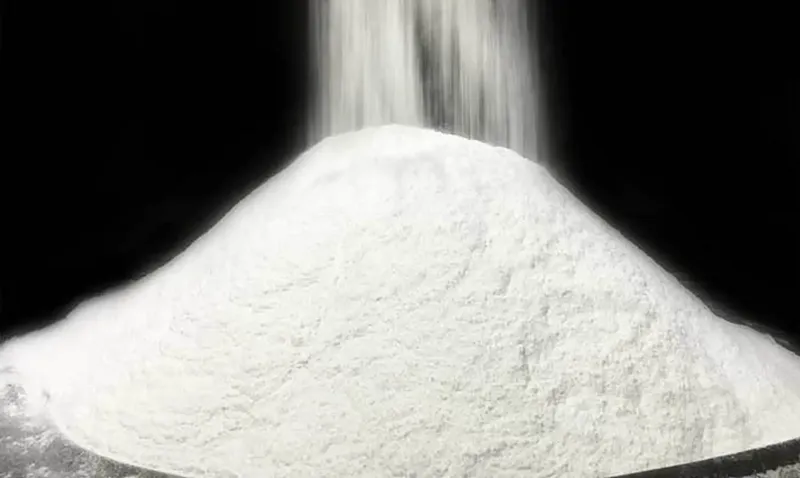
1. Definition and Classification of Calcium Carbonate Purity
The purity of calcium carbonate usually refers to the proportion of calcium carbonate in the total material. It can also be assessed by the content of impurities such as magnesium, silicon, iron, aluminum, or sulfate ions. According to purity, calcium carbonate can be categorized as follows:
- Industrial Grade Calcium Carbonate
- Purity: approximately 85%-95%.
- Mainly used in construction, cement, and road filler applications, where higher impurity tolerance is acceptable.
- Particle morphology and whiteness requirements are not strict. Production costs are lower.
- Light Calcium Carbonate (Limestone-derived PCC)
- Purity: 96%-99%.
- Commonly used in plastics, rubber, and coatings.
- Requires better powder dispersibility, whiteness, and uniform particle size.
- Ultra-High Purity / Electronic Grade Calcium Carbonate
- Purity: 99.9% or higher.
- Impurity content is extremely low.
- Mainly used in optical, electronic, pharmaceutical, and high-end coatings applications.
Thus, the purity of calcium carbonate directly determines its applicable field and performance characteristics.
2. How Calcium Carbonate Purity Affects Performance
Calcium carbonate powder purity affects not only chemical performance but also processing behavior and final product properties:
- Impact on Plastics and Rubber
- High-purity calcium carbonate improves mechanical properties such as tensile strength, rigidity, and wear resistance when used as a filler.
- Impurities like iron or silicon can cause discoloration, reduce transparency, and affect processing stability.
- Powder uniformity and purity directly influence surface gloss and consistency of plastic products.
- Impact on Coatings and Inks
- High-purity calcium carbonate enhances whiteness, opacity, and smoothness of coatings.
- Excess impurities can cause pigment dispersion issues, faster sedimentation, and uneven coating surfaces.
- In high-end inks, powder particle size and purity determine flowability and adhesion.
- Impact on Pharmaceuticals and Food
- Food and pharmaceutical grade calcium carbonate require extremely high purity. Even trace impurities can affect safety and stability.
- High purity ensures stable bioavailability and effectiveness in calcium supplements and medications.
- Impact on Electronics and Optical Materials
- Ultra-high purity calcium carbonate is essential for electronic packaging, optical glass, and ceramic applications.
- Impurity ions can cause fluctuations in dielectric constant, increase conductivity, or reduce optical performance, affecting the final product quality.
3. Relationship Between Grinding Equipment and Calcium Carbonate Purity
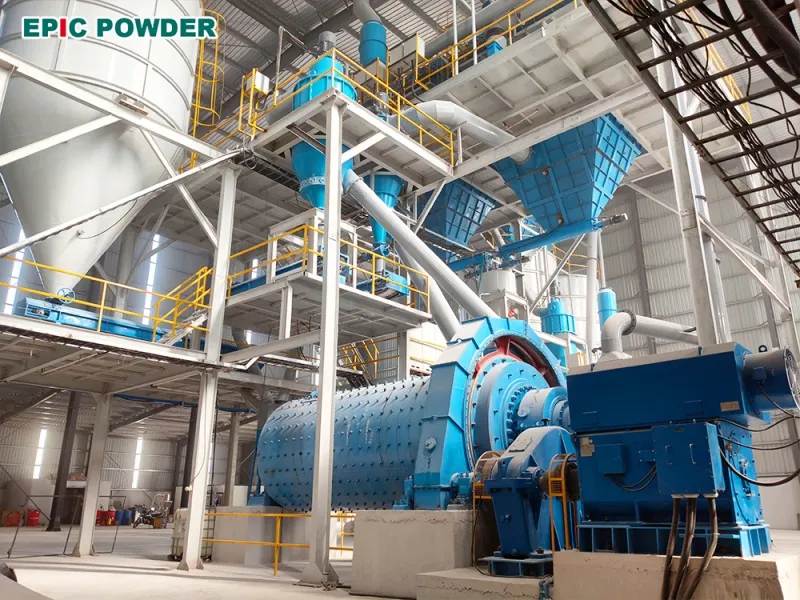
The production of high-purity calcium carbonate powders depends not only on raw material quality but also on the grinding equipment used. Different types of equipment affect purity, particle size distribution, and powder morphology differently.
3.1 Raymond Mill
- Characteristics: Simple structure. Suitable for medium and low hardness calcium carbonate. Achieves a certain level of ultrafine grinding.
- Applications: Industrial and light calcium carbonate production.
- Effect on Purity: Wear of grinding rollers and rings can introduce trace metal impurities. Wear-resistant linings reduce contamination.
3.2 Jet Mill
- Characteristics: Low-temperature grinding and high-efficiency classification. Particle size distribution can be precisely controlled.
- Effect on Purity: Since there is no metal contact during grinding, jet mills are suitable for high-purity and electronic-grade calcium carbonate.
- Advantages: Precise particle size control, ideal for plastics, coatings, and pharmaceutical-grade powder production.
3.3 Ball Mill
- Characteristics: Uniform grinding, suitable for ultrafine grinding of high hardness calcium carbonate.
- Effect on Purity: Requires wear-resistant linings and grinding media (e.g., alumina balls) to avoid metal contamination.
- Advantages: High throughput, suitable for large-scale production of high-purity calcium carbonate.
3.4 Stirred Mill / Vibration Mill
- Characteristics: High-efficiency grinding, low noise, low energy consumption, pollution-free. Suitable for electronic-grade ultrafine calcium carbonate.
- Effect on Purity: Grinding chambers lined with ceramic or wear-resistant materials effectively control impurities.
- Advantages: Produces near-spherical powder particles with good flowability and dispersibility, ideal for high-end coatings, inks, and plastics.
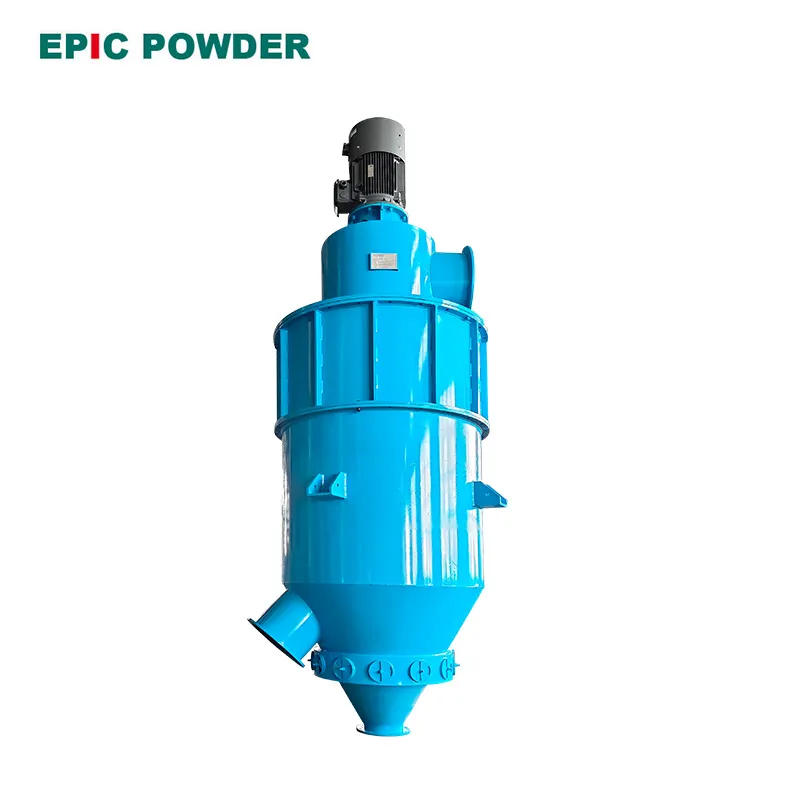
3.5 Air Classifier
- Characteristics: Controls particle size distribution and recovers oversized particles.
- Function: Improves uniformity and purity of calcium carbonate powders.
- Application: Often used with ball mills or jet mills to produce precisely controlled high-purity powders.
Summary: Equipment selection and process parameter control directly determine the purity and particle size distribution of calcium carbonate powders. High-purity powders require low-wear, contamination-free grinding environments, along with high-efficiency classification systems.
4. Factors Affecting Calcium Carbonate Purity
Besides equipment, the following factors influence the final powder purity:
- Raw Material Selection
- Different natural calcium carbonate sources contain varying levels of impurities. Choosing low-impurity sources is essential for high-purity powders.
- Grinding Process
- Grinding media material, mill temperature, grinding time, and rotation speed affect purity.
- High temperature or high wear can introduce metal impurities.
- Classification and Collection Systems
- Efficient classifiers and dust collection systems precisely control particle size and reduce coarse particle or impurity contamination.
- Grinding Aids and Dispersants
- Proper use of grinding aids improves powder dispersibility, prevents agglomeration, and enhances purity.
5. Typical Applications of High-Purity Calcium Carbonate
High-purity calcium carbonate powders are widely used in applications that require uniform particle size, high whiteness, and low impurity content:
- Plastics and Rubber
- Improve mechanical performance, processing stability, and appearance.
- Coatings and Inks
- Enhance whiteness, opacity, smoothness, and dispersibility.
- Pharmaceuticals and Food
- Safe and effective for calcium supplements and food-grade products.
- Electronics and Optical Materials
- Ensure stable dielectric properties, optical clarity, and electronic device performance.
6. Conclusion
The purity of calcium carbonate powder is a critical factor that determines material performance across multiple industries. Achieving high-purity powders relies on several key elements:
- Proper raw material selection.
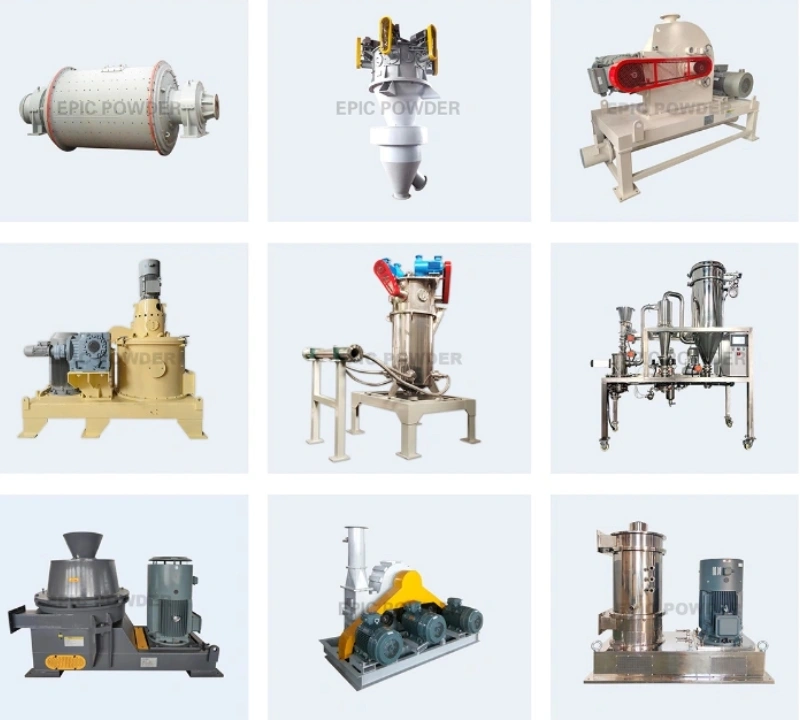
- Optimized grinding processes using suitable equipment such as ball mills, jet mills, vibration mills, and classifiers.
- Careful control of process parameters to minimize contamination and ensure particle size uniformity.
- The use of grinding aids to enhance dispersibility and prevent agglomeration.
By integrating these factors, manufacturers can produce high-purity, uniform, and stable calcium carbonate powders. These powders not only meet the stringent requirements of plastics, coatings, inks, food, pharmaceuticals, and electronics but also provide reliable performance and consistency for advanced applications.

“Thanks for reading. I hope my article helps. Please leave a comment down below. You may also contact Zelda online customer representative for any further inquiries.”
— Posted by Emily Chen