
Producing 5-25 micron calcium carbonate powders poses clear challenges: balancing a narrow Particle Size Distribution (PSD) while minimizing energy consumption and avoiding over-grinding. If your current process struggles with inconsistent output or excessive costs, optimizing your ultrafine processing with advanced grinding technology is critical. This guide focuses on how the right combination of ball mill grinding media ratios, precise air classifier adjustments, and integrated surface modification can significantly boost your yield and product consistency in this crucial size range. Keep reading to discover engineering-driven solutions that enhance efficiency, reduce downtime, and deliver a sharper PSD for industrial applications.
Technology Selection: Matching the Mill to the Micron
Choosing the right grinding technology is essential for optimizing 5-25 micron calcium carbonate ultrafine processing. Matching the mill type to the target particle size ensures efficient Particle Size Distribution (PSD) control and maximizes yield with minimal energy consumption.
Why the Ball Mill + Classifier System Reigns Supreme
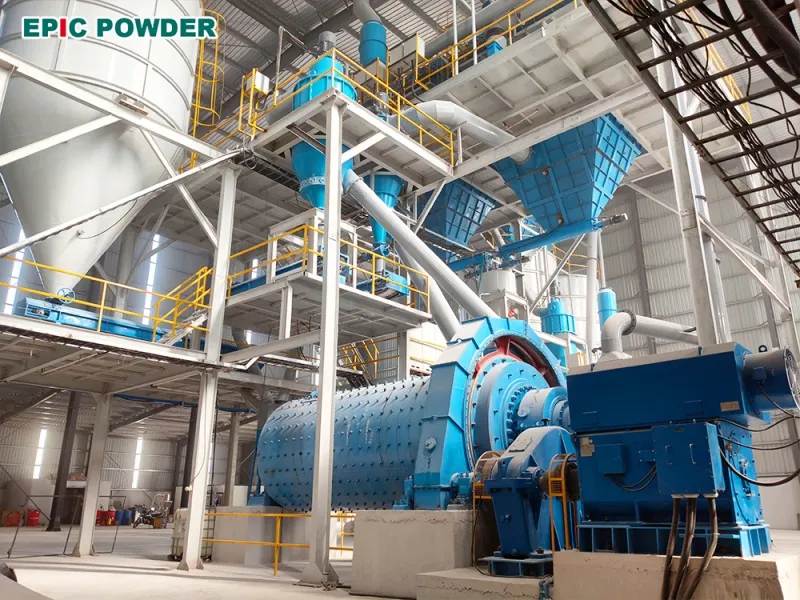
- Ball mills combined with high-efficiency air classifiers dominate the industry for producing ultrafine ground calcium carbonate (GCC) in the 5-25 micron range.
- The system excels at achieving tight PSD specs such as D97 and D50 particle size targets, allowing precise cut points through adjusting classifier wheel speed.
- Grinding media ratio customization in ball mills directly influences milling efficiency and specific energy consumption (kWh/t), enabling better control over powder fineness.
- The closed-circuit ball mill system reduces powder agglomeration and facilitates surface modification of calcium carbonate immediately after grinding.
The Role of Vertical Roller Mills (VRM)
- VRMs present a modern alternative, offering energy-efficient ultrafine milling and integrated classification.
- Effective for mineral filler masterbatch production, VRMs reduce specific energy use but may require refinements in airflow and classification efficiency to match ball mill precision at the finest size ranges.
- VRMs excel in handling abrasive industrial limestone milling systems by minimizing wear and optimizing differential pressure control.
Epic Powder’s Approach
- Epic Powder integrates proven ball mill + classifier ultrafine powder classifying lines with ongoing process optimization.
- We tailor grinding media ratios, classifier settings, and the incorporation of surface modification techniques such as stearic acid coating to maximize product performance.
- Our approach balances energy efficiency and yield while mitigating common bottlenecks like powder agglomeration and equipment wear, ensuring robust production of high-aspect ratio calcium carbonate powders.
Selecting the optimal mill technology is the foundation for consistent, scalable ultrafine calcium carbonate manufacturing tailored to modern industrial demands.
Critical Optimization Parameters (The “How-To”)
Optimizing the ultrafine processing of 5-25 micron calcium carbonate involves dialing in three key areas: grinding media ratio, airflow and classification efficiency, and surface modification integration. Here’s how to nail each for consistent particle size distribution (PSD) control and lower specific energy consumption (kWh/t).
Optimizing Grinding Media Ratio
- Why it matters: The ball mill grinding media ratio directly influences particle breakage and milling efficiency.
- Typical range: 60-75% media filling by volume is common for ultrafine GCC processing.
- Key tip: Start with a balanced mix of small and large media to target both coarse and fine particle grinding, minimizing over-grinding and fines.
Airflow and Classification Efficiency
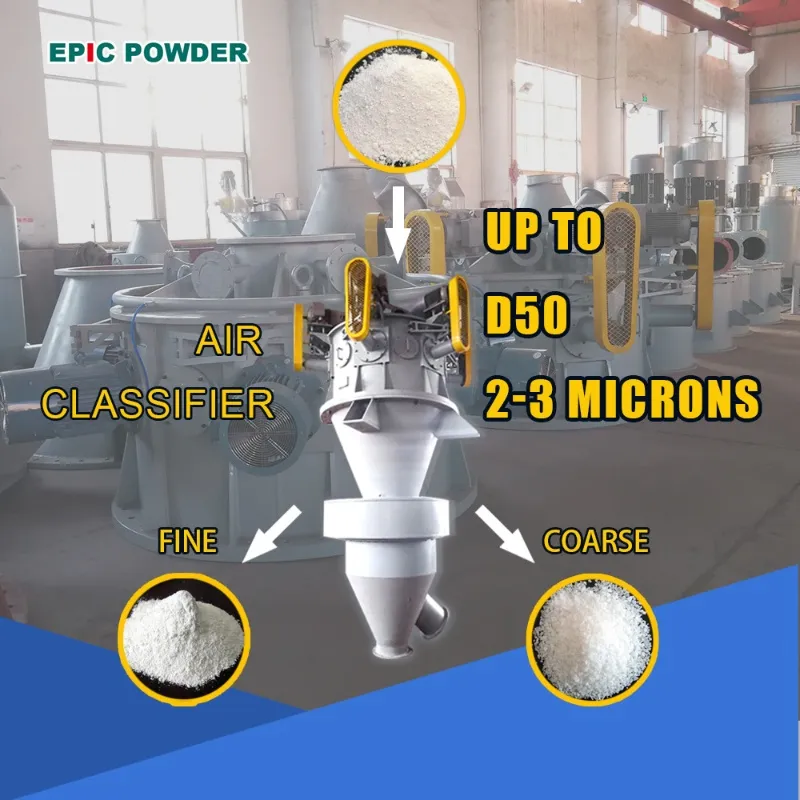
- Fine-tune the air classifier wheel speed to sharpen the D97 and D50 particle size cut-off.
- Maintain differential pressure control to prevent powder agglomeration and ensure smooth powder flow.
- Careful airflow adjustment enhances ultrafine powder classifying line performance, yielding a consistent high-aspect ratio powder without excessive energy use.
| Parameter | Recommended Range | Effect |
|---|---|---|
| Ball Mill Grinding Media | 60-75% volume filling | Optimal balance for particle breakage |
| Air Classifier Wheel Speed | Variable; adjust per target PSD | Controls cut size (D97, D50) |
| Differential Pressure | Stable, within equipment specs | Prevents powder clumping |
Surface Modification Integration
- Applying surface treatments like stearic acid coating during or post milling improves dispersibility and reduces dust.
- Integrating surface modification reduces surface energy, preventing agglomeration, critical for high-quality mineral filler masterbatch production.
- This also enhances compatibility in plastic composites, an emerging industry demand related to calcium carbonate’s role in composites.
Focusing on these critical parameters helps you achieve tight control over size distribution and powder quality in your calcium carbonate ultrafine processing.
Troubleshooting Common Processing Bottlenecks: Heat Management, Wear Protection, Dust Control
Optimizing 5-25 micron calcium carbonate ultrafine processing often hits a few common snags. Managing these bottlenecks is critical for maintaining consistent particle size distribution (PSD) control and efficient production.
Heat Management
Grinding ultrafine ground calcium carbonate (GCC) generates significant heat, which can cause powder agglomeration or affect the surface modification process. To control this:
- Use cooling systems integrated into the mill or classifier.
- Monitor differential pressure control to avoid overheating the mill system.
- Adjust specific energy consumption (kWh/t) carefully; excess energy spikes temperature unnecessarily.
Wear Protection
Continuous ultrafine powder processing wears down milling equipment rapidly, especially in ball mills or vertical roller mills. Effective wear protection includes:
- Selecting high-quality grinding media with optimal ball mill grinding media ratio.
- Regularly inspecting liner plates and classifier components.
- Employing corrosion-resistant materials in contact zones to extend machine life.
Dust Control
Dust is a serious issue in ultrafine calcium carbonate processing lines, impacting both worker safety and product purity. Key measures include:
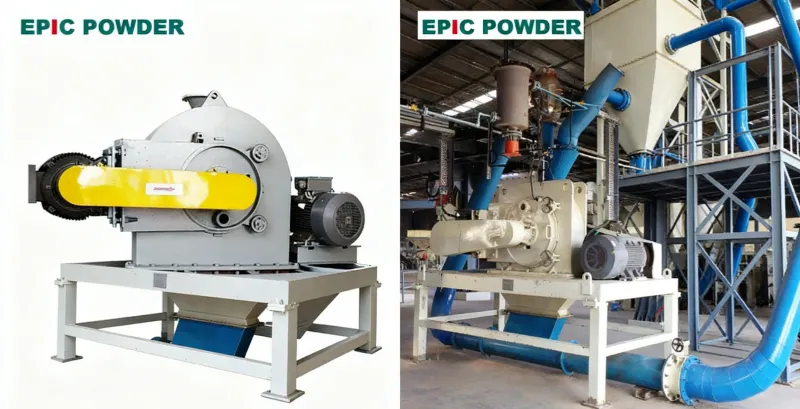
- Installing efficient dust extraction systems linked to the ultrafine powder classifying line.
- Using sealed feed and discharge points.
- Regularly maintaining filters and cyclones to prevent powder loss and airborne contamination.
Addressing these bottlenecks ensures a steady flow in your industrial limestone milling system, helping achieve reliable D97 and D50 particle size targets while reducing downtime. For more detailed information on mill types and wear solutions, exploring options like the ball mill grinding media system and vertical roller mill setups can be invaluable.
Case Study: Achieving High-Yield 10 Micron GCC
Challenge
Producing ground calcium carbonate (GCC) with a consistent particle size around 10 microns, especially maintaining tight particle size distribution (PSD) control like D97 and D50 targets, poses significant challenges. The main issues were excessive powder agglomeration, high specific energy consumption (kWh/t), and unstable airflow affecting classification efficiency in the ultrafine powder classifying line. Managing heat buildup and wear on grinding media in a typical ball mill setup further complicated the process.
Epic Powder Solution
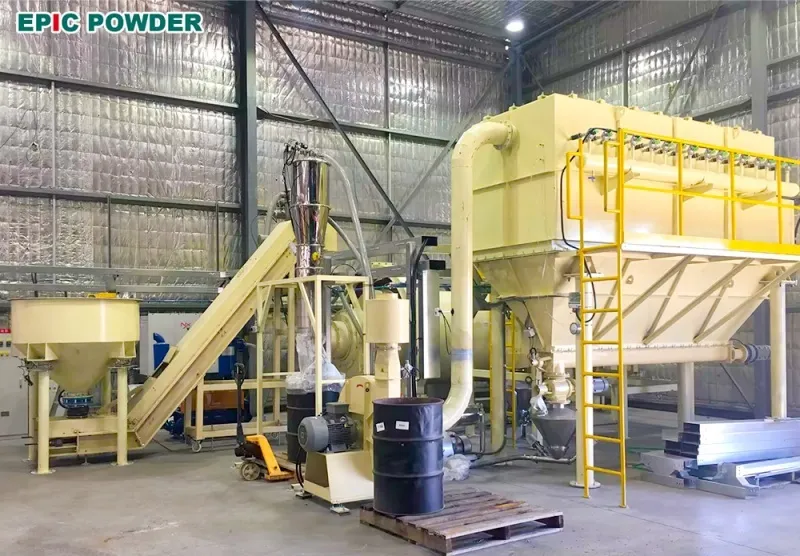
Epic Powder tackled these challenges by optimizing the ball mill grinding media ratio combined with fine-tuning the air classifier wheel speed. This balance improved classification efficiency, ensuring tighter PSD control around the 10-micron target. Additionally, integrating surface modification such as the stearic acid coating process helped reduce powder agglomeration, improving flow and dispersion in mineral filler masterbatch production. The system also involved real-time differential pressure control to stabilize airflow and reduce energy consumption, while wear protection measures were enhanced to extend equipment life. You can find more about these innovations in calcium carbonate processing via Epic Powder’s specialized approach.
Result
The result was a high-yield 10-micron GCC with a narrowly controlled D97 and D50 particle size distribution, improved consistency, and reduced energy costs. The combination of advanced grinding technology and process optimization significantly boosted production throughput while maintaining high product quality tailored for industrial limestone milling systems and other applications requiring high-aspect ratio powder. This case highlights how precise control over grinding media and classification parameters, alongside surface treatment, is key in ultrafine calcium carbonate ultrafine processing.
For deeper insights into the role of powdered fillers in various industries and how these processes translate into high-value products, see how active calcium carbonate injects vitality across sectors.

“Thanks for reading. I hope my article helps. Please leave a comment down below. You may also contact Zelda online customer representative for any further inquiries.”
— Posted by Emily Chen