
Calcium carbonate (CaCO₃) is one of the most widely used industrial minerals on the planet. From paper coating and plastics fillers to paints, rubber, pharmaceuticals, and even food additives, the quality of ground calcium carbonate (GCC) powder depends heavily on particle size, distribution, whiteness, and production efficiency. Achieving the right fineness — whether 200 mesh for basic fillers or D97 5–10 μm for high-end applications — requires the right grinding equipment.
Two of the most common machines in the calcium carbonate industry are the Raymond Mill and the Ball Mill. Both can process limestone or marble into fine powder, but they differ dramatically in working principle, energy efficiency, fineness range, operating costs, and suitability. This article provides a comprehensive head-to-head comparison to help plant owners, engineers, and procurement teams decide which mill is truly “best” for calcium carbonate grinding.
Working Principles: How Each Mill Operates
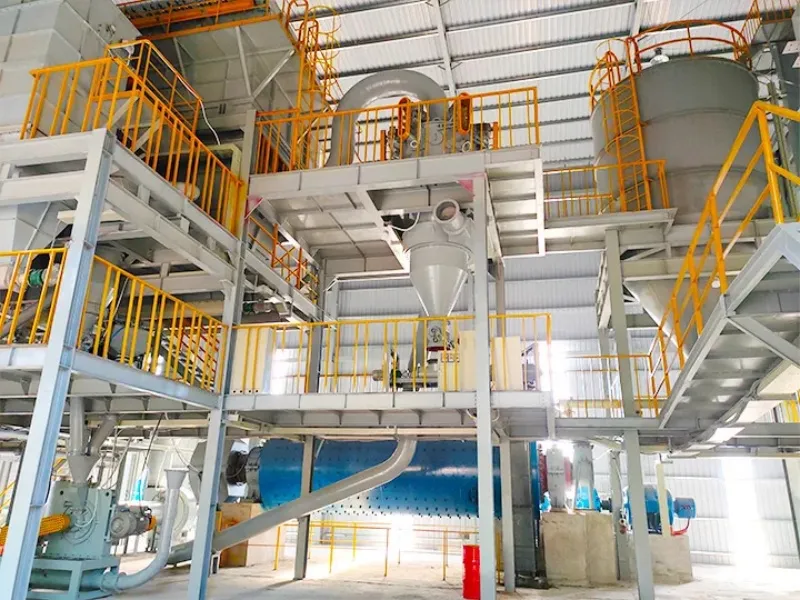
Raymond Mill (also known as Raymond roller mill) is a vertical pendulum roller mill. Material is fed into the grinding chamber between a rotating grinding roller and a fixed grinding ring. Centrifugal force presses the rollers against the ring, crushing and grinding the material through compression and shear. An internal classifier (air separator) automatically returns oversized particles for re-grinding, while qualified fine powder exits with the airflow. The entire process is dry grinding and integrated with classification.
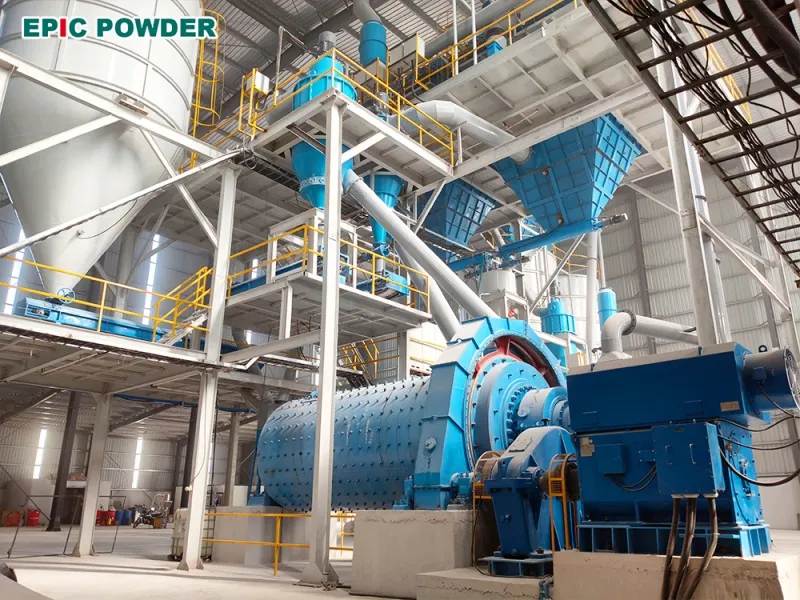
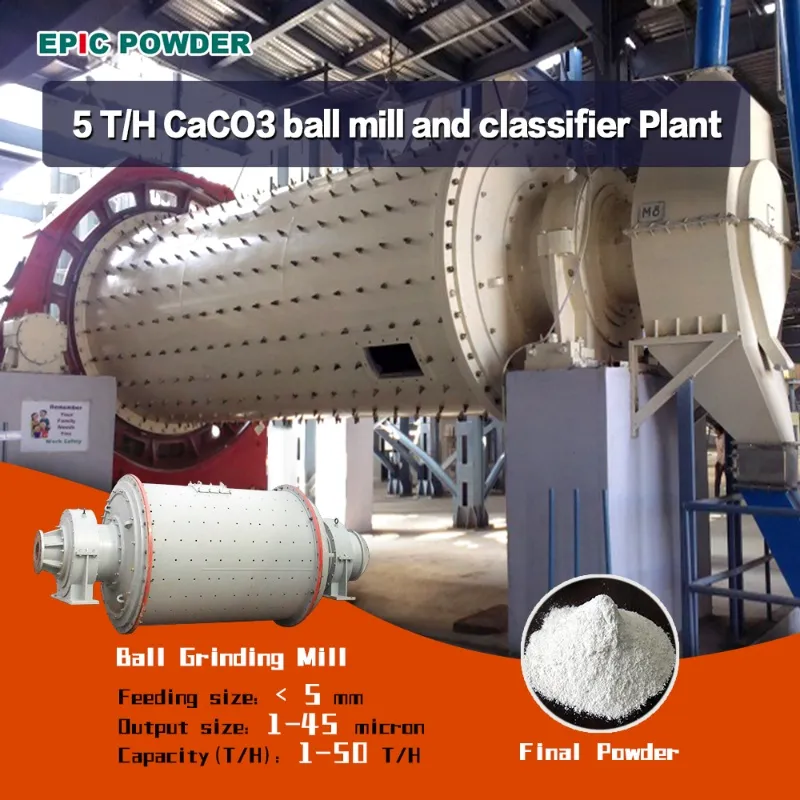
Ball Mill is a horizontal cylindrical rotating device. Steel or ceramic grinding balls inside the drum tumble and cascade as the cylinder rotates, pulverizing the material through impact and attrition. For calcium carbonate, ball mills are almost always paired with an external air classifier to achieve precise fineness control. It can operate in both dry and wet modes, though dry grinding with classifier is standard for GCC.
Key Performance Comparison for Calcium Carbonate
| Parameter | Raymond Mill | Ball Mill | Winner for CaCO₃ |
|---|---|---|---|
| Typical Fineness Range | 80–800 mesh (45–180 μm common; max ~20 μm) | 200 mesh to D97 2–45 μm (ultra-fine possible) | Ball Mill (ultra-fine); Raymond (medium) |
| Feed Size | ≤25–30 mm | ≤20–25 mm | Similar |
| Capacity | 1–30 t/h (up to 176 t/h in large models) | 0.65–615 t/h (excellent for large plants) | Ball Mill (large scale) |
| Energy Consumption | 30–50% lower than ball mill | High (especially for fine grinding) | Raymond Mill |
| Power per Ton (typical) | 20–30 kWh/t (325 mesh) | 35–60 kWh/t or more | Raymond Mill |
| Investment & Running Cost | 40% lower than ball mill | Higher (media, liners, classifier) | Raymond Mill |
| Maintenance | Simple, fewer wearing parts | Frequent ball/liner replacement | Raymond Mill |
| Particle Uniformity & Whiteness | Excellent, smooth surface | Good but can vary | Raymond Mill |
| Floor Space | Compact | Larger (especially with classifier) | Raymond Mill |
| Moisture Tolerance | <6% (dry only) | Handles higher moisture | Ball Mill |
Advantages of Raymond Mill for Calcium Carbonate Grinding
- Superior Energy Efficiency
Raymond mills consume 30–50% less electricity than ball mills for the same output at 200–400 mesh — the most common fineness for CaCO₃ fillers in plastics and paint. In a 10 t/h plant, this can translate to annual electricity savings of hundreds of thousands of dollars. - Excellent Particle Shape and Whiteness
The compression + shear action produces smoother, more uniform particles with higher whiteness, critical for high-end paper coating and premium plastics. - Lower Investment and Operating Costs
Initial capital cost is roughly 40% of a comparable ball mill system. Maintenance is straightforward — rollers and rings last longer than grinding balls, and there is no need for frequent media replenishment. - Integrated Classification
Built-in classifier gives precise control without extra equipment, reducing system complexity and footprint. - Proven Track Record for Medium-Fineness GCC
Most 325-mesh and 400-mesh calcium carbonate production lines worldwide still use Raymond mills because they deliver consistent quality at lower cost.
Advantages of Ball Mill for Calcium Carbonate Grinding
- Superior Ultra-Fine Grinding Capability
When paired with a high-efficiency classifier, ball mills can reliably produce D97 5 μm, D97 2–3 μm, or even nano-range powders required for high-grade PVC, rubber, and functional fillers. Raymond mills struggle beyond 800 mesh. - High Throughput for Large-Scale Plants
Ball mills excel in plants producing 50–200+ tons per hour. Their robust design handles continuous heavy-duty operation. - Versatility
Can process harder or slightly wetter feedstocks and is easily adapted for wet grinding if needed (though rare for GCC). - Narrow Particle Size Distribution
With modern classifiers, ball mill systems produce tighter distributions, improving product performance in coatings and plastics.
However, these benefits come at the cost of significantly higher energy bills and maintenance expenses.
Real-World Applications and Case Insights
- Paint & Coatings Industry (200–400 mesh): Raymond Mill dominates because of lower cost, better whiteness, and sufficient fineness.
- Paper Coating (325–600 mesh): Many plants still use Raymond for base grades; ultra-fine top-coat grades often switch to ball mill + classifier.
- Plastics & Rubber Fillers (up to 1250 mesh / 10 μm): Ball mill systems are preferred for high value-added products.
- Construction Materials (coarse 100–200 mesh): Raymond Mill is the clear economical choice.
A typical 20,000-ton/year GCC plant using Raymond Mill might spend $0.8–1.2 million on electricity annually, while the same output with a ball mill system could exceed $1.8 million — a difference that directly impacts profitability.
Factors to Consider When Choosing
- Target Fineness — If your main products are 80–400 mesh, choose Raymond. If you need consistent ultra-fine (<10 μm), choose Ball Mill.
- Production Scale — Small to medium plants (≤30 t/h): Raymond. Large plants (>50 t/h): Ball Mill or vertical roller mill hybrids.
- Electricity Cost — In regions with high power prices (e.g., Europe, Southeast Asia), Raymond Mill’s savings are decisive.
- Capital Budget — Raymond offers faster ROI for most new entrants.
- Product Quality Requirements — Whiteness and shape favor Raymond; ultra-fine distribution favors Ball Mill.
- Future Expansion — Many plants start with Raymond and later add a ball mill line for premium ultra-fine grades.
Modern trends show hybrid systems emerging: Raymond for coarse grinding followed by ball mill for finishing, or vertical roller mills (newer technology) replacing both for even better efficiency. However, between classic Raymond and Ball Mill, the choice remains fineness-driven.
Conclusion: Which Is Best for Calcium Carbonate Grinding?
There is no universal winner — it depends on your fineness requirements.
- For 80–800 mesh (the majority of calcium carbonate applications), Raymond Mill is the best choice — lower energy consumption, lower cost, easier maintenance, higher whiteness, and sufficient performance.
- For true ultra-fine grinding (D97 <10 μm) and high value-added products, Ball Mill (with classifier) is superior and often the only practical option.
Most calcium carbonate producers find that starting with a Raymond Mill gives the best balance of cost, quality, and profitability for standard grades, while reserving ball mill systems for specialized calcium carbonate ultra-fine grinding lines. Before investing, always conduct material trials and calculate total cost of ownership (TCO) including energy, maintenance, and downtime.
By matching the mill to your exact product specifications and plant scale, you can maximize profit margins while delivering consistent, high-quality calcium carbonate powder that meets today’s demanding market standards.
Two Related Questions & Answers
Q1: Can I modify a Raymond Mill to produce ultra-fine calcium carbonate below 10 μm?
A: Technically possible but not recommended. Even with upgraded classifiers and higher power, Raymond Mills rarely achieve stable D97 <10 μm without excessive energy use and wear. The roller-ring grinding mechanism simply lacks the impact force needed for true ultra-fine grinding. Industry experts advise switching to a ball mill + classifier system or a dedicated ultra-fine roller mill (such as HGM or CLUM) once you need fineness finer than 800–1250 mesh. Attempting ultra-fine output on a standard Raymond often results in low capacity, high rejection rates, and poor particle distribution.
Q2: How much can I save on energy costs by choosing Raymond Mill over Ball Mill for 325-mesh calcium carbonate production?
A: Real-world data from 5–50 t/h plants shows savings of 30–50% on electricity. For a 20 t/h line producing 325-mesh GCC:
- Raymond Mill system: approximately 25–30 kWh per ton.
- Ball Mill + classifier system: 40–60 kWh per ton.
At $0.10/kWh and 8,000 operating hours/year, the annual savings can exceed $300,000–$500,000 for a medium-sized plant. When you factor in 40% lower maintenance and media costs, the total TCO advantage of Raymond Mill becomes even more compelling for medium-fineness products. Always request a detailed energy audit from the manufacturer using your specific raw material moisture and hardness for precise projections.

“Thanks for reading. I hope my article helps. Please leave a comment down below. You may also contact Zelda online customer representative for any further inquiries.”
— Posted by Emily Chen