
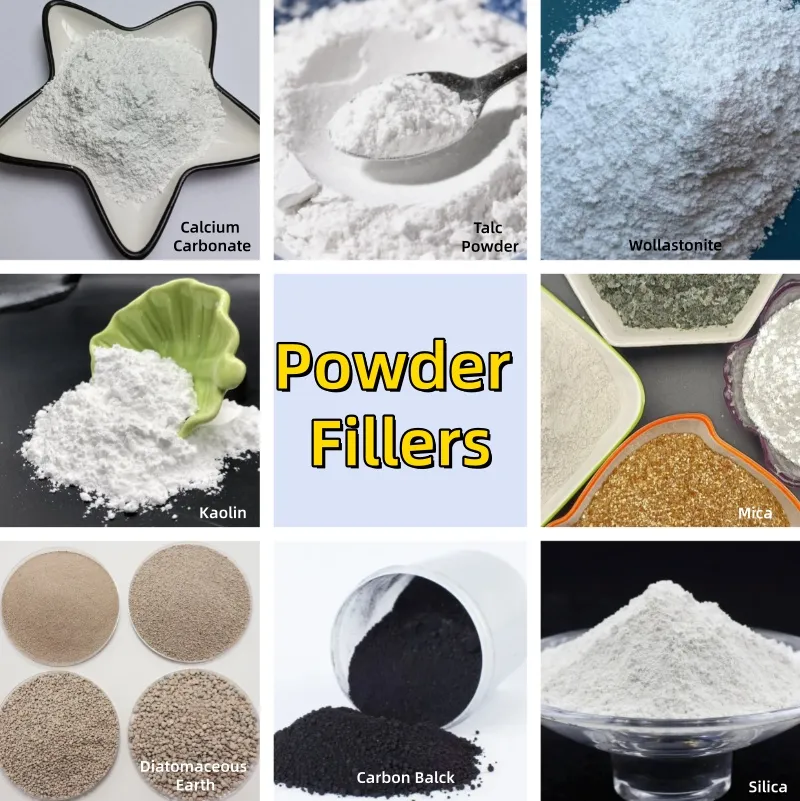
In the rubber and plastics industry, there is a common belief that the finer an inorganic powder filler is ground, the better its reinforcing effect will be.
As a result, many companies have steadily raised their fineness targets when purchasing mineral fillers like heavy calcium carbonate and talc. These requirements have pushed from 800 mesh up to 2500 mesh or even finer. However, new problems frequently surface during production. Finished products become more brittle. The maximum loading limit drops. Dispersant consumption rises, and processing energy costs climb. Expenses increase, yet overall performance improvements fall short of expectations.
These issues stem from multiple factors, but one critical link is often overlooked. Dry ultrafine grinding and fine classification are not simple tasks of grinding finer and passing material through a sieve. Instead, processing powder filler is a systematic engineering process. It involves equipment selection, parameter matching, particle size distribution control, and surface state utilization.
1. Differences in Grinding Methods: More Than Just “Grinding Finer“
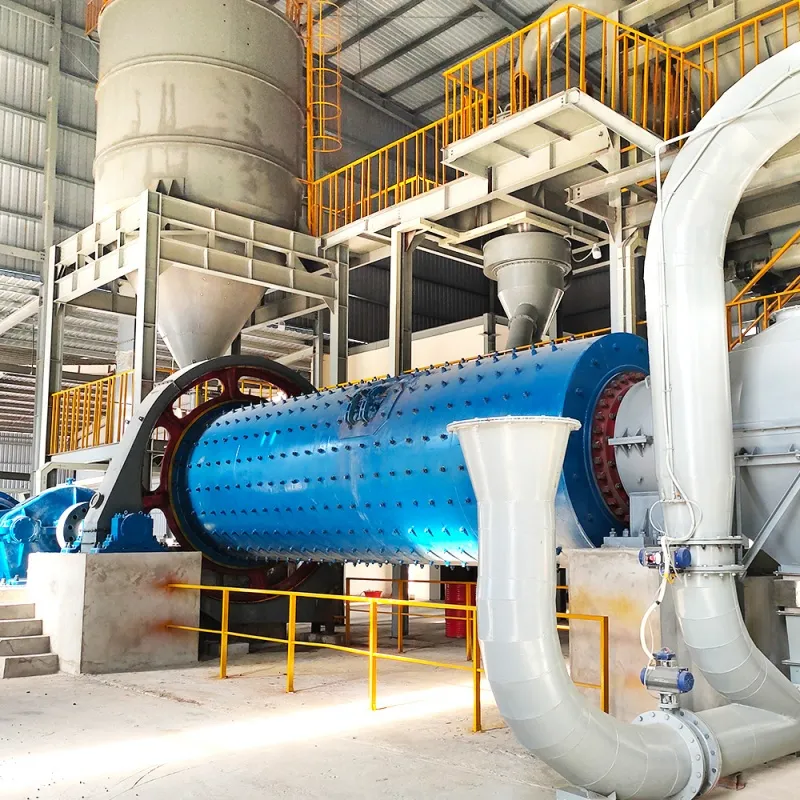
Equipment currently used in industry for dry ultrafine grinding of non-metallic mineral fillers mainly includes ball mills, vertical stirred mills, ring-roller mills, jet mills, and mechanical impact mills. Each type operates on different grinding mechanisms and suits distinct scenarios.
- Ball mills and vertical stirred mills rely on the compression, shearing, and impact of grinding media to achieve size reduction. They feature a high reduction ratio and can reliably process coarse particles down to the micron level. However, media wear may introduce trace impurities, and unit energy consumption is relatively high.
- Ring-roller mills use material-layer compression grinding principles. Their energy consumption is typically 20% to 30% lower than that of ball mills, making them suitable for medium-hard minerals like calcite and dolomite. Particle shape depends heavily on natural mineral cleavage, but material-layer compression helps preserve or enhance these natural features.
- Jet mills utilize high-speed airflow to drive particles into mutual collisions for grinding. They operate without grinding media, which results in high product purity. This makes them ideal for applications with strict requirements on whiteness and low contamination. However, unit energy consumption is high, with electricity usage ranging from 200 to 500 kWh per metric ton.
Selecting equipment is not about choosing the most high-end option. Instead, it requires matching the mineral type, target fineness, purity requirements, and overall costs. If an application does not demand extremely low impurity levels, using a jet mill for powder filler production may not be cost-effective.
2. Fine Classification: The Key to Product Consistency
If grinding determines how far particles are broken down, classification determines which particles can exit as the final product.
Particles produced during grinding naturally have a range of sizes—including target-sized particles, unground coarse particles, and over-ground ultrafine particles. Without effective classification, batch-to-batch stability in particle size distribution cannot be guaranteed.
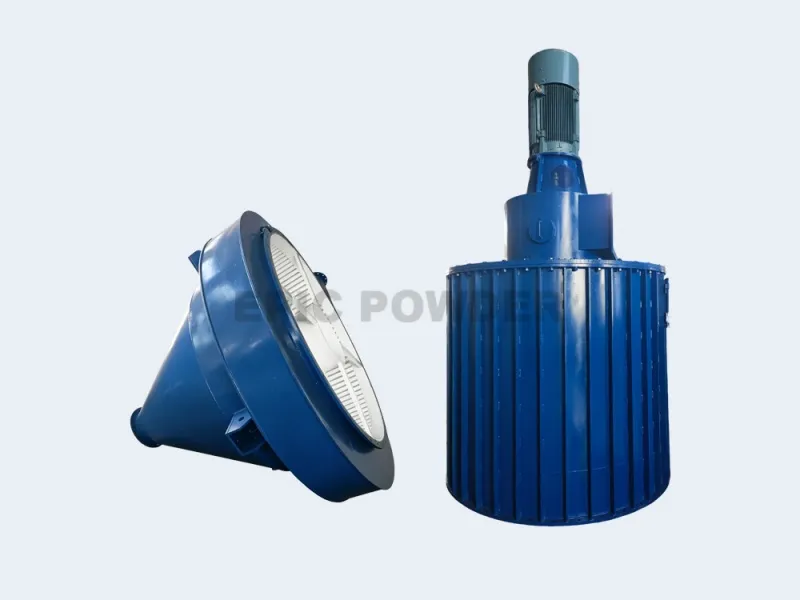
Turbo air classifiers are currently widely used for dry fine classification. Their operation relies on a high-speed rotating turbine that generates a centrifugal force field. This force works together with the airflow drag to separate coarse and fine particles: coarse particles are thrown outward and returned to the mill, while fine particles travel with the airflow into the collection system as finished product.
Two key technical points deserve attention here:
D50 Control:
D50 directly affects the maximum size limit of the product. It depends on turbine speed and air volume. It also depends on material concentration and dispersion within the classification zone. If feed concentration is too high, particle interference reduces classification precision. This causes coarse leakage. Even when the classifier operates at high speeds, coarse particles may still appear in the finished powder filler. The root cause is often improper feed concentration rather than machine limits.
Fine Powder Recovery:
In actual operation, some fine powder gets entrained by coarse particles or adheres to their surfaces, returning to the mill alongside them. As a result, fine particles are ground repeatedly. This not only increases energy consumption, but can also generate excessive submicron-level micro-powders. When filled into rubber and plastics, these micro-powders are often a major culprit behind increased melt viscosity and reduced processing fluidity. In practice, this issue can be mitigated by controlling the solid-to-gas ratio in the classification zone, optimizing turbine blade angles, and introducing secondary air rinsing.
3. Particle Size Distribution Is More Valuable Than a Single Fineness Metric
The market conventionally uses “mesh size” to label filler fineness. For ultrafine powder filler, however, what truly affects application performance is particle size distribution.
Two heavy calcium carbonate products with identical D50 values can perform quite differently in the same formulation. A product with a narrow particle size distribution may provide more stable melt fluidity during polypropylene (PP) compounding. Conversely, a product with a broad distribution contains coarse particles that can cause surface defects in finished goods, as well as high-oil-absorption micro-powders that raise melt viscosity.
Therefore, for many applications, the real goal is not “finer size,” but “rational distribution.” This objective is primarily achieved through a closed-circuit loop of “grinding, classifying, and re-grinding.” Within a closed circuit, the classifier acts as a quality gatekeeper: only qualifying particles are allowed to leave the loop, while coarse particles return for further grinding. This approach effectively prevents coarse particle leakage and fine particle over-grinding, both of which are common in open-circuit processes.
4. Timing the Integration of Grinding and Surface Modification
Another worthy process detail is leveraging fresh surfaces created during the grinding process.
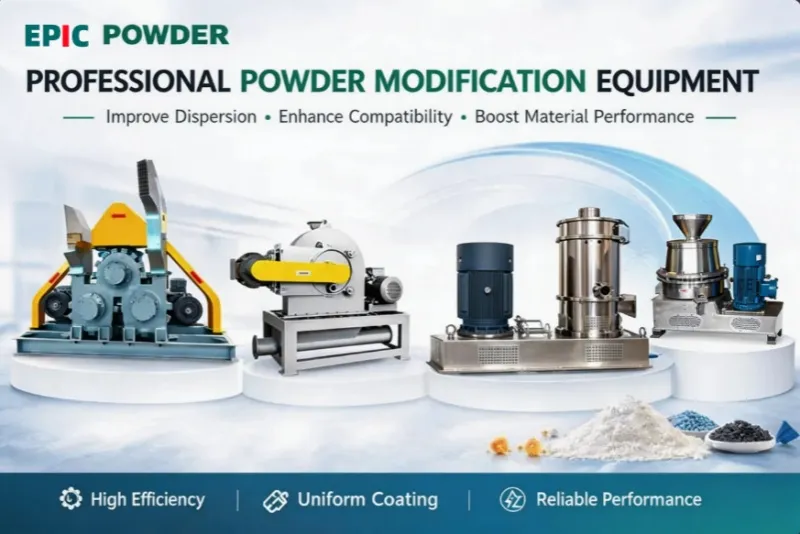
As minerals fracture and cleave during grinding, they continuously expose fresh surfaces with high surface energy. These fresh surfaces generally have a stronger adsorption capacity for modifying agents than aged, exposed surfaces. Adding surface treatment agents at an appropriate stage during grinding or classification allows in-situ modification on these highly active fresh surfaces. This can boost modification efficiency or reduce agent dosage while achieving the same level of performance.
To achieve this, proper dosing devices must be placed at the mill outlet, within the classification loop, or upstream of the collection system. Parameters such as dosage, atomization state, and mixing temperature must also be carefully controlled. Optimizing these process details often yields better practical results than simply switching to a different type of modifier.
Grinding and classification are foundational steps in powder filler processing. As downstream demand for high-quality rubber and plastic products grows, industry professionals must understand these underlying principles. Mastering grinding mechanisms, controlling classification precision, optimizing size distribution, and timing surface modification create real value. Rather than asking “how fine can we grind,” the key is determining “how to grind more rationally.” Answering that requires balancing mineral characteristics, equipment-process matching, and downstream application needs.

“Thanks for reading. I hope my article helps. Please leave a comment down below. You may also contact Zelda online customer representative for any further inquiries.”
— Posted by Emily Chen