
Calcium carbonate has become one of the most widely used inorganic fillers in plastic film production. This is mainly due to its low cost, high whiteness, and balanced overall properties. When processed into filler masterbatch for film production, calcium carbonate helps simplify manufacturing processes. It also improves compounding efficiency and increases productivity. In addition, dust generation during processing is effectively reduced, providing both economic and environmental benefits. From basic filling to functional modification, the application of calcium carbonate in plastic films continues to expand. Its ability to regulate film performance and adapt to different polymer matrices makes it an important material for the development of the plastic film industry.
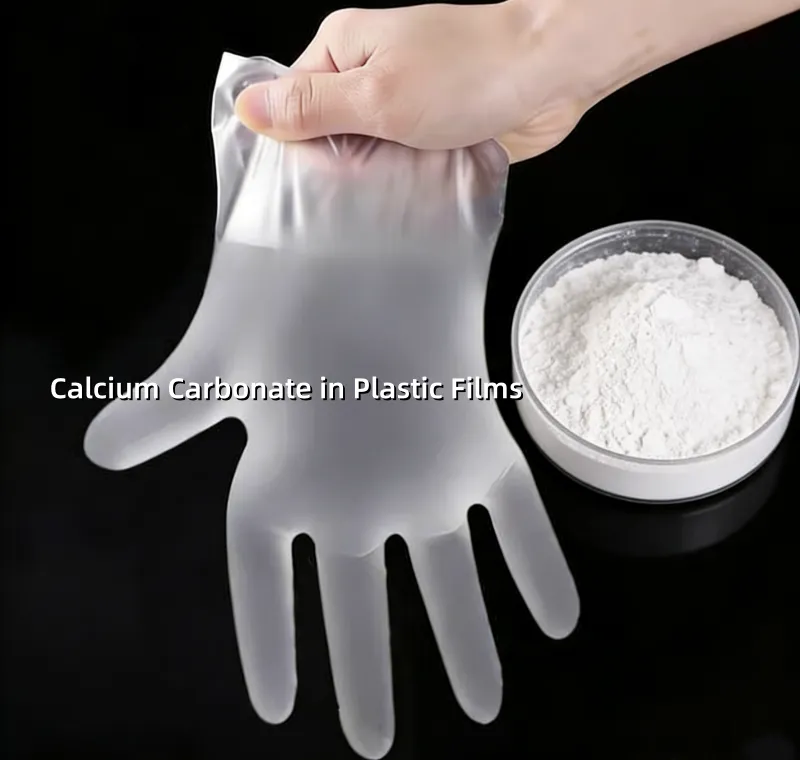
Key Characteristics of Calcium Carbonate as a Plastic Film Filler
As a filler in polymer film materials, the value of calcium carbonate is closely related to its intrinsic properties. At the same time, these properties also introduce certain challenges.
From an advantages perspective, calcium carbonate significantly improves the dimensional stability and stiffness of plastic films. It reduces the risk of deformation under high-temperature conditions. Owing to its excellent heat resistance, it also enhances the thermal stability of films. Most importantly, calcium carbonate can partially replace resin materials. This leads to a substantial reduction in production costs.
However, several challenges must be addressed. First, calcium carbonate has a higher density than organic resins. Excessive addition increases film density, which is unfavorable for lightweight applications. Second, improper use, such as insufficient surface modification or excessive filler content, can reduce tensile strength, impact resistance, toughness, and surface gloss. Third, calcium carbonate is a hydrophilic inorganic compound. Its surface contains abundant hydroxyl groups and shows strong alkalinity. In contrast, most film resins are hydrophobic. This interfacial incompatibility leads to poor dispersion and agglomeration within the polymer matrix. As a result, interfacial defects form and negatively affect mechanical stability and processing performance. With increasing filler content, these problems become more pronounced.
Therefore, targeted surface modification of calcium carbonate is a critical prerequisite for its efficient application in plastic films.
Multidimensional Effects of Calcium Carbonate on Plastic Film Performance
Through appropriate surface modification and reasonable dosage control, calcium carbonate can improve plastic film performance in multiple aspects. These include mechanical, thermal, and functional properties. This approach enables a balance between low cost and high performance.
Optimization of Mechanical Properties
The influence of calcium carbonate on mechanical properties is not simply positive or negative. It strongly depends on particle size, surface modification, and filler content.
Experimental results show that ultrafine ground calcium carbonate can effectively modify LLDPE/mPE blends. When the filler content is controlled at 5%, the dart impact strength increases by 13.2%. The elongation at break increases by approximately 5%. Tensile strength also shows a slight improvement. These results demonstrate a clear strengthening and toughening effect.
This behavior is mainly attributed to the uniform dispersion of surface-modified ultrafine calcium carbonate. Well-dispersed particles can effectively transfer stress. They also reduce stress concentration within the polymer matrix.
Improvement of Thermal Properties
Calcium carbonate exhibits excellent thermal stability. When incorporated into plastic films, it restricts the thermal motion of polymer chains.
As a result, the thermal expansion coefficient of the film decreases. Dimensional shrinkage at elevated temperatures is reduced. The heat distortion temperature is also increased. With a reasonable increase in filler content, thermal stability continues to improve. This makes calcium carbonate-filled films suitable for applications that experience temperature fluctuations. Typical examples include agricultural films and food packaging.
Application of Calcium Carbonate in Plastic Films of Different Materials
Plastic films are produced from a wide range of polymers. Their applications include packaging materials, agricultural films, and functional protective membranes. Due to its good adaptability, calcium carbonate is widely used in polyethylene, polypropylene, and polyvinyl chloride films.
Application in Polyethylene (PE) Films
Polyethylene is one of the most widely used film-forming resins. Different grades of PE films show significant performance differences. The addition of calcium carbonate can effectively improve overall performance.
Calcium carbonate enhances mechanical strength and thermal stability. It also improves anti-fog properties. In some formulations, it promotes degradability and optimizes moisture and gas permeability. Calcium carbonate-filled PE films represent the largest consumption volume among plastic packaging films. They account for more than 40% of total plastic packaging film usage. These films are widely used in food packaging, daily necessities packaging, and agricultural films.
Functional Applications in Polypropylene (PP) Films
Polypropylene films are non-toxic and exhibit excellent mechanical strength. Apart from limited use of blow molding, most PP films are produced by biaxial stretching. This process creates highly oriented film structures.
In microporous PP membranes prepared by thermally induced phase separation, calcium carbonate serves as a pore-forming agent. By adjusting particle size and filler content, pore structure and porosity can be precisely controlled. These composite membranes combine good mechanical properties with high separation efficiency. They show strong potential in industrial filtration, pharmaceutical purification, and energy storage applications.
Applications in PVC and Related Films
Calcium carbonate also plays an important role in PVC and related films. When used within an appropriate dosage range, it significantly improves tensile strength and elongation at break in PVC films.
In PVDC films, calcium carbonate helps regulate barrier properties. It also improves processing flowability and mechanical stability. In PVDF membranes prepared by thermally induced phase separation, calcium carbonate content and particle size directly affect membrane porosity. With proper optimization, water flux and retention performance can be improved simultaneously. This makes such membranes suitable for water treatment and separation applications.
Conclusion
The application of calcium carbonate in plastic films reflects the functional evolution of inorganic fillers. Its role has shifted from simple cost reduction to performance enhancement and functional modification.
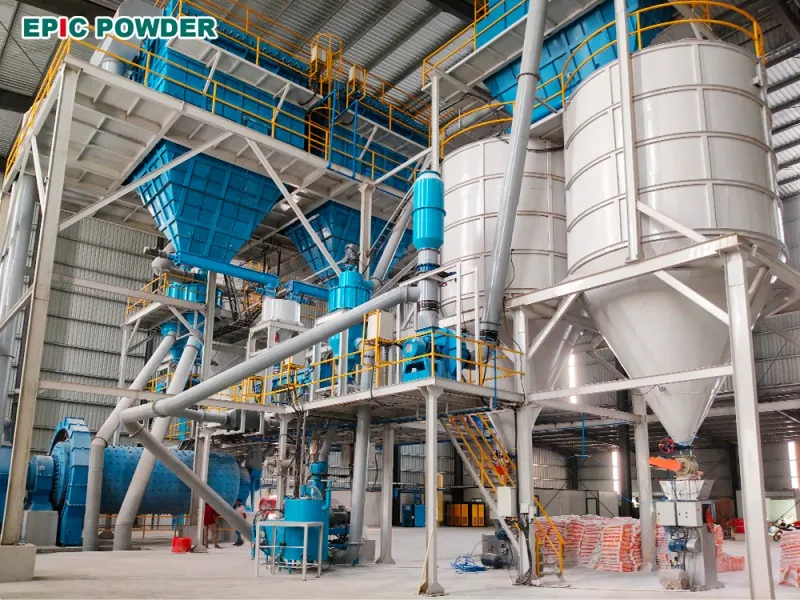
Precise control of particle size and dispersion is essential. Advanced grinding and classification technologies are therefore critical. Epic Powder provides reliable solutions through its calcium carbonate grinding equipment. These systems enable the production of fine, uniformly distributed powders suitable for surface modification.
By improving dispersion and interfacial compatibility, high-quality ground calcium carbonate enhances the mechanical and thermal performance of plastic films. As the industry moves toward greener and higher-value products, Epic Powder’s powder processing technologies will continue to support the development of advanced plastic films and functional membranes.

“Thanks for reading. I hope my article helps. Please leave a comment down below. You may also contact Zelda online customer representative for any further inquiries.”
— Posted by Emily Chen