
Among the family of inorganic powder materials, calcium carbonate (CaCO₃) is undoubtedly a shining star. Composed of calcium, carbon, and oxygen, it is widely found in nature in the form of limestone, marble, and calcite. At the same time, it can also be produced on a large scale through industrial synthesis. Thanks to its abundant availability, low cost, tunable performance, and environmental friendliness, calcium carbonate has penetrated numerous industries—including plastics, papermaking, coatings, rubber, food, and pharmaceuticals—becoming an indispensable basic material in modern industrial production.
Classification and Core Characteristics of Calcium Carbonate Inorganic powder
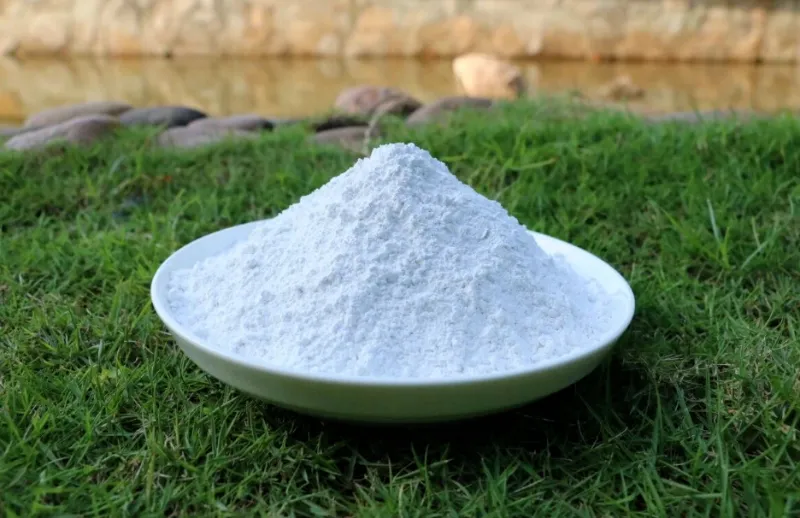
Based on differences in production methods and structural characteristics, calcium carbonate is generally classified into three main categories: ground calcium carbonate (GCC), precipitated calcium carbonate (PCC), and nano calcium carbonate (NPCC). Each type exhibits distinct performance characteristics and is suited to different application scenarios.
Classification and Preparation Characteristics
Ground Calcium Carbonate (GCC), also known as heavy calcium carbonate, is produced by physical processing methods such as crushing, grinding, and classification of natural minerals like limestone and calcite. Its particle size typically ranges from 1 to 100 μm. GCC retains the natural crystal structure of the mineral and is characterized by extremely low cost and large production capacity.
Precipitated Calcium Carbonate (PCC) is produced via chemical synthesis. Limestone is calcined, hydrated, and then carbonated to form PCC. Its particle size generally ranges from 0.5 to 10 μm. PCC exhibits diverse crystal morphologies—such as spindle-shaped, cubic, and needle-like forms—and its properties can be tailored through precise process control.
Nano Calcium Carbonate (NPCC) refers to ultrafine calcium carbonate with particle sizes below 1 μm. It requires highly controlled chemical synthesis and surface modification techniques. Due to its large specific surface area and size-related effects, nano calcium carbonate exhibits performance characteristics far superior to conventional calcium carbonate.
Core Physical and Chemical Properties
The core properties of calcium carbonate are closely related to its structure. In terms of physical properties, it offers high whiteness—premium grades can exceed 95%—and a moderate refractive index, making it an ideal white filler. With a Mohs hardness of approximately 3, it causes minimal wear on processing equipment.
Chemically, calcium carbonate exhibits excellent stability. Under normal conditions, it does not react violently with most acids or alkalis and dissolves only in strong acids such as hydrochloric acid. It also possesses suitable oil absorption and dispersibility. Through surface modification, it can achieve excellent compatibility with organic materials. In addition, calcium carbonate is non-toxic, odorless, and non-irritating, enabling its safe use in highly regulated fields such as food and pharmaceuticals.
Application Value of Calcium Carbonate Inorganic powder in Key Industries
The role of calcium carbonate has long surpassed the traditional concept of simple “filling.” In many applications, it not only reduces costs but also significantly enhances material performance, acting as a critical bridge between inorganic powder minerals and organic materials.
Plastic Modification: The “Cost-Performance Champion”
Calcium carbonate is the most widely used inorganic powder filler in the plastics industry, particularly in the modification of general-purpose plastics such as polyethylene (PE), polypropylene (PP), and polyvinyl chloride (PVC).
Unmodified polyethylene typically suffers from insufficient rigidity and poor heat resistance. By incorporating calcium carbonate, material costs can be reduced by 10–30%, while hardness, dimensional stability, and stiffness are significantly improved. When calcium carbonate is surface-modified with coupling agents such as titanates or silanes, its surface changes from hydrophilic to hydrophobic. This enables strong interfacial bonding with PE molecular chains and prevents phase separation. As a result, tensile strength can increase by more than 40%, and impact strength by over 50%.
In practical applications, calcium carbonate–modified PE is widely used in agricultural films (to enhance stiffness and aging resistance), pipes (to improve creep resistance), and household appliance housings (to increase impact resistance). It has truly become the “cost-performance champion” of plastic modification.
Papermaking Industry: The “Invisible Driver” of Paper Quality
Papermaking is another major application field for calcium carbonate. Whether used as a filler or as a coating pigment, it plays a decisive role in paper quality.
As a filler, calcium carbonate fills the voids between fibers, improving paper whiteness, opacity, and printability, while reducing the consumption of wood pulp and conserving forest resources. High-quality papermaking calcium carbonate requires strict control of particle size distribution. For example, calcium carbonate used in high-speed coating machines must limit particles ≥5 μm to prevent blade wear, while particles ≤1 μm should generally be kept below 30% to minimize filler loss.
As a coating pigment, calcium carbonate with a narrow particle size distribution improves coating rheology, allowing better synergy between pigments and binders. This enhances surface strength and optical properties. In addition, the electrical charge characteristics of calcium carbonate are critical in papermaking. Charge density varies with degree of grinding and directly affects filler dispersion, additive efficiency, and white water circulation. High-purity calcium carbonate (≥98%) is especially important for specialty papers such as food packaging paper and thermal recording paper.
Coatings and Rubber: A “Core Functional Additive”
In the coatings industry, calcium carbonate is used as an extender pigment. It improves leveling, hiding power, and weather resistance, while reducing the consumption of expensive pigments such as titanium dioxide. For example, ultrafine calcium carbonate in latex paints produces smoother and finer coatings and improves scrub resistance. In industrial anti-corrosion coatings, its chemical stability enhances resistance to acids and alkalis.
In the rubber industry, calcium carbonate serves as an important reinforcing filler. It can partially replace carbon black, improving tensile strength, tear resistance, and abrasion resistance, while also enhancing processability. For rubber products such as tires and seals, modified calcium carbonate not only reduces production costs but also mitigates the environmental impact associated with carbon black, aligning with green manufacturing trends.
Modification Technologies and Development Trends of Calcium Carbonate
As downstream industries demand higher performance, unmodified calcium carbonate is no longer sufficient. Surface modification has become the key to unlocking its full value. At the same time, green, functional, and composite development represents the future direction of the industry.
Mainstream Modification Technologies
Surface modification aims to change the surface properties of calcium carbonate. This is achieved through physical or chemical methods. The goal is to improve compatibility with organic matrices.
Coupling agent modification is the most widely used approach. Titanate coupling agents are commonly applied in plastics to enhance mechanical properties. Silane coupling agents are widely used in coatings to improve weather resistance. Aluminate coupling agents are cost-effective and suitable for rubber applications.
Other methods are also used. Surfactant modification, such as stearic acid treatment, is economical and suitable for mid- and low-end products. Polymer coating methods, such as polyethylene encapsulation, are applied in high-end plastic applications.
After modification, calcium carbonate shows much better dispersion. Interfacial bonding strength is significantly improved. Agglomeration is effectively reduced. Its reinforcing and toughening effects are fully realized.
Future Development Trends
Future development will focus on high performance, low energy consumption, and environmental sustainability.
First, functional customization will continue to advance. By controlling particle size, morphology, and surface chemistry, calcium carbonate with antibacterial, flame-retardant, thermally conductive, or electrically conductive functions can be developed.
Second, composite development will become more important. Calcium carbonate will be combined with fillers such as carbon nanotubes, glass fibers, or wood powder. Multi-component composite systems will be created to achieve synergistic effects.
Third, green production will accelerate. Bio-based coupling agents and biodegradable modifiers will be developed. Production processes will be optimized to reduce energy consumption and emissions.
Finally, intelligent upgrading will play a key role. Computational simulation will be used to predict modification effects. Process parameters will be precisely controlled. Product quality stability will be further improved.
Conclusion
From natural minerals to essential industrial materials, calcium carbonate, as an Inorganic powder, has shown remarkable versatility. It serves as a cost-effective modifier in plastics. It also acts as a safe and reliable material in food and pharmaceutical applications.
With continuous advances in modification technologies and expanding application fields, calcium carbonate will continue to evolve. It will play an increasingly important role in green manufacturing and high-end materials. In doing so, it will make a lasting contribution to high-quality industrial development.

“Thanks for reading. I hope my article helps. Please leave a comment down below. You may also contact Zelda online customer representative for any further inquiries.”
— Posted by Emily Chen