
Nano calcium carbonate refers to a functional inorganic filler with a particle size of 1–100 nm. It is widely used in rubber, plastics, papermaking, inks, coatings, sealants and adhesives, pharmaceuticals, toothpaste, food, and other fields. However, different applications have distinct requirements for particle size distribution, crystal form, oil absorption value, dispersion, and other properties.
Application of Nano Calcium Carbonate in Plastics
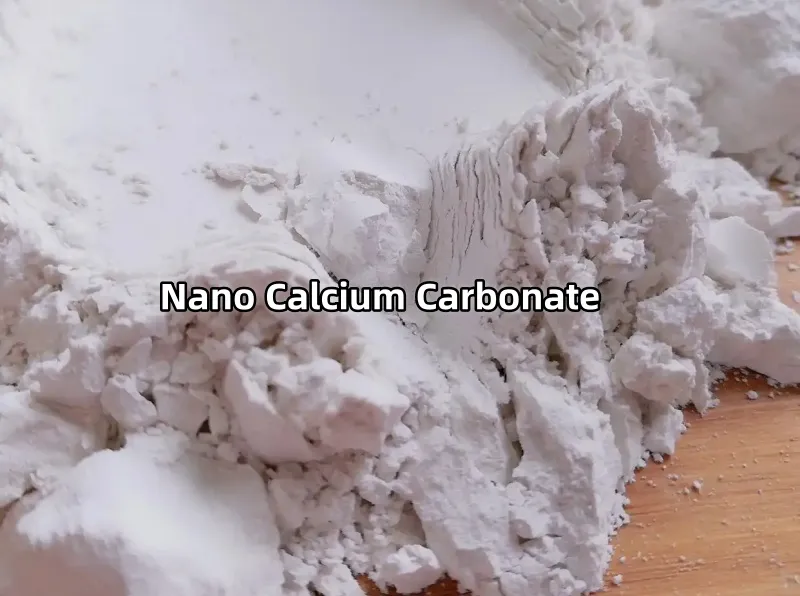
In plastic processing and manufacturing, ordinary calcium carbonate can only be used as a general filler. Modified nano calcium carbonate, however, can function not only as a filler but also as an activator and reinforcing agent. It can increase product volume, improve hardness and strength, enhance processing performance, and improve heat resistance, flexural strength, elastic modulus, and other mechanical properties of plastic products.
Nano calcium carbonate is widely used in PVC, PS, PP, and other plastics. Among them, PVC consumes the largest amount, especially in products such as wires, cables, and pipes. Nano calcium carbonate provides excellent reinforcing and toughening effects for PVC. Its nano-scale characteristics enable processed PVC products to exhibit improved strength, barrier properties, flame retardancy, thermal stability, and overall mechanical performance.
Technical Requirements of Nano Calcium Carbonate for the Plastics Industry
- Oil absorption value: Generally required to be low. Due to the small particle size and large specific surface area of nano calcium carbonate, a high oil absorption value increases plasticizer consumption during compounding, raises system viscosity, worsens processing performance, and increases production costs.
- Crystal form: Mainly cubic or spherical. These crystal forms exhibit low flow resistance, are easy to process, and do not negatively affect the surface gloss of plastic products.
- Particle size: Typically controlled at around 100 nm. If the particle size is too large, the nano effect cannot be achieved and product appearance may be affected; if too small, surface energy increases, severe agglomeration occurs, dispersion becomes difficult, and surface defects may appear.
- Dispersion: High dispersibility is essential. Severe agglomeration leads to secondary particle sizes much larger than primary particles. Since shear forces during plastic compounding are limited, poorly dispersed nano calcium carbonate may cause local defects and quality issues.
- Moisture content: Should not exceed 0.5%. Excessive moisture can cause bubbles or voids on plastic surfaces.
- pH value: Should be controlled below 10. A high pH negatively affects whiteness and surface gloss, worsens appearance, increases system viscosity, and impairs processing.
Among all non-metallic mineral fillers used in plastics, calcium carbonate accounts for the largest proportion, approximately 60–70% of total plastic additives. However, challenges remain in high-performance applications, particularly in addressing nano calcium carbonate agglomeration, improving dispersion, and enhancing interfacial bonding strength in composites.
Application of Nano Calcium Carbonate in Rubber
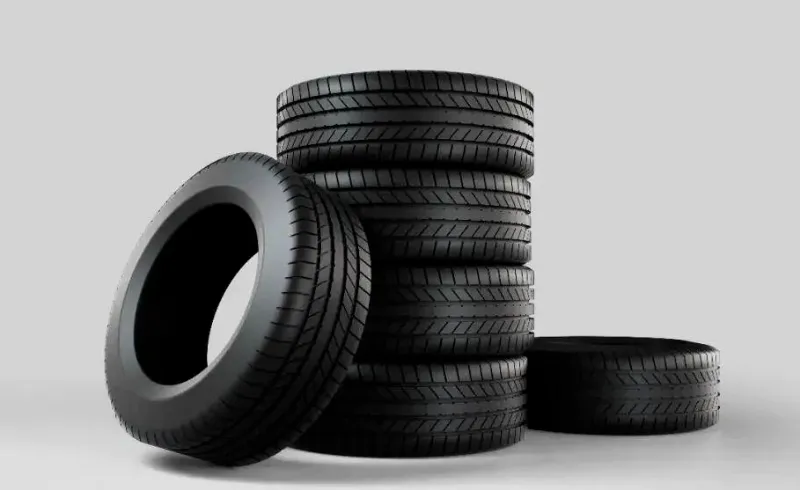
In the rubber industry, nano calcium carbonate is mainly used in tires, wires, cables, and rubber products. It increases volume, reduces costs, and improves processing performance. Currently, heavy calcium carbonate and ordinary light calcium carbonate are most commonly used, but the application scope of nano calcium carbonate is expanding. Rubber products containing nano CaCO₃ show significantly improved elongation, compression set resistance, flex resistance, and tear resistance compared to those using ordinary calcium carbonate.
Nano calcium carbonate treated by special processes has high surface activity. Under ultraviolet irradiation, it can release free electrons that readily react with oxygen or organic substances, killing bacteria and viruses. Therefore, nano CaCO₃ also exhibits antibacterial and disinfecting properties.
Specific Applications
- Tires: Nano calcium carbonate can partially replace carbon black and white carbon black in tire production. However, due to lower reinforcing performance, it is mainly used in low-stress areas such as sidewalls, carcass compounds, inner liners, and cushion layers. When used together with active zinc oxide, it can significantly enhance tread compound strength.
- Rubber hoses and belts: Mainly provides reinforcement, whitening, and improved dispersion of rubber compounds.
- Wires and cables: Used primarily in protective sheaths and rubber compounds for mining cables, high-voltage cables, and marine cables.
Technical Requirements for the Rubber Industry
- Oil absorption value: Generally required to be high. A higher oil absorption value improves wetting and reinforcing effects in rubber.
- Crystal form: Mainly chain-like or chain-linked structures, which interlock during processing and enhance system strength.
- Particle size: Typically 80–120 nm. Larger particles provide insufficient reinforcement, while smaller particles increase contact area, making dispersion difficult and impairing mixing.
- Moisture content: Should not exceed 0.5%. Excessive moisture prolongs scorch time and adversely affects vulcanization efficiency.
- pH value: Generally controlled at 9.5–10.5. A low pH slows vulcanization, reduces efficiency, and increases energy consumption.
Adding nano calcium carbonate significantly enhances rubber reinforcement while also improving aging resistance, oil resistance, and dispersion. Although its reinforcing effect is superior to ordinary light calcium carbonate, it is still inferior to carbon black and white carbon black. Complete replacement may reduce strength and cause roller sticking if used excessively, requiring careful formulation optimization.
Application of Nano Calcium Carbonate in Adhesives
Adhesives consist mainly of base resin, curing agents, fillers, coupling agents, and catalysts. With the rapid development of real estate, packaging, and building materials, adhesive consumption has increased significantly. Nano calcium carbonate, as an important filler, offers low cost and good compatibility. It accelerates crosslinking, improves thixotropy, enhances adhesion, tensile strength, and reinforcement.
Currently, its application in silicone sealants is relatively mature, while its use in polyurethane adhesives is still in early stages. Polyurethane adhesives offer excellent adhesion, aging resistance, surface paintability, and environmental friendliness, making them advantageous in many applications.
Technical Requirements for the Adhesives Industry
- Oil absorption value: A key parameter, especially for silicone sealants. Higher oil absorption improves mechanical properties and thixotropy but increases viscosity and additive consumption, raising costs. Requirements vary by formulation.
- Crystal form: Generally cubic or rhombohedral, compatible with product and equipment requirements.
- Particle size: Typically 60–100 nm. Larger particles reduce mechanical performance and thixotropy, causing sagging; smaller particles agglomerate easily, complicating kneading and causing surface defects.
- Moisture content: Should be as low as possible, generally below 0.5%. High moisture increases hydroxyl groups, promotes aggregation, raises viscosity, prolongs mixing time, reduces output, increases energy consumption, and may cause foaming in polyurethane adhesives due to CO₂ generation.
- pH value: Calcium carbonate is weakly alkaline (pH 8–10). Improper control can lead to alkalinity rebound, causing reactions with acidic components, surface defects, and reduced mechanical properties.
- Specific surface area: Typically 20–25 m²/g. Excessive surface area enhances reinforcement but worsens extrusion performance and dispersion.
Application of Nano Calcium Carbonate in Coatings
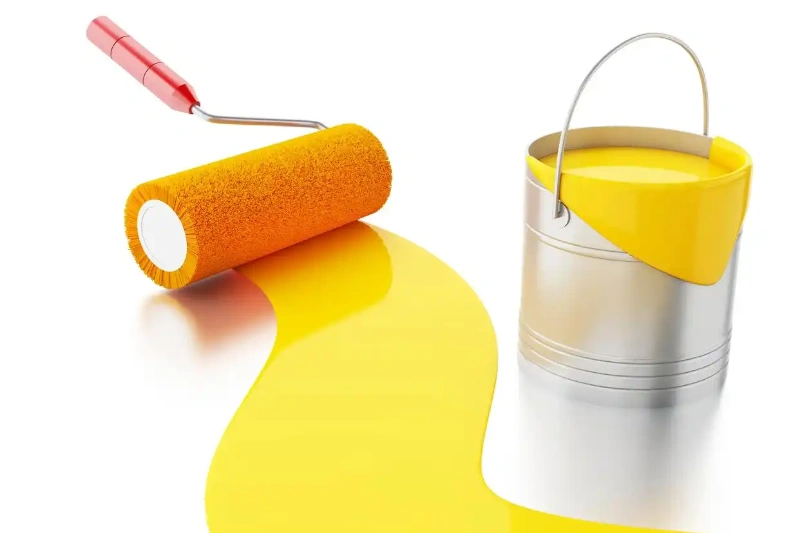
Heavy calcium carbonate, light calcium carbonate, and nano calcium carbonate are widely used in coatings. Compared with ordinary fillers, nano CaCO₃ provides better reinforcement, improves hiding power, gloss, transparency, fast-drying performance, and stability. In some applications, such as automotive and architectural coatings, it can partially or fully replace titanium dioxide to reduce costs.
Technical Requirements for PVC Plastisol Systems
- Oil absorption value: Generally low. High oil absorption increases viscosity and plasticizer demand, raising costs, though requirements vary by product.
- Crystal form: Typically cubic.
- Particle size: Generally 60–100 nm. Larger particles reduce viscosity and mechanical performance; smaller particles cause agglomeration, poor dispersion, surface defects, and increased viscosity and yield value.
Additional requirements include good thixotropy (shear thinning at high shear and thickening at low shear), high yield value, and stable quality to prevent sagging and ensure coating strength.
Application of Nano Calcium Carbonate in Inks

Inks consist of pigments, binders, fillers, and additives. Modified nano calcium carbonate is highly compatible with binders and offers high gloss, strong stability, good adaptability, and no negative impact on drying or printing performance. It improves ink quality while reducing costs.
Performance Requirements for Inks
- Excellent dispersion, absorption, transparency, gloss, hiding power, and printability.
- Predominantly cubic crystal form for low oil absorption, good flowability, and easy dispersion.
- Particle size generally 20–100 nm; flowability depends on crystal form and size distribution.
- High gloss, achieved through narrow particle size distribution and orderly arrangement in ink films.
- Lower whiteness requirement to facilitate coloration.
Nano CaCO₃ enhances ink smoothness, stability, printability, coverage, and ink absorption, promoting fast drying.
Application of Nano Calcium Carbonate in Papermaking
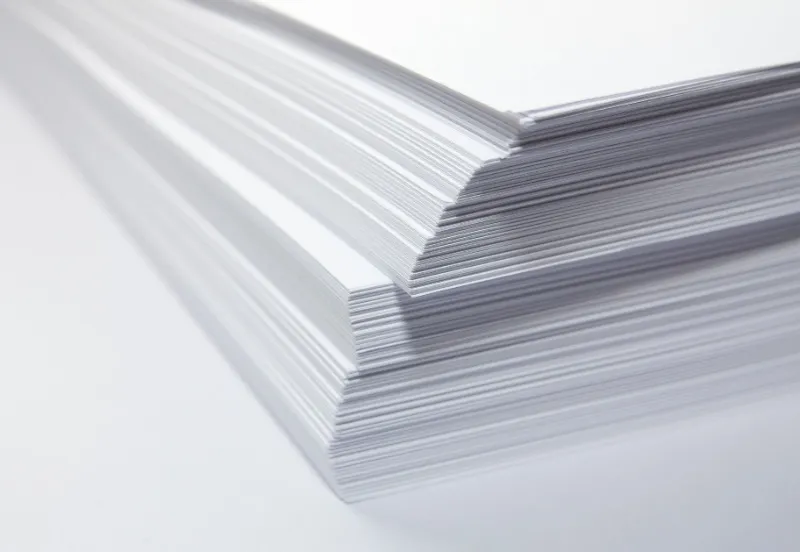
Main Applications
- Papermaking filler: Uniform small particle size reduces equipment wear, improves paper smoothness, whiteness, brightness, opacity, reduces pulp consumption, lowers costs, and benefits environmental protection.
- Cigarette paper: Added at 45–50%. High refractive index improves opacity; CO₂ release during burning regulates combustion speed, stabilizes ash, increases permeability, and reduces tar content.
- High-end sanitary paper: Widely used in feminine hygiene products, diapers, and similar items to produce breathable yet waterproof polyethylene films with fine texture and skin-friendly properties.
- Paper coating: Supplied as slurry to reduce energy consumption, eliminate dust, and simplify processes. It improves gloss, whiteness, smoothness, surface strength, and ink absorption.
Crystal form requirements vary by application: spindle-shaped, chain-like, or spherical for fillers; spindle-shaped or needle-like for cigarette paper; spindle-shaped, plate-like, or cubic for coatings.
Although nano calcium carbonate has great development potential in papermaking, high-end products still rely on imports due to technical challenges. With the transition from acidic to neutral and alkaline papermaking processes, the application prospects for nano calcium carbonate will continue to expand.

“Thanks for reading. I hope my article helps. Please leave a comment down below. You may also contact Zelda online customer representative for any further inquiries.”
— Posted by Emily Chen