Ultrafine powder grinding

jet mill for better whiteness calcium carbonate

Can a Jet Mill Achieve Better Whiteness than a Stirred Mill in Ultrafine Calcium Carbonate Grinding?

In ultrafine calcium carbonate (CaCO₃) processing, whiteness is not merely a visual parameter—it is a core indicator of product quality and market value. Whether the application is high-end plastics, paper coating, paints, sealants, or engineered composites, whiteness directly influences brightness, opacity, dispersion performance, and final product aesthetics. As calcium carbonate particles are ground into the […]

Can a Jet Mill Achieve Better Whiteness than a Stirred Mill in Ultrafine Calcium Carbonate Grinding? Read More »

Ultrafine Grinding Ball Mill

How to Optimize 5-25 Micron Calcium Carbonate Ultrafine Processing with Advanced Grinding Technology?

Producing 5-25 micron calcium carbonate powders poses clear challenges: balancing a narrow Particle Size Distribution (PSD) while minimizing energy consumption and avoiding over-grinding. If your current process struggles with inconsistent output or excessive costs, optimizing your ultrafine processing with advanced grinding technology is critical. This guide focuses on how the right combination of ball mill

How to Optimize 5-25 Micron Calcium Carbonate Ultrafine Processing with Advanced Grinding Technology? Read More »

Calcium Carbonate in the Papermaking Industry

How Does Calcium Carbonate Optimize Application and Performance in the Papermaking Industry?

Calcium carbonate, as a high-quality, low-cost, and environmentally friendly inorganic filler, has become one of the most widely used fillers in the papermaking industry due to its high whiteness, good dispersibility, strong chemical stability, and abundant resources. It is extensively applied in the production of cultural paper, packaging paper, and tissue paper. In papermaking, calcium

How Does Calcium Carbonate Optimize Application and Performance in the Papermaking Industry? Read More »

Calcium carbonate whisker modification

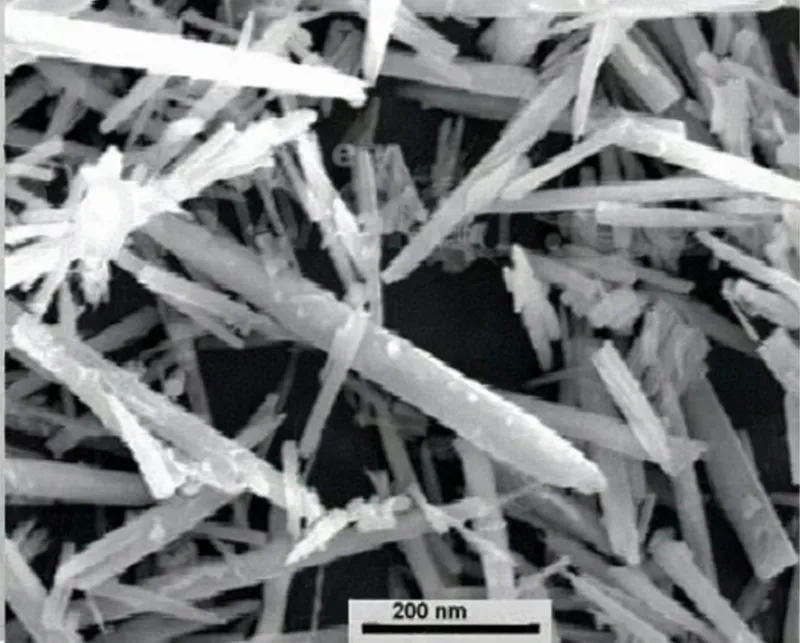
What Are Calcium Carbonate Whiskers?

Whiskers are single-crystal materials that grow in a filament-like or needle-like shape. They resemble short fibers, but their dimensions are much smaller. Whisker materials can be classified into organic whiskers and inorganic whiskers. Common inorganic whisker materials include SiC, Si₃N₄, K₂Ti₁₃O₃₀, Al₁₈B₄O₃₃, ZnO, MgO, Al₂O₃, and CaCO₃. The atomic structure inside a whisker is highly

What Are Calcium Carbonate Whiskers? Read More »

Ground Calcium Carbonate Ball Mill +Classifier System

What Is the Core Difference Between Precipitated Calcium Carbonate and Ground Calcium Carbonate?

In industries such as plastics, rubber, coatings, papermaking, cables, and construction materials, calcium carbonate is one of the most widely used inorganic fillers. It plays a critical role in product performance and cost control. However, in practical applications, Precipitated Calcium Carbonate (PCC) and Ground Calcium Carbonate (GCC) are often confused or improperly selected. This can

What Is the Core Difference Between Precipitated Calcium Carbonate and Ground Calcium Carbonate? Read More »

Specific Surface Area Calcium Hydroxide Grinding Equipment

What Grinding Equipment Is Needed to Produce High–Specific Surface Area Calcium Hydroxide? And What Is It Used For?

When calcium hydroxide is mentioned, most people still think of traditional applications such as construction plastering or soil pH adjustment. However, today’s protagonist—high–specific surface area calcium hydroxide—has long moved beyond these conventional roles. Thanks to its exceptionally high specific surface area (30–80 m²/g or even higher), it is reshaping application boundaries and driving a quiet

What Grinding Equipment Is Needed to Produce High–Specific Surface Area Calcium Hydroxide? And What Is It Used For? Read More »

Calcium carbonate

What Are The Types of Calcium Carbonate and Their Applications ? How to Choose The Right Grinding Equipment?

Core Types of Calcium Carbonate and Their Fundamental Differences Calcium carbonate can be categorized into four major types based on production process, particle size, and surface characteristics. Their key parameters and application positioning vary significantly and form the basis for industrial material selection. Type Production Method Key Parameters Core Characteristics Application Positioning Ground Calcium Carbonate

What Are The Types of Calcium Carbonate and Their Applications ? How to Choose The Right Grinding Equipment? Read More »

Pin Mill Disperse calcium carbonate

How Does a Pin Mill Effectively Disperse Nano-Calcium Carbonate?

Nano-calcium carbonate (nano-CaCO₃) is an ultrafine functional filler with a primary particle size typically below 100 nm. It is widely used in plastics, rubber, coatings, inks, and adhesives to improve mechanical strength, opacity, and rheological properties. However, due to its high surface energy and strong van der Waals forces, nano-calcium carbonate tends to agglomerate during

How Does a Pin Mill Effectively Disperse Nano-Calcium Carbonate? Read More »

Calcium carbonate ball mill classification production line site

How to Choose a Suitable Calcium Carbonate Grinding Mill?

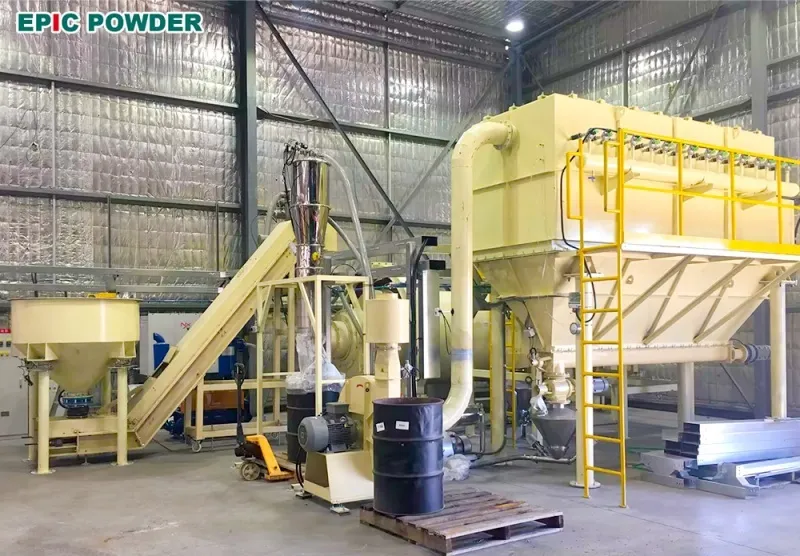
Calcium carbonate powder is widely used in plastics, rubber, coatings, paper, and construction materials. It is mainly produced by grinding natural minerals such as limestone, marble, and calcite. In a complete calcium carbonate production line, key equipment includes crushers, conveyors, storage bins, grinding mills, classifiers, dust collectors, and packaging systems — among which, the grinding

How to Choose a Suitable Calcium Carbonate Grinding Mill? Read More »

ball mill classifier system 3

Entering the Micron Era: Design and Application of Calcium Carbonate Ultrafine Grinding Production Line

Calcium carbonate (CaCO₃) is one of the most widely used non-metallic mineral raw materials in industrial applications. It plays an essential role in plastics, papermaking, coatings, rubber, ink, and pharmaceuticals. As downstream industries demand increasingly higher material performance, ultrafine grinding technology has become the key to enhancing the added value of calcium carbonate. A calcium

Entering the Micron Era: Design and Application of Calcium Carbonate Ultrafine Grinding Production Line Read More »