epicpowder

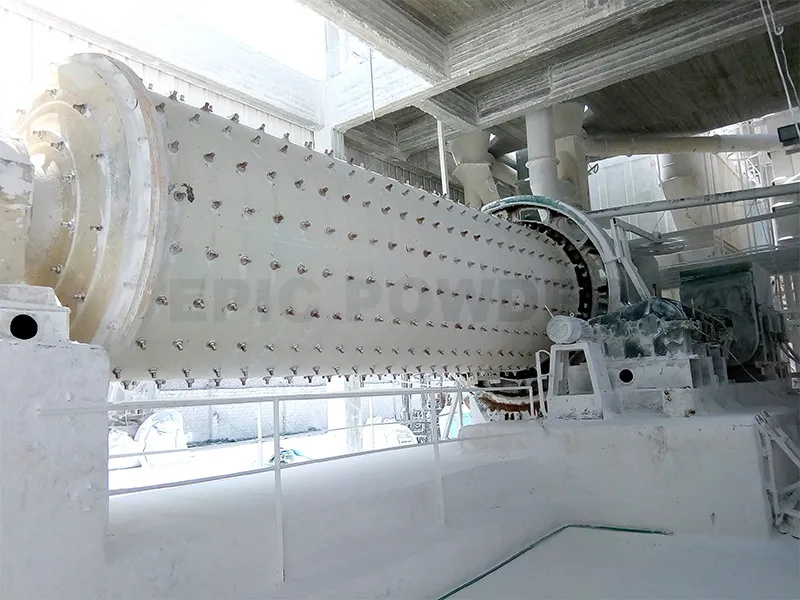
Ball mill 8

How Many Types of Calcium Carbonate Are There? Understanding Their Unique Applications and Differences

Calcium carbonate (CaCO₃) is a common inorganic compound, commonly known as limestone, marble, or chalk. It is neutral in nature, has low solubility in water, but readily dissolves in hydrochloric acid. Thanks to its abundant sources and low cost, calcium carbonate is widely used across many industries. It also offers good chemical stability, making it […]

How Many Types of Calcium Carbonate Are There? Understanding Their Unique Applications and Differences Read More »

Nano Calcium Carbonate

What Are the Six Major Application Fields of Nano Calcium Carbonate and Their Technical Requirements?

Nano calcium carbonate refers to a functional inorganic filler with a particle size of 1–100 nm. It is widely used in rubber, plastics, papermaking, inks, coatings, sealants and adhesives, pharmaceuticals, toothpaste, food, and other fields. However, different applications have distinct requirements for particle size distribution, crystal form, oil absorption value, dispersion, and other properties. Application

What Are the Six Major Application Fields of Nano Calcium Carbonate and Their Technical Requirements? Read More »

Ground Calcium Carbonate Ball Mill +Classifier System

What Is the Core Difference Between Precipitated Calcium Carbonate and Ground Calcium Carbonate?

In industries such as plastics, rubber, coatings, papermaking, cables, and construction materials, calcium carbonate is one of the most widely used inorganic fillers. It plays a critical role in product performance and cost control. However, in practical applications, Precipitated Calcium Carbonate (PCC) and Ground Calcium Carbonate (GCC) are often confused or improperly selected. This can

What Is the Core Difference Between Precipitated Calcium Carbonate and Ground Calcium Carbonate? Read More »

GCC (Ground Calcium Carbonate) Production Line

How does calcium carbonate mesh size affect the comprehensive performance of polypropylene (PP) filler masterbatches?

Calcium carbonate, as an inorganic mineral with abundant natural reserves and excellent cost performance, has become one of the most widely used inorganic fillers in the plastics industry. This is due to its low cost, high whiteness, good chemical stability, and strong mechanical compatibility with polymer materials. It can effectively reduce production costs while improving

How does calcium carbonate mesh size affect the comprehensive performance of polypropylene (PP) filler masterbatches? Read More »

Specific Surface Area Calcium Hydroxide Grinding Equipment

What Grinding Equipment Is Needed to Produce High–Specific Surface Area Calcium Hydroxide? And What Is It Used For?

When calcium hydroxide is mentioned, most people still think of traditional applications such as construction plastering or soil pH adjustment. However, today’s protagonist—high–specific surface area calcium hydroxide—has long moved beyond these conventional roles. Thanks to its exceptionally high specific surface area (30–80 m²/g or even higher), it is reshaping application boundaries and driving a quiet

What Grinding Equipment Is Needed to Produce High–Specific Surface Area Calcium Hydroxide? And What Is It Used For? Read More »

Calcium Carbonate in Plastic Films

What Are the Application Characteristics and Value of Calcium Carbonate in Plastic Films?

Calcium carbonate has become one of the most widely used inorganic fillers in plastic film production. This is mainly due to its low cost, high whiteness, and balanced overall properties. When processed into filler masterbatch for film production, calcium carbonate helps simplify manufacturing processes. It also improves compounding efficiency and increases productivity. In addition, dust

What Are the Application Characteristics and Value of Calcium Carbonate in Plastic Films? Read More »

Porcelain-White Composite Calcium Carbonate

Why Do Customers Prefer Porcelain-White Composite Calcium Carbonate?

In industries such as plastics, coatings, rubber, papermaking, and artificial marble, calcium carbonate is one of the most widely used and cost-effective functional fillers. In recent years, however, a more advanced and high-performance material—porcelain-white composite calcium carbonate—has been rapidly gaining popularity among customers. So what makes it stand out among so many filler materials? This

Why Do Customers Prefer Porcelain-White Composite Calcium Carbonate? Read More »

three-roller-mill-coating-machine

What You Need to Know About Calcium Carbonate Modification?

Calcium carbonate (CaCO₃) is a widely available mineral used across many industries. Structurally, it exists in three main crystal forms: calcite, aragonite, and vaterite. Each form differs in morphology and stability, with calcite being the most stable and commonly used in industrial applications. Although unmodified calcium carbonate is widely utilized, it has several limitations. Due

What You Need to Know About Calcium Carbonate Modification? Read More »

Toothpaste Abrasive

How Does the Particle Size of Natural Calcium Carbonate Abrasives Affect the Core Performance of Fluoride Toothpaste?

Natural calcium carbonate (NCC) is a commonly used abrasive in toothpaste. Typical commercial grades include 325 mesh (D97 ≈ 45 μm) and 400 mesh (D97 ≈ 38 μm). In recent years, toothpaste formulation technology has advanced rapidly. Ultrafine grinding processes have also made significant progress. As a result, finer natural calcium carbonate abrasives are becoming

How Does the Particle Size of Natural Calcium Carbonate Abrasives Affect the Core Performance of Fluoride Toothpaste? Read More »