epicpowder

Calcium Carbonate in Plastic Films

What Are the Application Characteristics and Value of Calcium Carbonate in Plastic Films?

Calcium carbonate has become one of the most widely used inorganic fillers in plastic film production. This is mainly due to its low cost, high whiteness, and balanced overall properties. When processed into filler masterbatch for film production, calcium carbonate helps simplify manufacturing processes. It also improves compounding efficiency and increases productivity. In addition, dust […]

What Are the Application Characteristics and Value of Calcium Carbonate in Plastic Films? Read More »

Porcelain-White Composite Calcium Carbonate

Why Do Customers Prefer Porcelain-White Composite Calcium Carbonate?

In industries such as plastics, coatings, rubber, papermaking, and artificial marble, calcium carbonate is one of the most widely used and cost-effective functional fillers. In recent years, however, a more advanced and high-performance material—porcelain-white composite calcium carbonate—has been rapidly gaining popularity among customers. So what makes it stand out among so many filler materials? This

Why Do Customers Prefer Porcelain-White Composite Calcium Carbonate? Read More »

three-roller-mill-coating-machine

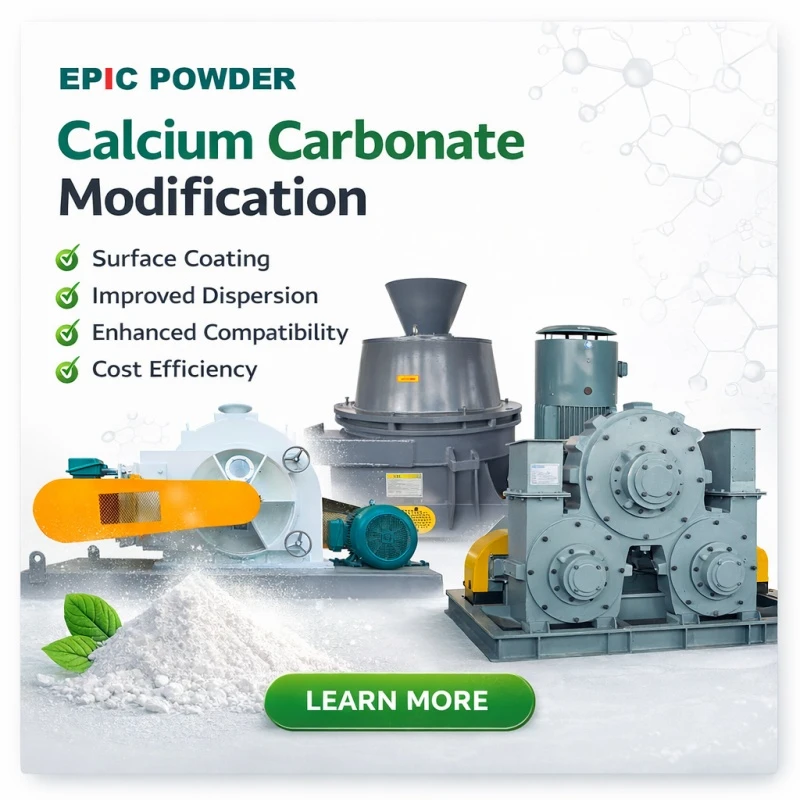
What You Need to Know About Calcium Carbonate Modification?

Calcium carbonate (CaCO₃) is a widely available mineral used across many industries. Structurally, it exists in three main crystal forms: calcite, aragonite, and vaterite. Each form differs in morphology and stability, with calcite being the most stable and commonly used in industrial applications. Although unmodified calcium carbonate is widely utilized, it has several limitations. Due

What You Need to Know About Calcium Carbonate Modification? Read More »

Toothpaste Abrasive

How Does the Particle Size of Natural Calcium Carbonate Abrasives Affect the Core Performance of Fluoride Toothpaste?

Natural calcium carbonate (NCC) is a commonly used abrasive in toothpaste. Typical commercial grades include 325 mesh (D97 ≈ 45 μm) and 400 mesh (D97 ≈ 38 μm). In recent years, toothpaste formulation technology has advanced rapidly. Ultrafine grinding processes have also made significant progress. As a result, finer natural calcium carbonate abrasives are becoming

How Does the Particle Size of Natural Calcium Carbonate Abrasives Affect the Core Performance of Fluoride Toothpaste? Read More »

limestone grinding machine

Why Is Limestone Known as “the King of Non-Metallic Minerals”?

Limestone is one of the most widely used, highly versatile, and economically significant non-metallic minerals in the world. From construction materials to advanced industrial applications, its influence spans countless industries. This extensive reach, combined with its abundant reserves and diverse functionalities, has earned limestone the title of “the King of Non-Metallic Minerals.”But what makes limestone

Why Is Limestone Known as “the King of Non-Metallic Minerals”? Read More »

Calcium carbonate

What Are The Types of Calcium Carbonate and Their Applications ? How to Choose The Right Grinding Equipment?

Core Types of Calcium Carbonate and Their Fundamental Differences Calcium carbonate can be categorized into four major types based on production process, particle size, and surface characteristics. Their key parameters and application positioning vary significantly and form the basis for industrial material selection. Type Production Method Key Parameters Core Characteristics Application Positioning Ground Calcium Carbonate

What Are The Types of Calcium Carbonate and Their Applications ? How to Choose The Right Grinding Equipment? Read More »

calcium carbonate

Which is More Suitable for Plastics—Light Calcium or Heavy Calcium?

Among the many filler and modification materials used in the plastics industry, calcium carbonate holds an irreplaceable position. It is generally divided into heavy calcium carbonate and light calcium carbonate. This raises an important question for plastic formulators:Which is more suitable for plastic products—light calcium or heavy calcium? Understanding the Difference Between Heavy Calcium and

Which is More Suitable for Plastics—Light Calcium or Heavy Calcium? Read More »

Pin Mill Disperse calcium carbonate

How Does a Pin Mill Effectively Disperse Nano-Calcium Carbonate?

Nano-calcium carbonate (nano-CaCO₃) is an ultrafine functional filler with a primary particle size typically below 100 nm. It is widely used in plastics, rubber, coatings, inks, and adhesives to improve mechanical strength, opacity, and rheological properties. However, due to its high surface energy and strong van der Waals forces, nano-calcium carbonate tends to agglomerate during

How Does a Pin Mill Effectively Disperse Nano-Calcium Carbonate? Read More »

Six Perspectives of Ground Calcium Carbonate

The Six Perspectives: What Do We Need to Know About Ground Calcium Carbonate?

1. What Is Ground Calcium Carbonate? Ground calcium carbonate (GCC) is a white powder produced by mechanically grinding natural calcium carbonate minerals such as calcite, limestone, dolomite, chalk, and shells. It typically appears as a gray-white or light brown granular solid with slight acidity, high purity, and stable composition. As a widely used industrial raw

The Six Perspectives: What Do We Need to Know About Ground Calcium Carbonate? Read More »

Calcium carbonate ball mill classification production line site

How to Choose a Suitable Calcium Carbonate Grinding Mill?

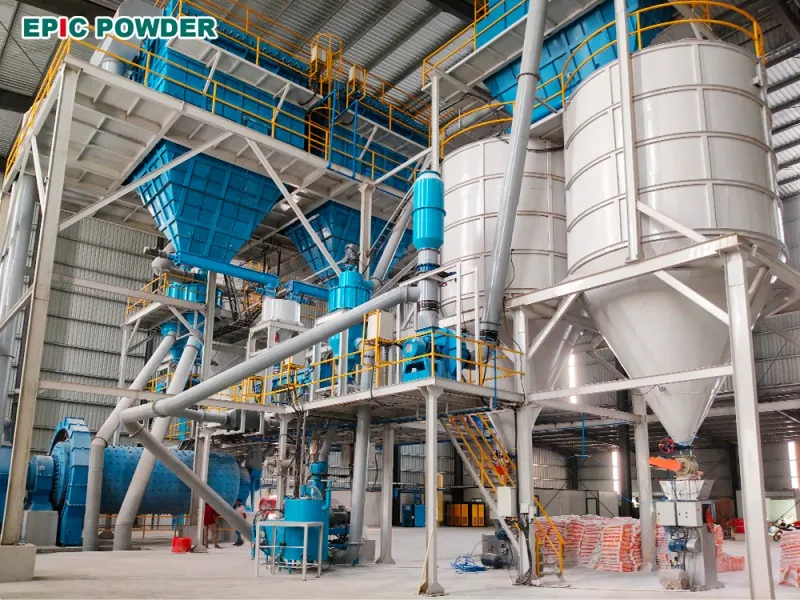
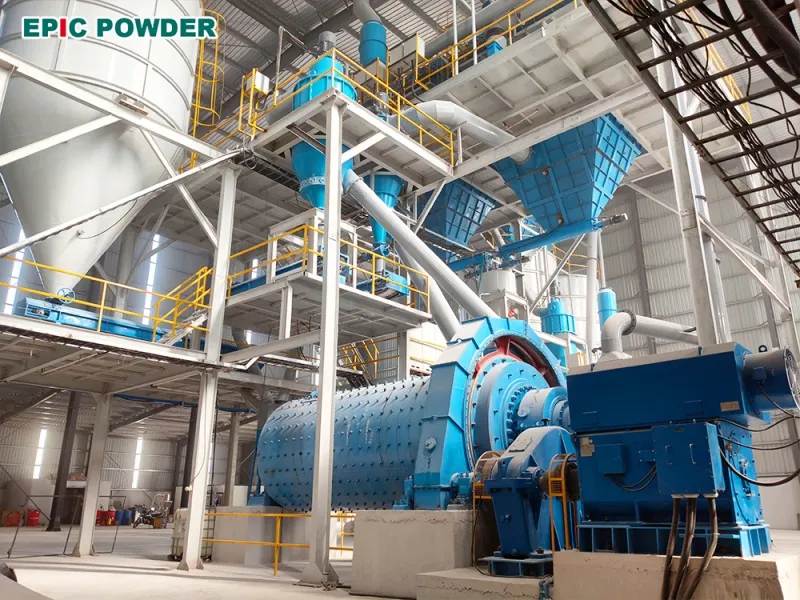
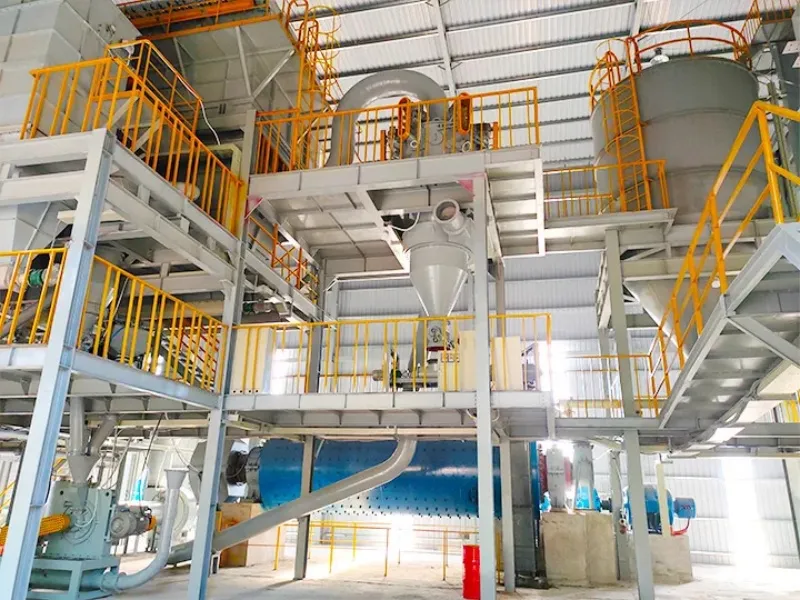
Calcium carbonate powder is widely used in plastics, rubber, coatings, paper, and construction materials. It is mainly produced by grinding natural minerals such as limestone, marble, and calcite. In a complete calcium carbonate production line, key equipment includes crushers, conveyors, storage bins, grinding mills, classifiers, dust collectors, and packaging systems — among which, the grinding

How to Choose a Suitable Calcium Carbonate Grinding Mill? Read More »